
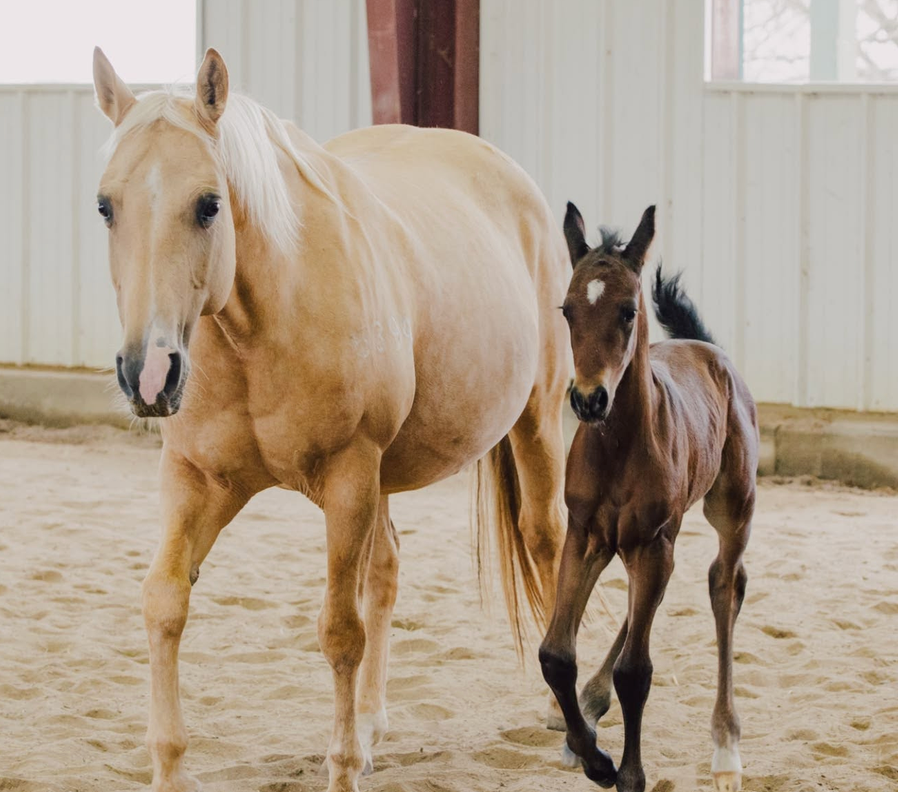
In horse breeding, progeny means offspring. A horse's progeny are the sons and daughters it has produced, whether the parent is a stallion or a mare. Breeders look at those offspring as a group to learn whether a parent consistently passes along useful traits such as conformation, movement, disposition, soundness, and performance ability.
Breeding is one of my favorite parts of life at Running Springs because every foal adds another piece to the story. You plan a cross based on the sire, the dam, and the goal for that baby, but the progeny are what eventually show how those decisions played out.
Key Takeaways
- Progeny means offspring. It is not a horse breed or a stage of life.
- A horse remains part of its parents' progeny after it grows out of the foal stage.
- Get usually refers to a sire's offspring, while produce usually refers to a dam's offspring.
- A progeny record may include each offspring's pedigree, show or race results, earnings, points, awards, and other verified achievements.
- One exceptional foal is exciting, but a larger group of consistent offspring tells breeders much more.
If you came across the word while reading a pedigree, stallion page, or sale listing, the short definition may be all you need. If the other vocabulary is unfamiliar too, my separate guide to horse breeding terms and lingo explains the wider language of pedigrees, reproduction, pregnancy, and foaling.
What Progeny Means in Horses

Progeny describes the relationship between a parent and its offspring. A stallion's progeny are the horses he has sired, and a mare's progeny are the horses she has produced. The word can refer to an individual descendant, but horse people often use it collectively when discussing a parent and all of its offspring.
Progeny is not the same as foal. Foal describes a young horse during its first year of life. Progeny describes parentage, so a mature show horse can still be discussed as the progeny of its sire or dam.
Simple example: If a stallion has sired 50 registered horses, those 50 horses are his progeny. Each one is also part of its dam's produce.
Progeny vs. Foal, Get, and Produce
These words overlap, but they are not always interchangeable. Here is the practical difference:
| Term | How it is used |
|---|---|
| Progeny | The offspring of either a sire or a dam; often discussed as a group. |
| Foal | A young horse in its first year of life, regardless of sex. |
| Get | The offspring of a sire. Registries and shows may use the phrase “get of sire.” |
| Produce | The offspring of a dam. Registries and shows may use the phrase “produce of dam.” |
| Sire | The father of a horse. |
| Dam | The mother of a horse. |
The American Quarter Horse Association, for example, separates its official records into Get of Sire and Produce of Dam reports. That parent-specific wording is more precise than using produce for every horse's offspring.
What Is a Progeny Record?
A progeny record is a documented look at a horse's offspring and what those offspring have accomplished. The exact fields depend on the breed registry or performance organization. An AQHA get-of-sire or produce-of-dam report can include registered offspring, parentage, race results, show points, earnings, awards, and achievement summaries.
That is different from a pedigree. A pedigree looks backward at a horse's ancestors. A progeny record looks forward at the horses it has produced.
| Record | Main question it answers |
|---|---|
| Individual record | What did this horse accomplish? |
| Pedigree record | Which horses did this horse descend from? |
| Progeny record | What have this horse's offspring done? |
How Breeders Evaluate Progeny
The goal is not to find one famous foal and stop there. Breeders look for patterns across multiple offspring and ask whether those patterns hold up across different dams, trainers, riders, and environments.
- Start with the number and age of the offspring. A young sire with a small first foal crop has had less time to build evidence than an older sire with mature offspring in competition.
- Look for consistency. Repeated strengths across several offspring are more informative than one outlier.
- Compare like with like. Results should make sense for the breeding goal and discipline, whether that is Western pleasure, reining, cutting, racing, or another job.
- Consider the other parent. Every foal receives genetics from both its sire and its dam. A standout result cannot automatically be credited to only one side.
- Account for opportunity. Training, health, handling, competition level, and the owner's resources all affect what an offspring is able to show.
- Use verified records. Registry and association data are more dependable than a sales claim with no supporting results.
What “proven” means: There is no single universal cutoff that makes every stallion or broodmare proven. The word usually means the horse has enough offspring with relevant, repeatable results to give breeders useful evidence beyond the parent's own performance and pedigree.
Why Progeny Can Affect a Horse's Value
A strong record can increase confidence in a breeding decision. When multiple offspring succeed in the job they were bred to do, demand for the parent, its future foals, and related bloodlines may rise. That can support stud-fee decisions and sale values, but it is never a guarantee of what the next foal will become.
The reverse is also important. A talented stallion or mare may have an impressive individual record without yet having enough mature offspring to show what it reliably passes on. That horse may still be promising, but the decision carries more uncertainty than breeding to a parent with a deep, relevant progeny record.
My stallion VS Code Red is a good example of why breeders study both the individual and the offspring. His own show record matters, and so do the results and qualities breeders see across the horses he has sired.
Watching Progeny at Running Springs

At Running Springs, this is the part of breeding that keeps unfolding for years. First we plan the cross. Then we meet the foal and watch its conformation, movement, and personality develop. Later, training and performance add new information about what may have come through from each side of the pedigree.
If you want to follow that progression, start with a look at breeding season at Running Springs and my complete guide to pregnancy in mares.
As delivery approaches, my breakdown of the three stages of foaling and the signs of a healthy foal birth covers the transition from pregnancy to newborn care. The journey continues in my guide to weaning horses as each youngster becomes more independent.
That is also why I try not to judge an entire cross from one early impression. One baby can be exciting, but a program becomes clearer as more related horses grow up and show what they can do.
You can meet many of the horses behind those pedigrees in Meet the Herd at Running Springs, or follow the next group in my 2026 foaling season preview.
Love following the horses from planned cross to growing youngster? Browse the Running Springs collection inspired by the farm.
The Simple Meaning of Progeny
Progeny means a horse's offspring. The word is simple, but the record behind it can help breeders answer a much bigger question: does this sire or dam consistently produce horses suited to the goal?
The best answer comes from more than one star. It comes from a meaningful group of offspring, verified results, the quality of both parents, and enough time to see the pattern.
Frequently Asked Questions
Is progeny a horse breed?
No. Progeny means offspring. It describes the relationship between a horse and its sire or dam; it does not describe a breed.
What is the difference between progeny and a foal?
Foal is an age term for a young horse in its first year. Progeny is a parentage term, so an adult horse is still the progeny of its sire and dam.
What is the difference between get and produce?
Get refers to a sire's offspring, while produce refers to a dam's offspring. Progeny can refer to the offspring of either parent.
What information is in a horse's progeny record?
Depending on the registry, it may list registered offspring, parentage, show or race results, points, earnings, awards, and achievement summaries.
What makes a good progeny record?
Breeders generally want to see consistent, relevant strengths across multiple offspring, not just one standout. They also consider the dams, the offspring's ages, their training and opportunities, and the quality of the verified results.
About the Author

Hi, I am Katie Van Slyke, and I share my daily life at Running Springs farm with millions of wonderful people online. I breed, foal out, and raise American Quarter Horses, and I am best known for raising a huge variety of animals, from champion Quarter Horses to famous mini Highland cows.
I am incredibly lucky to share this journey with millions of friends across YouTube, TikTok, Facebook, and Instagram. You can read the full story of how it all started on my about page.
Sources
The terminology and record types in this article are supported by equine registry, competition, and Cooperative Extension references. Details about my own horses and breeding program come from firsthand experience at Running Springs.











0 comments