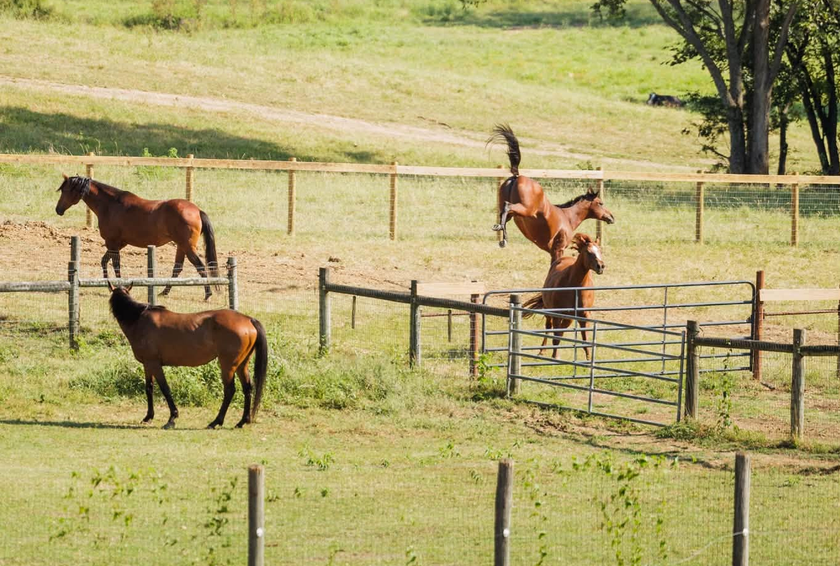
A pasture is a large, grassy grazing area that feeds your animals with live vegetation.
A paddock is a smaller enclosed field used for exercise, short turnout, or dividing a pasture into sections for rotational grazing.
A dry lot is a bare, non-grazing "sacrifice" area with durable footing like gravel or sand, built to keep horses off grass entirely, perfect for muddy seasons or animals that need a restricted diet.
The three come down to size, vegetation, and purpose.
This one's personal for me. At Running Springs, I've moved late-pregnancy mares onto a dry lot, and it made a real difference in how closely I could manage their diet and keep an eye on them before foaling.
Key Takeaways
- A pasture is a large grazing area (1+ acre per horse) that serves as the primary food source.
- A paddock is smaller, used mainly for exercise, short turnout, and rotational grazing rather than nutrition.
- A dry lot is intentionally bare, with durable footing, used to protect grass and control a horse's diet.
- Most well-run farms use all three, matching the area to the season and the individual horse.
- Dry lots need you to provide everything: hay, fresh water, and shelter.
If you've ever heard someone use paddock, pasture, and dry lot like they mean the same thing, you're not alone. They're all outdoor spaces where horses spend time, but they serve very different jobs.
Understanding the difference changes how you feed, how you protect your grass, and how you keep certain horses healthy. For more everyday farm vocabulary, my beginner's guide to horse terms is a great starting point.
The Three Areas at a Glance
| Area | Size | Vegetation | Main purpose |
|---|---|---|---|
| Pasture | 1+ acre per horse | Lush, growing grass/legumes | Primary grazing and nutrition |
| Paddock | Usually under an acre | Some grass, easily grazed down | Short turnout, exercise, rotation |
| Dry lot | ~400 to 500 sq ft+ per horse | Intentionally bare | Grass-free turnout, diet control, mud protection |
What Is a Pasture?
A pasture is your big grazing ground, typically an acre or more per horse, heavily vegetated with growing grasses or legumes. It's the primary source of nutrition, letting horses forage naturally the way their bodies are built to.
Pastures need real management: rotational grazing, mowing, and rest periods so the grass isn't grazed into the dirt. Overgraze a pasture and you get weeds, bare patches, and soil erosion instead of forage. Catching a horse in a big open pasture is a skill of its own, which I break down in how to catch a horse in the pasture.
What Is a Paddock?
A paddock is smaller, usually under an acre. It may have some grass, but it gets grazed down quickly and isn't meant to be a horse's main food source. Paddocks shine for short-term turnout, controlled exercise, and breaking a big pasture into "slices."
This is the backbone of rotational grazing: you move horses through a series of paddocks so the grass in each one recovers while the others are in use. It's how you stretch limited acreage without wrecking it. Weanlings and young stock often start their independent lives in smaller paddocks, something I touch on in my guide to weaning horses.
What Is a Dry Lot?
A dry lot, sometimes called a sacrifice area, is intentionally kept bare of grass. It's sized to let horses move around, often a minimum of 400 to 500 square feet per horse, and reinforced with gravel, geotextile fabric, sand, or woodchips to prevent mud and protect hooves.
Dry lots earn their keep in two situations:
- Protecting your pastures: during heavy rain, winter, or drought, keeping horses on a dry lot saves your grass and prevents the mud pit that ruins a field.
- Diet control: for horses that need restricted grass, like those prone to obesity, laminitis, or metabolic issues, a dry lot lets you control exactly how much forage they get.
The trade-off is that you provide everything: hay, fresh water, and shelter. A dry lot isn't "no care," it's turnout where you manage the menu.
How to Choose the Right One
Most well-run farms use all three, not just one. A simple way to think about it:
- Need to feed horses off grass? Pasture.
- Need exercise, short turnout, or to rotate grazing? Paddock.
- Need to save your grass, dodge the mud, or restrict a horse's diet? Dry lot.
Your climate, acreage, and each horse's health all factor in. A metabolic horse might live on a dry lot with measured hay while your easy keepers rotate through paddocks and your pasture rests. Once you see paddock vs pasture vs dry lot as three tools for three jobs, the setup that fits your farm gets a lot clearer.
Why I Moved My Late-Pregnancy Mares to a Dry Lot

Late in gestation, I want tight control over what those mares are eating and a safe, low-drama space where I can keep a close eye on them.
A dry lot gives me that, measured forage, solid footing, and no gorging on rich spring grass right before foaling. It's part of how we handle pregnancy checking and prep heading into a new season.
It's a great example of picking the area to fit the horse's situation instead of defaulting to "put them in the field." You can see the mares I'm planning around in our 2026 foaling season preview, and meet the whole crew in Meet the Herd.
The rest of our sprawling animal family lives in the animal kingdom at Running Springs.
Mud season and dry-lot chores call for comfy, hard-wearing layers. My Katie's Classics pieces are my go-to.
Final Thoughts on Paddock vs Pasture vs Dry Lot
You don't have to pick a single winner. A pasture feeds, a paddock manages movement and rotation, and a dry lot protects your grass and your horse's waistline. The best farms keep all three in the toolbox and reach for whichever one fits the season and the horse standing in front of them.
Frequently Asked Questions
Is a paddock the same as a pasture?
No. A pasture is a large grazing area that feeds horses; a paddock is smaller and used mainly for exercise, short turnout, or rotating grazing rather than as a primary food source.
What's the difference between a meadow and a pasture?
A meadow is grassland often left to grow for hay, while a pasture is grazed directly by livestock. In everyday horse talk the words overlap, but a pasture implies active grazing.
Are dry lots good for horses?
Yes, when used correctly. Dry lots protect pastures from mud and overgrazing and are ideal for horses that need restricted grass, as long as you supply hay, water, and shelter.
How big should a dry lot be?
Big enough to let a horse move, commonly a minimum of about 400 to 500 square feet per horse, with durable footing to prevent mud.
About the Author

Hi, I am Katie Van Slyke, and I share my daily life at Running Springs farm with millions of wonderful people online. I breed, foal out, and raise American Quarter Horses, and I am best known for raising a huge variety of animals, from champion Quarter horses to famous mini Highland cows.
I am incredibly lucky to share this journey with millions of friends across YouTube, TikTok, Facebook, and Instagram. You can read the full story of how it all started on my about page.
Sources
The general grazing and turnout guidance in this article is supported by the equine references below. Everything about my own mares and dry lot comes from firsthand experience at Running Springs.











0 comments