
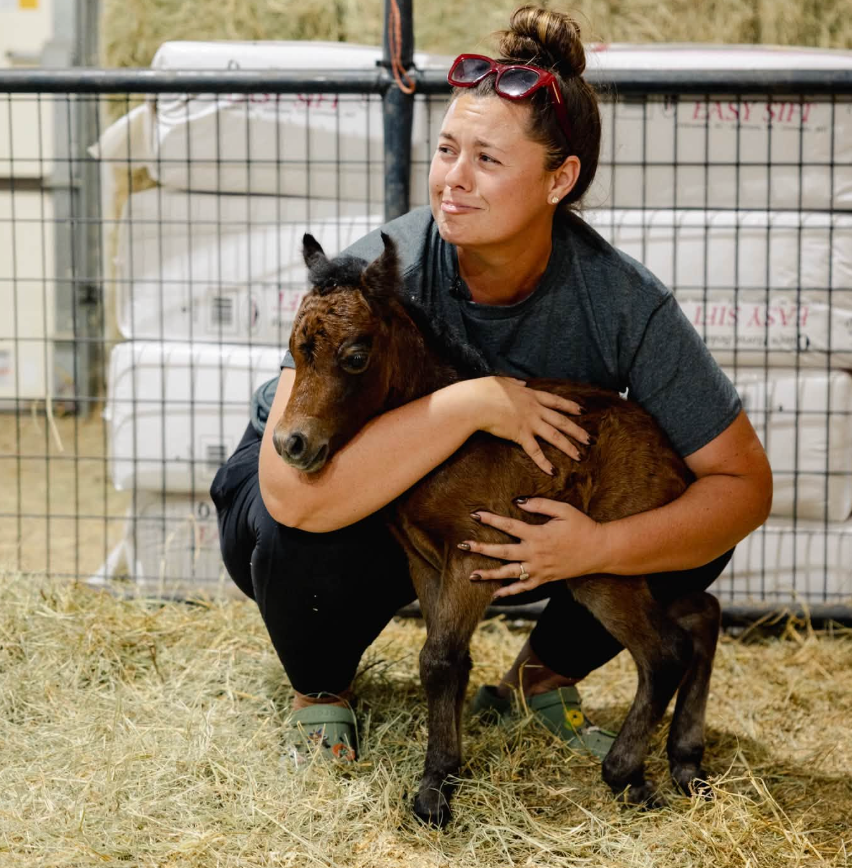
I have sat more foal watches than I can count at Running Springs, and I have watched, filmed, and helped with many births. Foaling is my favorite time of year and the most nerve-wracking, so everything here comes from real nights in the barn, not just a textbook.
The process of giving birth in horses, called foaling, happens in three rapid stages. First, contractions begin and the mare's water breaks, which usually takes one to four hours.
Next comes the actual delivery, ideally front hooves and nose first, and this part is fast, often just 20 to 30 minutes. Finally, the mare rests and then passes the placenta, typically within one to three hours. When everything is normal, a healthy foal can be on the ground in well under an hour of hard labor.
Below I'll walk you through exactly what happens in each stage of a normal horse birth, what a healthy delivery physically looks like, the simple 1-2-3 rule I use afterward, and the critical moment when a normal foaling turns into an emergency.
Key Takeaways
- Foaling has three stages: early labor, active delivery, and passage of the placenta.
- After the mare's water breaks, normal active delivery is rapid and the foal should present with two front feet and the nose.
- A stalled delivery, abnormal presentation, or thick red membrane is an emergency that requires immediate veterinary guidance.
- After birth, monitor the mare, placenta, standing, and nursing milestones and contact a veterinarian when progress is abnormal.
- A red, velvety sac at the vulva instead of a thin white one is a "red bag" delivery and a true emergency.
How Do Horses Give Birth? The Three Stages
When people ask me how do horses give birth, my honest answer is: fast, and almost always in the middle of the night when you have finally dozed off in the barn chair.
Mares have this incredible amount of control over their labor, and a lot of them will wait for a quiet, dark, undisturbed moment to get down to business.
The whole thing unfolds in three stages, and knowing them cold is what lets you tell a normal foaling from one that needs help.
| Stage | What happens | Typical time |
|---|---|---|
| Stage 1 | Early labor: contractions, restlessness, cervix dilates, water breaks | 1 to 4 hours |
| Stage 2 | Active delivery: the foal is pushed out, front feet and nose first | 10 to 30 minutes |
| Stage 3 | The mare rests, then passes the placenta | Within 1 to 3 hours |
If you want a feel for what this looks like across a whole season of watching and waiting, I share it all in the thrilling world of foaling season.
Stage 1: Early Labor and Preparation

Stage one is the long lead-up, and it usually lasts one to four hours. Inside, contractions are quietly working the foal into position and the cervix is starting to dilate. Outside is where my girls tell on themselves.
A mare in early labor gets restless, y'all. She'll pace, break into a sweat, swish her tail, keep looking back at her sides, and lie down and pop right back up over and over.
A lot of them go off their feed and just act distracted, and honestly that is usually my very first clue when I am squinting at the foaling cameras at 2 a.m. This stage ends with one big, dramatic moment: the amniotic sac breaks and a huge gush of fluid pours out. That is her "water breaking," and it means the baby is coming.
By this point at our farm, we already know who is close, because we track every mare's bump dates and safe dates all season long. You can see how we plan for it in our foaling season preview and our foaling prep lineup.
Stage 2: Active Delivery
Stage two is the main event, and it is quick. Once that water breaks, the mare usually lies down and gets to some serious pushing, and within about 10 to 30 minutes there is a baby on the ground.
Here is what a normal delivery actually looks like, and I want you to memorize it so you can spot it in a heartbeat. The foal comes in what we call a "diving" position.
You should see one front hoof, then the second front hoof just a little behind it, then that sweet little nose and head laying right on top of the legs. That staggered two-feet-then-nose picture is exactly what you are praying for. A thin, whitish membrane covers the foal as it slides out.
There is truly nothing like watching it happen. Here is one of our own foal births from start to finish so you can see the real thing:
Once the foal is out, the mare will usually lie still for a bit, and so should you. That quiet moment matters more than people realize, which brings us to stage three.
Stage 3: Passing the Placenta
The third stage is the mare passing the placenta, what we call the afterbirth. Here is the thing I have to remind every new helper in my barn: once that baby is out, let everybody just breathe.
The mare will usually lie there and rest for 20 to 30 minutes with the umbilical cord still attached, and that cord is doing real work, sending one last, essential push of blood from the placenta into the foal. So do not go rushing in to break it. When mama stands up on her own, it breaks right where it is supposed to.
She should then pass the entire placenta, usually within one to three hours. Afterbirth care is its own important topic, from saving the placenta for your vet to checking that it came out complete, and I cover all of it in my guide to placenta care after foaling.
Never do this
Do not pull on the placenta or cut the umbilical cord early. Let the cord break naturally when the mare rises, and let the placenta pass on its own. Rushing either one can harm the foal or the mare.
What Happens Right After Birth

Once the foal is safely on the ground, the birth itself is basically done, and a whole new checklist begins for the newborn.
The short version: a healthy foal should be standing within about an hour and nursing within two, and that first nursing matters because it delivers colostrum, the antibody-rich first milk.
I walk through every newborn milestone, including the full 1-2-3 rule, the suckle reflex, and those charming foal slippers, in my guide to the signs of a healthy foal birth.
Foaling season means long nights in the barn. My Katie's Classics line is what I throw on for every midnight foal check.
When Foaling Becomes an Emergency
Now for the part I take the most seriously of anything on this whole page. Most foalings go beautifully, but when one goes sideways, it goes sideways fast, and minutes truly matter.
This right here is why we watch our girls so closely and lose so much sleep every single spring. These are the moments when a normal birth turns into an emergency and you need your vet on the phone right now.
Most of these emergencies come down to one word your vet will use: dystocia, which just means a difficult or obstructed birth. A foal in the wrong position, an oversized foal, or weak contractions can all cause it.
Dystocia is uncommon in mares, showing up in fewer than 10 percent of foalings, but when it happens it is a true emergency that needs a professional fast. The three situations below are the ones that most often signal it.
The 30-minute rule
If the foal is not delivered within about 20 to 30 minutes after the mare's water breaks, do not keep waiting.
Prolonged, hard pushing with no progress usually means the foal is stuck or badly positioned, and it needs professional help right away.
The wrong presentation
Anything other than that two-feet-then-nose diving position is a red flag. A nose with no feet, one leg back, a tail or hind feet first, or the bottoms of the hooves pointing up can all mean the foal is malpositioned. Call your vet the moment you see it.
A "red bag" delivery
This is the emergency every foaling owner must know. Normally the first thing you see is a thin, whitish, translucent sac. If instead you see a thick, red, velvety bag bulging from the mare, the placenta has detached too early.
The foal is no longer getting oxygen and can suffocate. This is a true emergency: call your vet immediately, and if they tell you to, carefully open that red bag with clean scissors and help deliver the foal right away.
Sometimes a mare needs a hand even when things are close to normal, and knowing when to step in takes real experience.
Also call your vet if: the mare does not pass her placenta within three hours, the foal is not standing by one hour or nursing by two, or the mare seems painful or distressed after delivery.
A retained placenta especially can cause serious infection and laminitis, so never ignore it.
None of this is meant to scare you. It is meant to prepare you, because a calm owner who knows the warning signs and has a vet on speed dial is the best thing a foaling mare can have.
This is also where a strong breeding program and good vet relationship pay off.
Shop All Running Springs Merch
Foaling Season at Running Springs

Running Springs is our family farm in Nolensville, Tennessee, and foaling season is the beating heart of our year.
We breed, foal out, and raise registered American Quarter Horses, so I have lived every one of these stages in real time, the good nights and the hard ones.
If you want the full journey that leads up to these nights, my complete guide to pregnancy in mares covers all eleven months.
Want to meet the babies and the whole crew? Take a peek at how many animals we have and meet everyone by name in our herd roundup. And come follow along on Facebook, Instagram, TikTok, and YouTube.
The Bottom Line on How Horses Give Birth
The process of giving birth in horses is fast and, most of the time, beautifully uncomplicated: early labor for one to four hours, a quick 10 to 30 minute delivery with the foal coming feet and nose first, and the placenta passed within three hours.
Learn what normal looks like, run the simple 1-2-3 rule afterward, and know the emergencies, especially a red bag and a stalled delivery.
After all the mares I have foaled out, I can tell you the magic never wears off. But the reason those nights so often end happily is preparation.
Know the stages, watch closely, and keep your vet's number close. That combination is how healthy foals hit the ground.
Frequently Asked Questions
How long does it take a horse to give birth?
Active delivery is very fast, usually just 10 to 30 minutes once the mare's water breaks. Before that, early labor typically lasts one to four hours, and after the birth the mare passes the placenta within one to three hours.
If the foal is not delivered within about 20 to 30 minutes of the water breaking, treat it as an emergency and call your vet.
What position should a foal be in during birth?
A normal foal is born in a diving position: one front hoof first, the second front hoof slightly behind it, and then the nose and head resting on top of the legs.
Anything else, such as a nose with no feet, one leg back, hooves pointing up, or hind feet first, can mean the foal is malpositioned and needs immediate veterinary help.
How do you know when active foaling has started?
Active labor announces itself. The mare gets restless, paces, sweats, swishes her tail, looks back at her sides, and lies down and gets up over and over, and she usually goes off her feed.
The clearest signal that stage two has begun is her water breaking in a big gush of fluid. The slower build-up signs in the days and weeks before, like bagging up and waxing, are covered in my guide to horse labor symptoms.
What is a red bag delivery in horses?
A red bag delivery means the placenta has separated from the uterus too early, so instead of the normal thin white sac you see a thick, red, velvety bag at the mare's vulva.
The foal is losing its oxygen supply and can suffocate, making it a true emergency. Call your vet immediately, and if directed, open the red bag right away with clean scissors and help deliver the foal.
When should you call a vet during foaling?
Call your vet if the foal is not delivered within about 20 to 30 minutes of the water breaking, if the foal is in any position other than two feet and a nose, if you see a red velvety bag, or if the mare does not pass her placenta within three hours.
Also call if the foal is not standing by one hour or nursing by two hours after birth.
About the Author

Hi, I am Katie Van Slyke!
I breed AQHA Quarter Horses at my family farm in Tennessee, stand two stallions, and document foaling season every year from the barn floor while sharing the daily realities of farm life.
I am incredibly lucky to share this journey with millions of friends across YouTube, TikTok, Facebook, and Instagram. You can read the full story of how it all started on my about page.
Sources
The veterinary and reproductive facts in this guide come from the sources below. Anything about our own mares and foals is drawn from firsthand experience at Running Springs.
















0 comments