
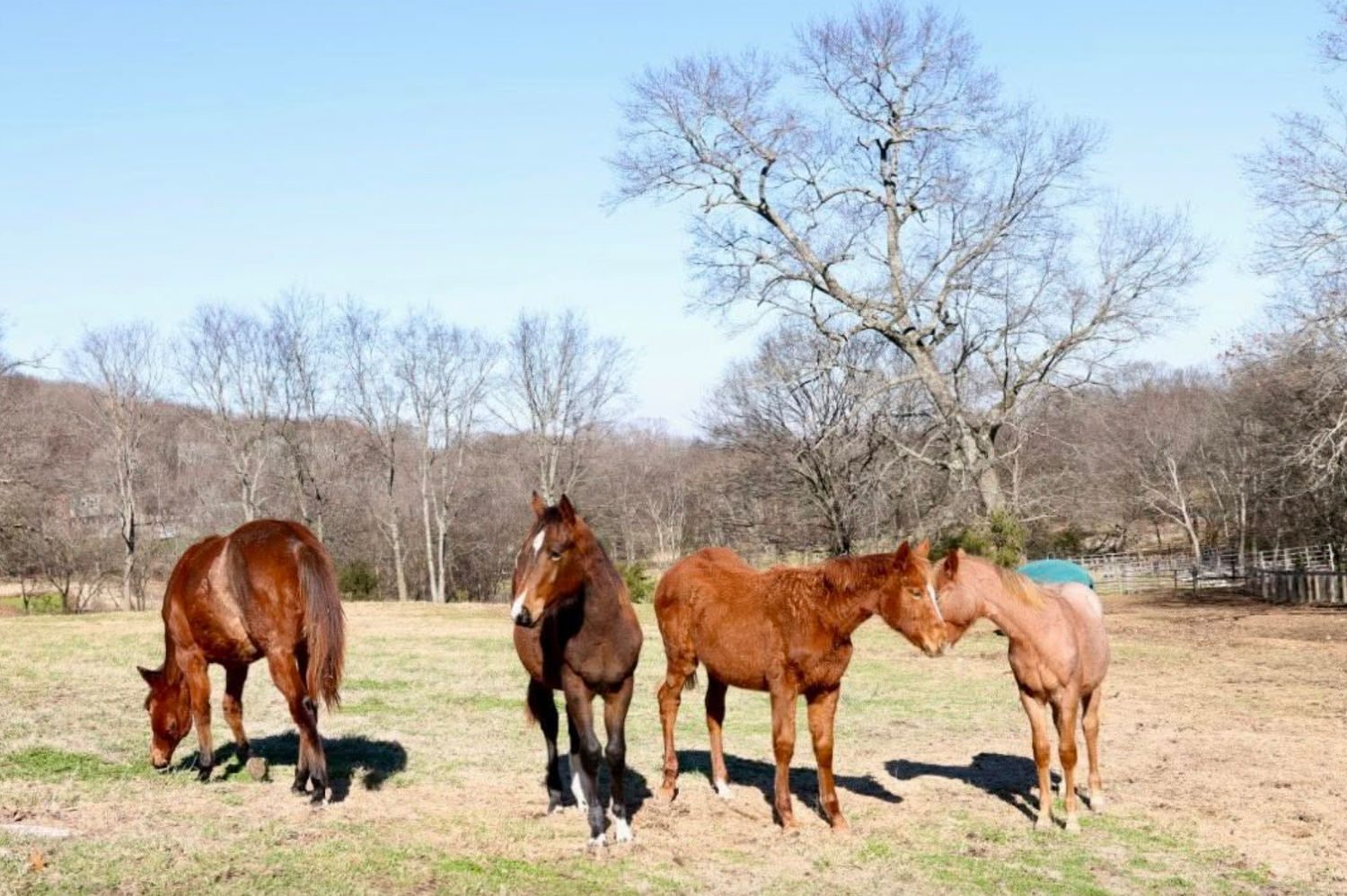
Hi y'all, Katie Van Slyke here! If you've ever spent twenty minutes walking circles around a pasture while your horse side-eyes you and trots the other direction, you know the frustration.
Learning how to catch a horse in the pasture is one of those skills nobody really teaches you until you're already out there, halter in hand, feeling ridiculous.
Today, I'll walk you through why horses play this game, the step-by-step approach that actually works, and the long-term fixes that'll save your sanity. Let's get into it.
- Horses avoid being caught for a reason, usually because it means work or it's become a game.
- Approach calmly at an angle with soft eyes, and let the horse close the last few steps.
- Halter slowly and reward the moment they stand for you.
- For tough cases, use the "walk off" method, a smaller paddock, and a feeding routine.
- The real fix is trust: vary what happens after catching and handle them often.
- Stay safe: never wrap the lead rope, never chase, and wear closed-toe shoes.
Why Your Horse Doesn't Want to Be Caught

Before we talk about how to catch a horse in the pasture, it helps to understand why they're avoiding you in the first place.
Horses aren't being spiteful when they walk away. There's usually a reason, and understanding it changes how you approach the problem.
They've Learned That Being Caught Means Work
This is the biggest one. If every single time you catch your horse, you saddle up and ride, or the vet shows up, or the farrier starts trimming, your horse has connected "human with halter" with "something I'd rather not do." They're out in a beautiful field with their friends and good grass. Can you blame them for not wanting to leave?
They Don't Trust the Process Yet
Young horses, green horses, or horses that haven't been handled much may genuinely feel unsure about being approached.
For prey animals, someone walking straight at them with focused eye contact can feel like pressure. If the horse hasn't built a strong trust relationship with you yet, their instinct says "move away."
Past Negative Experiences
Horses have excellent memories. If a horse was previously caught roughly, or if being caught was consistently followed by something painful or stressful, that association sticks. It takes time and patience to rewrite that story.
It's Just a Fun Game (to Them)
Some horses, honestly? They think it's hilarious. They know they're faster than you, and they enjoy the chase. It's a power dynamic, and as long as they're "winning," they'll keep playing.
With the number of horses we manage at Running Springs, we can't afford to spend 30 minutes chasing anyone around the pasture. We've had to develop a system, and it starts with building the right association from day one. The horses who come willingly are the ones who've learned that being caught leads to good things, not just work.
How to Catch a Horse in Pasture: Step by Step

Here's the approach that works for us at Running Springs, whether I'm bringing in a seasoned broodmare or a weanling who's still figuring out the whole halter thing.
Step 1: Set Yourself Up for Success
Before you head out to the pasture, give yourself plenty of time. If you're rushed and stressed, your horse will feel it. Horses are incredibly sensitive to your energy and body language.
Walk out with your halter and lead rope visible (don't try to hide them behind your back; your horse isn't fooled), and keep your breathing calm and your pace relaxed.
If there are multiple horses in the pasture, have a plan for managing the others. Bringing a friend to help keep the herd away from the gate while you catch and lead your horse out is smart, especially in the beginning.
Step 2: Approach at an Angle, Not Head-On
Walking straight toward a horse's face with direct eye contact is pressure. For a horse that's already hesitant about being caught, that kind of approach triggers the "move away" response.
Instead:
- Approach at an angle toward the horse's shoulder, not directly at the head.
- Keep your eyes soft and slightly averted. Look at the horse's shoulder or barrel, not straight into their eyes.
- Keep your body relaxed. Shoulders down, arms easy, no tense posture.
- Walk slowly and steadily. Don't sneak, and don't rush. Just move calmly.
Step 3: Read Their Body Language
As you approach, watch for subtle signals. If the horse turns an ear toward you, lowers their head slightly, or softens their body, those are good signs. They're thinking about accepting you.
If they raise their head, tense up, or start to shift their weight away, stop walking. Just stand still for a moment. Let the pressure ease.
When they relax again, take another step. This approach-and-pause rhythm is key. You're showing the horse that you respect their space while still being persistent.
Step 4: Let Them Come the Last Few Steps
When you're within a few feet, stop and let the horse close the gap. Turn your body slightly sideways. Extend the back of your hand (less threatening than reaching with an open palm). Let them sniff you, investigate, and decide to stay.
This is the part that requires the most patience. Don't lunge for the halter. Don't grab at their neck. Let the horse make the choice to stand still. When they do, reward them with a quiet scratch on the neck or shoulder.
Step 5: Halter Calmly
Once the horse is standing relaxed and accepting your presence, slide the lead rope over their neck first (this gives you a gentle hold if they shift), then bring the halter up and buckle it. No rushing, no fumbling. Smooth and calm.
Immediately after haltering, give them a scratch or a treat. Make the moment of being caught a positive one.
Love the daily grind of barn life? Our Katie's Classics collection was made for mornings at the pasture gate.
What to Do With a Truly Hard-to-Catch Horse

Some horses are next-level about this. They see you coming from 200 yards away and they're already moving to the far corner.
If you're dealing with a horse like that, the step-by-step approach above is still the foundation, but you need to add some longer-term strategies.
The "Walk Off" Method
This one takes time and comfortable shoes, but it works. Walk into the pasture with your halter and walk steadily toward your horse's head with calm determination. Don't chase, don't run, don't try to corner them. Just walk. When they move away, follow at a walk. Keep heading toward them.
The idea is that your horse will eventually realize that moving away doesn't make you go away. You're patient, you're persistent, and you're not giving up.
Most horses will give in within 20 to 45 minutes the first time. The second time, it takes half as long. By the third or fourth time, many will stand still and let you walk up.
The key: when the horse finally stops and faces you, immediately soften your body language. Lower your eyes, slow your pace, and approach gently. The moment they stand for you, reward them.
Then, critically, don't immediately work them. Just halter them, give a treat, maybe hand-graze for a few minutes, and let them go. You're rewriting the story.
Use a Smaller Space
If your pasture is huge and your horse has room to run laps all day, temporarily move them to a smaller paddock or pen while you work on the catching issue. A smaller space gives them fewer escape options and makes the "walk off" method much faster.
Build a Feeding Routine
At Running Springs, our horses associate certain times of day with food and positive interaction. When they see us coming with grain or heading to the hay feeder, they come in willingly.
Establishing a consistent routine where you bring something good (feed, treats, fresh water) changes the association from "halter = work" to "human = good things."
Catch your horse regularly even when you don't need them for anything. Walk out, halter them, give them a treat and a scratch, and let them go. Do this several times a week. When being caught sometimes means a reward and nothing else, your horse stops assuming the worst every time they see a halter.
Safety Tips for Catching Horses in a Pasture

This is important, y'all. Pasture catching can be dangerous if you're not paying attention, especially if there are multiple horses turned out together.
- Never wrap the lead rope around your hand, wrist, or any body part. Always hold it in loops that you can release instantly if the horse bolts.
- Watch the other horses. Herd dynamics can cause kicking, biting, or rushing, especially near the gate. If other horses crowd in, back off and regroup.
- Never stand directly behind a horse. Even a gentle horse can kick when startled.
- Wear closed-toe shoes with some support. You're walking on uneven ground, and if a hoof lands on your foot, flip-flops won't help.
- Don't chase. Running after a horse escalates the situation and puts you at risk of being kicked, run over, or tripped.
- If you're a beginner, ask for help. There's no shame in having an experienced barn friend or instructor show you the ropes the first few times.
Long-Term Fixes: Making Your Horse Easy to Catch
The real solution to how to catch a horse in pasture isn't a one-time trick. It's a relationship-building process that happens over weeks and months. Here's what makes the biggest difference long-term:
- Vary what happens after catching. Sometimes you ride. Sometimes you groom. Sometimes you just give treats and let them go. When the horse can't predict what comes next, they stay curious instead of avoidant.
- Make every interaction positive. Even grooming and vet visits can be framed as good experiences with the right approach. Our post on horse care tips has more on building positive daily habits.
- Handle your horse often from the ground. Groundwork builds respect and trust. The more your horse is comfortable with you on the ground, the easier catching becomes.
- Consider a breakaway halter for turnout. If your horse is genuinely difficult to catch and it's a safety concern, a breakaway halter (designed to release if the horse gets caught on something) gives you a handle to work with. This is a temporary tool, not a permanent solution, while you work on the underlying behavior.
- Strengthen the bond. It sounds simple, but the horses that are easiest to catch are the ones who genuinely enjoy being around their people. Time spent handling young horses during weaning, grooming regularly, and just being present in the barn pays off.
Proud horse person? Browse our latest merch drops for fresh designs inspired by life at Running Springs.
Shop Running Springs
Whether your horse comes running when they see you or makes you earn it every time, we've got merch that celebrates the everyday reality of barn life. Check out our Katie's Classics for the staples, or see what's new in the store.
Shop All Running Springs Merch
Catching a Horse in Pasture: Patience Wins Every Time
I'm not going to pretend every horse at Running Springs walks right up to me on command. Some days, someone has a different plan.
But the process works: stay calm, be consistent, build the right associations, and never make catching a negative experience. Over time, even the most stubborn horse will come around.
The best advice I can give? Don't take it personally. Your horse isn't mad at you. They're just being a horse. And the day they finally walk up to you on their own, halter or not, and stick their nose in your hand? That's one of the best feelings in this whole game.
Thanks for reading, y'all. Come share your hard-to-catch horse stories with me on Facebook. I know I'm not the only one who's spent a morning walking laps around a field.
Frequently Asked Questions
Should I use treats to catch my horse?
Treats can be a useful reward after your horse lets you halter them, but I wouldn't use them as a bribe to lure the horse in. If your horse only comes because they see a treat bag, they haven't actually learned to trust the catching process. Treats work best as positive reinforcement once the halter is on.
Is it safe to leave a halter on in the pasture?
Only if it's a breakaway halter designed to release if the horse gets caught on something. Standard nylon halters should never be left on during turnout because they don't break under pressure, and a caught horse can be seriously injured. Leather halters or halters with leather crownpieces are safer options.
How long should I spend trying to catch a hard-to-catch horse?
For the "walk off" method, most horses will give in within 20 to 45 minutes the first session. It gets shorter each time after that. The important thing is not giving up before the horse stops. If you walk away before they stand for you, they learn that running works.
My horse is only hard to catch when other horses are around. Why?
Herd dynamics play a huge role. Your horse may feel safer in the group and reluctant to leave. Other horses can also influence the behavior by running away, which triggers a chain reaction.
If this is your issue, try catching your horse before turnout with the full herd, or work on catching in a smaller, individual paddock first.
Will round pen training help with catching?
It can. Round pen work teaches your horse to face you, yield to pressure, and accept your approach, all of which transfer to the pasture.
But round pen work alone won't fix the catching problem if the underlying trust or association issue isn't addressed. Combine it with the strategies in this article for best results.
About the author

Hi, I am Katie Van Slyke, and I share my daily life at Running Springs farm with millions of wonderful people online. I am best known for raising a huge variety of animals, from Quarter horses to famous mini Highland cows.
My true expertise lies in hands-on animal husbandry and living an authentic Tennessee outdoor lifestyle. I love bringing my everyday farm adventures and practical experience straight to you!
Keep Reading
More horse care and handling tips from Running Springs:
















0 comments