
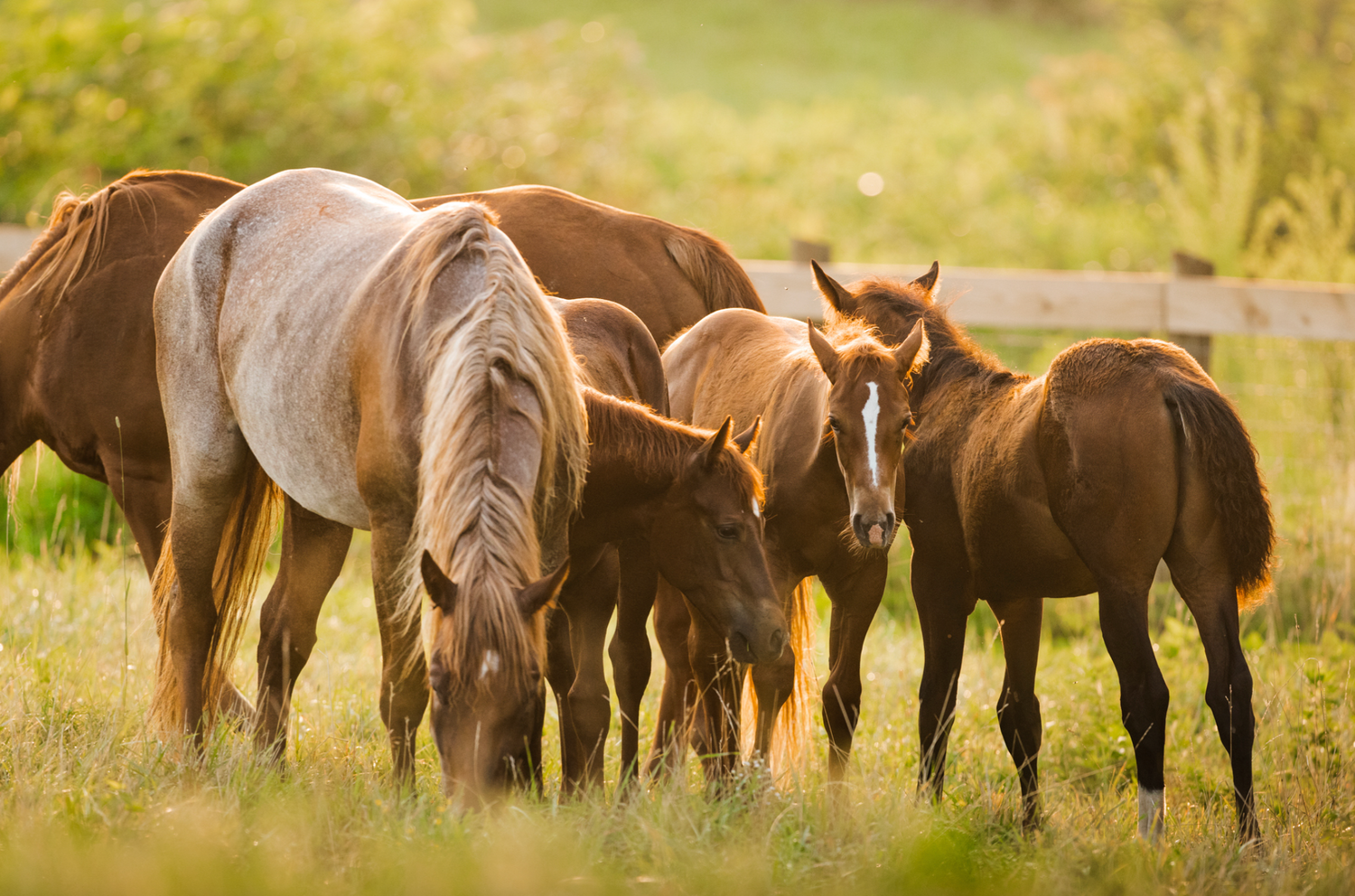
I breed and show AQHA Quarter Horses at Running Springs, our farm in Nolensville, Tennessee, so I get to watch most of these horse facts play out in real life every single day.
Hey y'all, Katie Van Slyke here! Horses have been part of my life for as long as I can remember, and I'm still learning new things about them every single day.
Whether you're into horse showing, horse breeding, or just love fun trivia, I've rounded up some fascinating horse facts that might just surprise you.
So saddle up, here are 11 horse facts you probably didn't know (until now).
What You'll Find in This Guide
- Horses Can't Breathe Through Their Mouths
- Their Teeth Never Stop Growing
- Horses Can Sleep Standing Up
- Their Hearts Are Bigger Than You Think
- Nearly 360° Vision
- They Make Gallons of Saliva Daily
- More Than 40 Teeth in That Long Face
- Horses Can't Vomit
- Hooves Are Made of Keratin
- Horses Can Recognize Human Emotions
- Every Whorl Is Unique
- More Important Facts About Horses
- Horse Facts FAQ
- Meet the Herd at Running Springs
- Final Rein-Down
1. Horses Can't Breathe Through Their Mouths

Horses are obligate nose breathers, which means they can only inhale through their nostrils. This helps them take in large amounts of oxygen during exercise, but it also explains why respiratory health is so important for horse care.
2. Their Teeth Never Stop Growing

An adult horse can have between 36 - 44 teeth, and they keep erupting throughout life. That's why routine dental care, like floating to file down sharp edges, is a non-negotiable part of horse health.
3. Horses Can Sleep Standing Up

Thanks to something called the "stay apparatus," horses can lock their legs and nap without falling over. They'll still lie down for deep REM sleep, but quick standing naps keep them safe in the wild.
4. Their Hearts Are Bigger Than You Think

The average horse's heart weighs about 9 - 10 pounds, that's 10x heavier than a human's! Famous racehorse Phar Lap's heart weighed an incredible 14 pounds, which helped make him a legend on the track.
5. Nearly 360° Vision

With eyes placed on the sides of their head, horses can see almost all the way around them, about 350 degrees. The only blind spots are directly in front of their nose and right behind their tail.
6. They Make Gallons of Saliva Daily

Horses produce up to 10 gallons of saliva a day while grazing. This moisture keeps digestion moving and prevents choke and colic. Chewing isn't just about food, it's about gut health.
7. More Than 40 Teeth in That Long Face

The phrase "long in the tooth" actually comes from horses! With age, their teeth grow longer and more visible. That's one way horse people can estimate a horse's age.
8. Horses Can't Vomit

Because of a strong band of muscles at the top of their stomach, horses physically can't vomit. That's why digestive issues like colic are so dangerous, they can't relieve pressure the way we can.
9. Hooves Are Made of Keratin

A horse's hoof is basically a giant toenail. Made of keratin, the same protein in your hair and nails, hooves need regular trimming and farrier care to stay healthy.
10. Horses Can Recognize Human Emotions

Research shows horses can pick up on our facial expressions, tone of voice, and even stress levels. If you're having a rough day, don't be surprised if your horse notices and reacts.
11. Every Whorl Is Unique

Those swirls of hair on a horse's forehead (called whorls) are as unique as fingerprints. Some old-timers even believe they can predict temperament and behavior.
More Important Facts About Horses

Once you start digging, the list of surprising things about horses just keeps going.
Here's some more important information about horses that fans always find wild, grouped by how their bodies, brains, and instincts work.
These are the same kinds of facts you'll see pop up in quick answers online, so I wanted to lay them out clearly in one place.
Anatomy and Senses
They can rotate their ears almost all the way around. Where humans control each ear with just three muscles, a horse uses about ten, letting them swivel each ear roughly 180 degrees and move the two independently.
According to Extension Horses, that gives a horse nearly 360-degree hearing without ever turning its head, so it can point one ear at you and one at a noise across the field.
Horses don't have a collarbone. Unlike people, a horse has no clavicle connecting its front legs to the rest of the skeleton.
Instead, the front legs are held on by a strong hammock of muscle and connective tissue called the thoracic sling. That muscular attachment is part of what makes horses such smooth, powerful movers.
Behavior and Intelligence
Horses have a memory for emotion. This one goes a step past fact number ten above.
Researchers at the University of Portsmouth and University of Sussex found that horses not only read a person's facial expression but remember it, and treat that same person differently hours later based on whether they'd looked angry or happy. Their long-term memory really is that good.
They're prey animals, through and through. Horses are herd animals with lightning-fast flight instincts, and in a group at least one will usually stay alert while the others rest.
Those quick reflexes and that safety-in-numbers wiring are exactly why the standing-sleep trick in fact number three matters so much.
One-of-a-Kind Facts
Each hoof works like a second heart. There are no muscles down in the lower leg to push blood back up toward the heart, so the hoof does the job.
As the horse steps down, the soft, V-shaped frog and the structures around it compress and pump blood up the leg. Extension Horses explains this is why it's commonly called the horse's "second heart," and it's a big reason movement and turnout matter so much for hoof health.
Foals can stand and run within hours of being born. Horses are what scientists call precocial, meaning babies arrive ready to go.
Per Extension Horses, a foal usually stands within about an hour of birth and is nursing within two, and it can trot and gallop soon after. In the wild, being able to keep up with the herd fast is the difference between life and death.
Watch it happen: the full birth of Raven's foal at Running Springs, from first contractions to those wobbly first steps.
Meet the Boys: VS Code Red & First Thingz First
Frequently Asked Questions About Horse Facts
What are some fun facts about horses?
A few of my favorites: horses can only breathe through their noses, they physically can't vomit, they have nearly 360-degree vision, and each hoof acts like a "second heart" that pumps blood back up the leg. Foals can also stand and run within hours of being born.
Can horses really sleep standing up?
Yes! A horse has a "stay apparatus" that lets it lock its legs and doze without tipping over. They still need to lie down for deep REM sleep, but standing naps let a prey animal rest and stay ready to move at the same time.
Why can't horses throw up?
There's a strong band of muscle where the esophagus meets the stomach that essentially works as a one-way valve, so horses can't vomit or even burp. That's a big part of why colic and other digestive troubles are taken so seriously in horse care.
Do horses recognize human emotions?
They really do. Horses read our facial expressions, tone, and stress, and studies from the University of Sussex and University of Portsmouth found they even remember a person's past emotional expression and adjust how they act around them later. In other words, they hold onto how you made them feel.
How many teeth does a horse have?
An adult horse typically has between 36 and 44 teeth, and those teeth keep erupting throughout life. That constant growth is why routine dental care, like floating down sharp edges, is such an important part of keeping a horse healthy.
Is a horse's hoof really like a second heart?
Yep. There are no muscles in the lower leg to pump blood back up, so every time the hoof hits the ground the frog and surrounding structures compress and push blood up toward the heart. That's why it's nicknamed the "second heart," and why regular movement is so good for hoof health.
Meet the Herd at Running Springs
Every one of these horse facts hits a little different when you're living them out every day. At Running Springs, our Quarter Horse and cattle farm in Nolensville, Tennessee, I breed and show AQHA Quarter Horses and stand two stallions, VS Code Red (Waylon) and First Thingz First (Denver). You can read more about how I got here on my About Me page, and I answer the questions I get asked most in our FAQ.
The horses are just the start. The farm is also home to our famous mini Highland cows like Poppy and Petunia, a crew of mini horses, our mini donkeys, Nigerian dwarf goats, barn cats, and a whole lot more.
Come follow along for the daily chaos on Facebook, Instagram, TikTok, and YouTube.
Final Rein-Down
From massive hearts to unique whorls, these horse facts prove just how incredible our equine partners are. The more we learn about them, the better we can care for them, and the deeper our connection grows.
👉 Which fact surprised you most? Share this list with a fellow horse lover, and drop your favorite fun horse fact in the comments!
About the Author

Hi, I am Katie Van Slyke, and I share my daily life at Running Springs farm with millions of wonderful people online. I am best known for raising a huge variety of animals, from Quarter horses to famous mini Highland cows.
My true expertise lies in hands-on animal husbandry and living an authentic Tennessee outdoor lifestyle. I love bringing my everyday farm adventures and practical experience straight to you!
Sources
The general anatomy, senses, and behavior facts in this article are drawn from the veterinary and university-extension sources below. Figures like heart weight and saliva volume reflect widely reported equine averages.
- Extension Horses: Horse Hearing (ear muscles and 180-degree rotation)
- Extension Horses: Blood Pumping Mechanism of the Hoof (the "second heart")
- Extension Horses: Care of the Newborn Foal (foals standing and walking)
- American Farriers Journal: The Shoulder-to-Thorax Junction (no collarbone / thoracic sling)
- University of Portsmouth: Horses Remember Human Facial Expressions
















2 comments
How do they react to different emotions?
Do they all react the same way to the different emotions?
I recently bonded with 2 horses on an open farm. I would love to share my story with you. I picked the brother (Thunder) and his sister (Lightning) picked me. During this summer 2025, I would camp 4 hours away from my home. I found this farm and started visiting the horses. I quickly bonded with Thunder, then I noticed another horse staring at me, it was his sister Lightning. She’s very timid and doesn’t really like facial contact with humans, however, Lightning became very affectionate with me, responding to my emotions. I have a video of her dancing. I taught her to dance. When I would cry, she would nudge me, stay close and never leave me. Her brother would stare at me from his stall. A couple weeks ago, I climbed in Thunders stall and was FaceTiming my Mom. Thunder was following me around, rubbing his lips on my back, arms, he loved to pull my hair (gently). My Mom said she noticed he was making a fuss over me, he wouldn’t leave me alone, almost jealous that I was talking to my Mom lol. Lightning immediately took to my Mom and went right up to the camera, as soon as she heard her voice. My Mom is also deaf, she was born that way. Lightning appeared to love her voice. She listened to my Mom when she would call her over. Anyways, I would love to share pictures and videos with you. I’m not feeling well today, so I’m going back to bed. Thank you for the videos and sharing your life.