
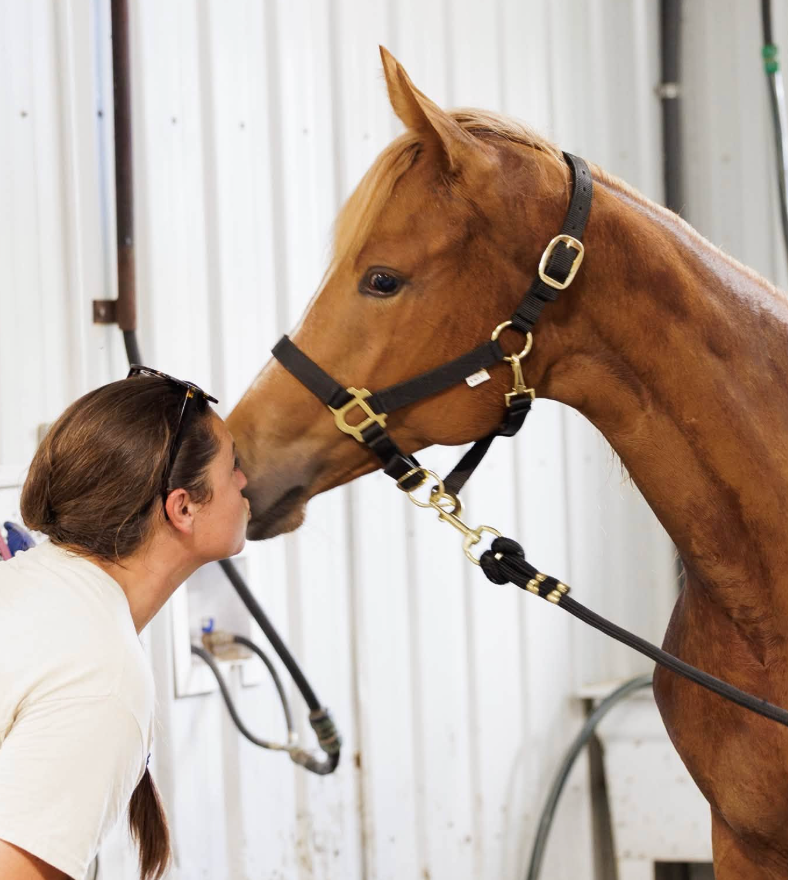
On a farm as full as Running Springs, nobody is ever lonely, and that's completely on purpose. Watching my horses groom each other over the fence, nap nose-to-tail in the sun, and call to their buddies at feeding time is honestly one of my favorite parts of every single day.
Yes, horses need companions. Horses are herd animals, so they feel safe and calm when they have a friend. A horse kept all alone often gets stressed and anxious and picks up bad habits.
The best friend for a horse is another horse, but a pony, mini horse, or donkey works great too, and some horses even bond with a goat or sheep. What matters most is a calm, well-matched buddy, not just any animal nearby.
Key Takeaways
- Horses are herd animals and genuinely need companionship for their mental and emotional wellbeing.
- A solitary horse can develop stress, anxiety, and habits like weaving, pacing, cribbing, or fence-walking.
- The ideal companion is another horse, but ponies, minis, and donkeys are excellent alternatives.
- Goats, sheep, or other farm animals can help, though they don't fully replace mutual grooming with another equine.
- Suitability matters more than just proximity, choose a calm, compatible, healthy friend and introduce them slowly.
- Even one steady companion can transform an anxious horse into a calm, settled one.
If you've ever wondered whether a single horse can be truly happy on its own, the honest answer is that horses are hardwired for company. It's not a preference or a nice-to-have, it's built into who they are as a species.
Understanding why helps you set your horse up for a calmer, healthier, more balanced life. New to horse keeping? My beginner's guide to horse terms is a good place to start building your vocabulary.
Why Horses Need Company

In the wild, horses live in herds for a very simple reason: survival. A lone horse is a vulnerable horse, so over thousands of years they evolved to feel safe only when they're part of a group.
That instinct doesn't switch off just because a horse now lives in a tidy backyard paddock with a run-in shed and a feed bucket.
Safety, grooming, and rest
A companion gives a horse three things it can't give itself.
First, a sense of safety, herds take turns keeping watch, and a horse won't fully relax or lie down to sleep deeply if it feels like the only set of eyes on duty.
Second, mutual grooming, that shoulder-to-shoulder scratching you see horses do isn't just cute, it lowers heart rate and builds bonds.
Third, simple companionship and communication through body language, whinnies, and shared routines.
Meeting those needs is a welfare basic, which is one big reason I keep such a full, social farm, as you'll see in the animal kingdom at Running Springs.
What Happens When a Horse Lives Alone
Keeping a solitary horse is generally considered detrimental to its welfare, and the effects show up in both the mind and the body.
Without a companion, many horses live in a low-grade state of stress and anxiety, always a little on edge, never fully able to switch off.
The behavior you'll see
That stress usually leaks out as behavior. Common signs of a lonely, under-socialized horse include:
- Weaving (rocking side to side), stall-walking, or endlessly pacing the fence line
- Cribbing and other repetitive stable habits
- Separation anxiety, constant calling, and refusing to settle when a neighbor leaves
- Restlessness that can lead to injury, ulcers, or poor body condition
I always tell people that a horse acting "naughty," spooky, or unsettled is very often just a lonely horse asking, in the only language it has, for a friend.
Address the loneliness and a surprising number of "behavior problems" quietly disappear.
The Best Companions for Horses

Not every companion is equal, and it helps to know the pecking order of good options before you go looking.
| Companion | Why it works | Things to know |
|---|---|---|
| Another horse | The ideal match, shares the same communication, grooming, and play needs | Best all-around option; needs space and its own feed |
| Mini horse or pony | Low-maintenance, space- and budget-friendly, fills the equine social need | Watch their weight, minis founder easily on rich grass |
| Donkey | Calm, steady friends that often bond deeply with horses | Have different feed and hoof needs than horses |
| Goats or sheep | Provide company when equines aren't an option | No mutual grooming; secure fencing is a must |
Why I love minis for this
Miniature horses are one of my favorite companion options because they give a horse a true equine friend without the space, feed, and cost of a full-sized horse.
hey speak the same body language, they'll groom over the fence, and they've got personality for days. If you're curious about them, see why mini horses are such petite marvels and come meet Coco, my mini horse.
When Another Horse Isn't an Option

Sometimes a second horse just isn't realistic right now, maybe it's space, budget, or timing.
The good news is that horses are flexible, and a donkey, mini, pony, or even a well-bonded goat can meet much of that social need and take a lonely horse from anxious to settled.
Just go in with your eyes open about the trade-off: non-equine friends like goats and sheep can absolutely provide company, but they don't fully replace the mutual grooming and true herd dynamic that another equine offers.
A goat won't scratch your horse's withers the way another horse will. It's still a huge upgrade over living alone, it's just not quite the same as another horse or a mini.
Herd animals of every kind crave company, which is exactly why I never keep a single cow either, as I explain in my guide to mini cows.
Why Racehorses Have Companion Animals
You've probably seen photos of a racehorse with a goat, a pony, or even a cat as a constant sidekick, and there's real science behind it.
Racehorses often live more isolated, high-stress, high-stimulation lives, hauled to unfamiliar tracks, stalled away from home, and kept on a knife's edge of fitness.
A steady companion animal gives them an anchor of calm in all that chaos.
A settled horse eats better, rests better, and travels better, so that little goat or pony isn't a novelty, it's part of the horse's performance team.
It's the same principle that applies to your backyard horse, just turned up to a professional level: company keeps a horse's nervous system regulated.
If you love our animals as much as I do, you can take a little piece of the farm home, browse the foals merch or check out what's fresh in new arrivals.
Choosing and Introducing the Right Companion

Here's the part people rush and shouldn't: suitability matters far more than simply putting another animal in the field. The wrong match, an aggressive horse, a wildly mismatched energy level, or an animal that hogs the feed, can create more stress, not less.
What to look for
Look for a calm, healthy, compatible personality, and try to match energy levels where you can. An anxious horse usually does far better with a steady, easygoing friend than with another live wire.
Consider feed needs too, since an easy-keeper mini or a donkey on the same rich pasture as a hard-keeping horse can run into weight and laminitis trouble.
Introduce them slowly
Never just toss two strange animals together and hope. Introduce new pairs gradually, ideally across a safe fence line first, so they can sniff, squeal, and sort out their manners without anyone getting cornered or kicked.
Give it days, not minutes.
Once they're relaxed side by side over the fence, supervised turnout together usually goes smoothly. You can see how different personalities end up fitting together in Meet the Herd.
Companionship at Running Springs
Between horses, minis, donkeys, cows, and just about every other animal you can imagine, my crew always has someone to hang out with, and it shows.
I've watched firsthand how much calmer a horse is when it has a buddy, and how quickly a nervous or lonely one perks up once it has a friend to stand nose-to-nose with over the fence.
Company isn't a bonus here at Running Springs, it's a core part of how I care for every animal. When you build a life around herd animals, you learn quickly that their friendships aren't sentimental fluff, they're genuinely how these animals stay healthy and happy.
If you want more of my everyday care philosophy, my frequently asked questions page covers a lot of it.
If you want more from the farm, come follow along on Facebook, Instagram, TikTok, and YouTube.
Long days making sure everyone has a friend and a full trough. My Katie's Classics line is my everyday barn uniform.
The Bottom Line on Horse Companionship
Do horses need companions? Absolutely, without question. Whether it's another horse, a mini, a donkey, or a bonded goat, giving your horse a friend is one of the simplest and most important things you can do for its wellbeing.
A horse with company is a calmer, happier, healthier horse, and once you've watched a lonely horse light up over a new friend, you'll never want to keep one alone again.
Frequently Asked Questions About Horse Companions
Do horses get lonely?
Yes. As herd animals, horses can become genuinely lonely and stressed without company, and it often shows up as anxiety, constant calling, and repetitive habits. Companionship is a real welfare need, not just a nicety.
Can a horse live alone?
A horse can survive alone, but it's generally considered bad for its welfare. Most solitary horses live in a low-grade state of stress and do far better with at least one compatible companion, whether that's a horse, mini, donkey, or bonded goat.
What animals can be companions for a horse?
Another horse is best, followed by ponies, miniature horses, and donkeys, all of which speak the same body language. Goats and sheep can help when an equine isn't possible, though they don't provide mutual grooming or a true herd dynamic.
Why do racehorses have companion animals?
Racehorses often live isolated, high-stress lives with lots of travel and stall time, so a steady companion, frequently a pony, goat, or cat, keeps them calm, helps them eat and rest, and settles their nerves at unfamiliar tracks.
Is one companion enough for a horse?
For many horses, one compatible companion is enough to meet the social need and prevent loneliness. That said, horses are herd animals at heart, so a small group is even better when you have the space, and a bonded pair should ideally not be split up suddenly.
How do I introduce a new companion to my horse?
Go slowly. Start with the animals separated by a safe, sturdy fence so they can meet, sniff, and sort out manners without getting cornered. Give it days, watch for relaxed body language, then move to short supervised turnouts together before leaving them out full time.
About the Author

Hi, I am Katie Van Slyke!
I breed AQHA Quarter Horses at my family farm in Tennessee, stand two stallions, and document foaling season every year from the barn floor while sharing the daily realities of farm life.
I am incredibly lucky to share this journey with millions of friends across YouTube, TikTok, Facebook, and Instagram. You can read the full story of how it all started on my about page.
Sources
The general companionship guidance in this article is supported by the equine references below. Everything about my own animals comes from firsthand experience at Running Springs.










0 comments