
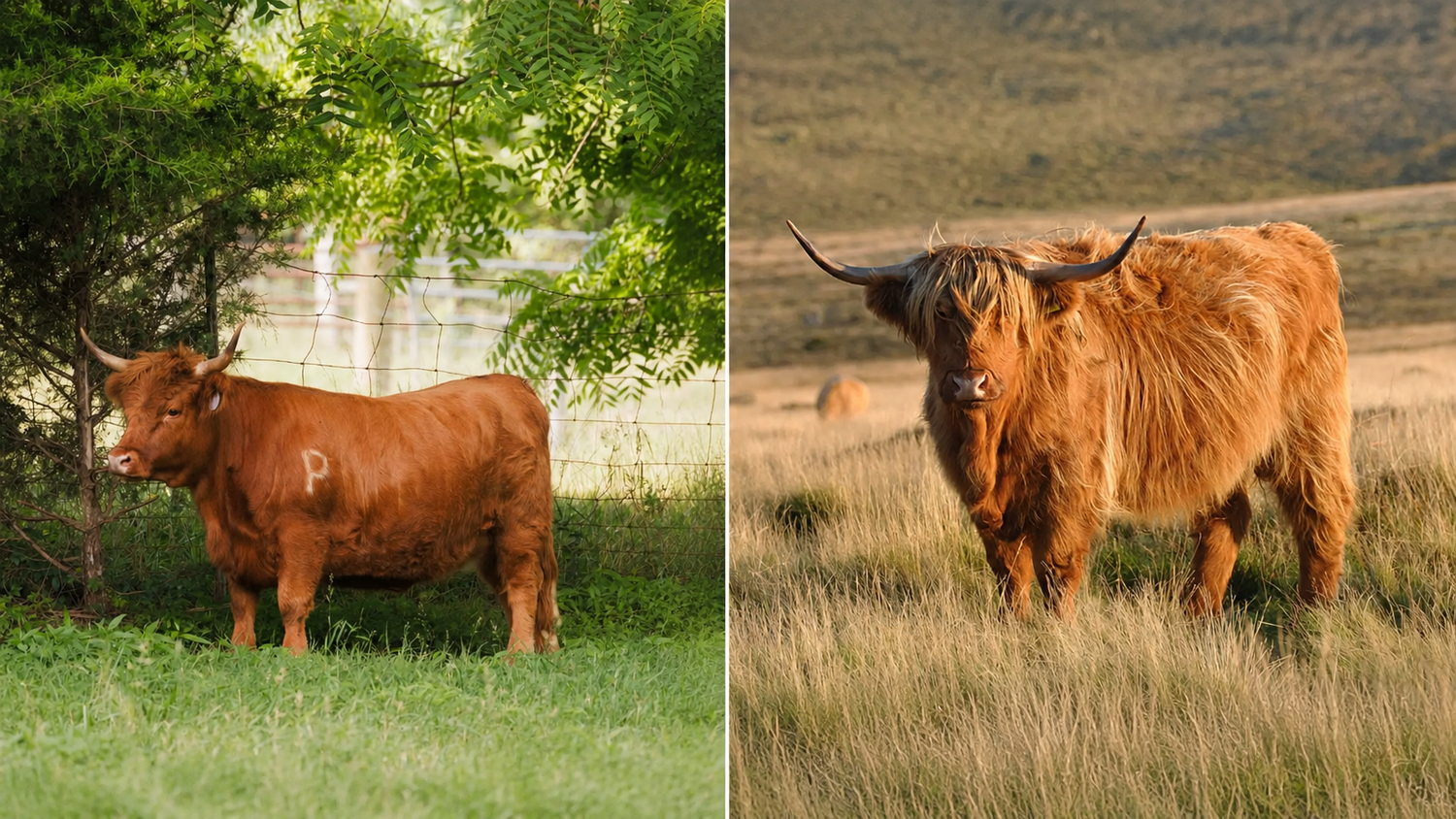
Hi y'all, Katie Van Slyke here! I raise both miniature Highland cattle and full-size Simmental cattle at Running Springs, so I get this question constantly: "What's actually different about a mini Highland cow compared to a regular one?"
The answer is more nuanced than most people think.
Today, I'll break down size, temperament, care needs, cost, and which one is right for your setup. Stick with me, this is a good one.
TL;DR: Mini Highland vs. Regular Highland
Short on time? Here's every key difference at a glance before we dig into the details:
| Factor | Mini Highland | Standard Highland |
|---|---|---|
| Breed | Same breed, bred smaller over generations | Same breed |
| Height (at shoulder) | 36 to 42 inches | 42 to 51 inches |
| Weight | 500 to 900 lbs | 900 to 2,000 lbs |
| Land per cow | 0.5 to 2 acres | 1.5 to 5 acres |
| Feed needs | Roughly 30 to 50% less | More (bigger frame) |
| Purchase price (heifer) | $3,500 to $12,000 | $2,500 to $7,000 |
| Annual feed cost | $300 to $800 | $500 to $1,200 |
| Temperament | Docile; safer and easier to handle | Docile, but much larger |
| Lifespan | 15 to 20 years | 15 to 20 years |
| Best for | Small acreage, pasture pets, beginners, families | 5+ acres, beef, traditional breeding |
Same Breed, Different Size

First things first: miniature Highland cattle are not a separate breed. They're Highland cattle that have been selectively bred over multiple generations to be smaller than standard Highlands.
Both share the same Scottish roots, the same shaggy double-layered coat, the same wide horns, and the same gentle temperament.
The difference is size, and that size difference changes a lot about how you manage them. But genetically? They're the same breed.
If you lined up a mini Highland and a regular Highland side by side, the only thing you'd notice immediately is that one is significantly shorter and lighter.
Size and Weight: The Numbers
This is where the comparison gets concrete. Here's how miniature Highland cattle stack up against their standard-sized relatives:
| Measurement | Mini Highland Cow | Standard Highland Cow |
|---|---|---|
| Height (at shoulder) | 36 to 42 inches | 42 to 51 inches |
| Weight (females) | 500 to 700 lbs | 900 to 1,300 lbs |
| Weight (males) | 600 to 900 lbs | 1,500 to 2,000 lbs |
That's a significant difference in mass. A standard Highland bull can weigh over a ton. A mini Highland bull might top out around 900 pounds.
For hobby farmers and small-property owners, that size gap matters for everything from handling to fencing to how much they eat.
At our farm, our mini Highland cows share pasture near our Simmental cattle operation, and the size contrast is wild. Poppy and Petunia look like babies next to our full-size mama cows. Both groups are gentle, but the handling experience is completely different.
Temperament and Personality
Both mini and standard Highlands are known for being docile, curious, and friendly. Highland cattle in general are one of the calmest breeds out there, and that reputation is well earned.
They're great with people when socialized properly, and they tend to be less flighty than many commercial beef breeds.
That said, there's a practical difference. A mini Highland cow that bumps you in the pasture is pushing 500 pounds. A standard Highland cow doing the same thing is pushing 1,200.
Size makes the interaction safer with minis, especially if you have kids or are new to cattle.
Our mini girls (Poppy, Petunia, Pumpkin, Posie, Pippa, Peanut, Pearl, and Pepper) all have distinct personalities. Poppy is calm and easygoing. Pumpkin and Posie are officially the spiciest cows on the property.
Regular Highlands have personality too, but because minis are often handled more frequently and kept as "pasture pets," they tend to develop stronger bonds with their owners.
Space and Land Requirements

This is one of the biggest practical differences between miniature Highland cattle and standard Highlands, and it's probably the reason most people choose minis in the first place.
| Land Requirement | Mini Highland | Standard Highland |
|---|---|---|
| Minimum per cow | 0.5 to 1 acre | 1.5 to 2+ acres |
| Ideal per cow | 1 to 2 acres | 2 to 5 acres |
Mini Highlands are perfect for smaller properties where a full-size cow simply wouldn't have enough grazing room. They're also easier on the land itself. Their lighter weight means less soil compaction and less wear on pastures, especially during wet seasons.
At Running Springs, we have about 300 acres for the whole operation (horses, big cows, minis, goats, donkeys, the whole crew). But our mini cow area is a fraction of that, and the girls do great with regular pasture rotation.
If Poppy and Petunia have stolen your heart, check out our mini cow merch collection for tees, hoodies, and accessories featuring the whole "P" crew.
Feeding and Nutrition Differences
Both mini and standard Highlands are efficient grazers that can thrive on rough pasture other breeds would struggle with. That's one of the Highland breed's biggest strengths, and it holds true at both sizes.
The difference is volume. A standard Highland cow eats more hay, more grass, and needs more mineral supplementation simply because she's bigger. A mini Highland eats roughly 30 to 50% less than a standard Highland, which translates directly to lower feed costs over time.
Both need:
- Quality pasture grass (primary diet)
- Free-choice hay (especially in winter)
- Loose cattle minerals (always available)
- Fresh water (checked daily)
Neither standard nor mini Highlands typically need grain unless they're lactating, growing calves, or have a specific nutritional deficiency. Keep it simple with both.
Health and Veterinary Care
Health-wise, both sizes share the same general needs: annual vaccinations, routine deworming, hoof trimming, and fly/parasite control.
Highland cattle are a hardy, disease-resistant breed overall, and that resilience carries over to the miniature version.
There are a couple of differences worth knowing:
- Breeding complications. Mini Highland cows can sometimes have calving difficulties if the calf is large relative to the dam's frame. This is more of a concern with micro minis than standard minis, but it's something to discuss with your vet if you plan to breed.
- Cold tolerance. Both sizes handle cold weather exceptionally well thanks to their double coat. However, micro minis with very small frames may need slightly more wind protection than standard Highlands.
- Handling for vet work. Minis are easier to work on simply because of size. Getting a 500-pound cow into a squeeze chute is a very different experience than getting a 1,200-pound cow in there.
At Running Springs, we have a trusted large-animal vet for our cattle program, including our embryo transfer work with the Simmental herd. Having a good vet relationship before you bring any cattle home, mini or otherwise, is essential.
Cost Comparison: Mini Highland vs. Standard Highland
Here's the part that catches most people off guard: mini Highland cows are almost always more expensive to buy than standard Highlands.
| Cost Category | Mini Highland | Standard Highland |
|---|---|---|
| Purchase price (heifer) | $3,500 to $12,000 | $2,500 to $7,000 |
| Annual feed costs | $300 to $800 | $500 to $1,200 |
| Annual vet care | $200 to $600 | $200 to $600 |
| Fencing (per acre) | Similar, but tighter gaps needed | Standard livestock fencing |
The higher purchase price for minis reflects the years of selective breeding it takes to produce truly miniature cattle, plus the intense demand from hobby farmers and social media-driven interest. But the lower ongoing feed costs and smaller land requirements can make minis more economical over their 15 to 20 year lifespan.
Which One Is Right for You?

This really comes down to your property, your goals, and your experience level. Here's my honest take:
A mini Highland cow might be right for you if:
- You have 1 to 5 acres of pasture
- You want a companion animal or "pasture pet"
- You're new to cattle and want something more manageable
- You have kids who will interact with the animals
- You want the Highland look without the full-size commitment
A standard Highland cow might be right for you if:
- You have 5+ acres of grazing land
- You're interested in beef production (Highland beef is lean and high quality)
- You want to start a traditional breeding program
- You have experience with cattle or other large livestock
- You want a hardier, more resilient frame for rough terrain
Both are wonderful animals. I love our minis, and I love our big Simmental cows too. They serve different purposes at Running Springs, and both have earned their place on the farm.
Love the farm life? Browse our Katie's Classics for evergreen favorites that celebrate the Running Springs lifestyle.
The Ethical Side: Breeding Mini Highland Cattle Responsibly
I want to touch on this because it matters. There's a lot of debate in the cattle world about whether breeding for smaller size is ethical. I think it can be done responsibly, but not all breeders are doing it right.
Responsible mini Highland breeding means selecting for smaller-framed animals over multiple generations without compromising health, bone structure, or hardiness. It does not mean starving calves to stunt their growth, or breeding animals with genetic disorders like chondrodysplasia (a dwarfism gene that causes skeletal abnormalities) just to get a smaller cow.
If you're buying a mini Highland, ask about chondro status. Ask to see the parents. Ask how many generations of minis are behind the calf you're looking at. A good breeder will be transparent about all of this. If they're not, find a different breeder.
At Running Springs, our mini Highland cows are all purebred, healthy, and properly socialized. We started breeding our minis in 2025, and we take the same careful approach with them that we do with our quarter horse breeding program.
Shop Running Springs
Whether you're team mini cow, team big cow, or just team "I love all animals," you'll find something at the Running Springs store. Our mini cow collection is a fan favorite, and we've always got new arrivals dropping. Come take a look.
Shop All Running Springs Merch
Choosing Between Miniature Highland Cattle and Standard Highlands

At the end of the day, both mini and standard Highland cattle are hardy, gentle, beautiful animals with a centuries-old heritage. The "right" choice depends entirely on your land, your budget, and what you want from the experience.
If you're drawn to the Highland look but work with limited acreage, a mini Highland cow gives you everything you love about the breed in a more manageable package. If you have the space and want to run a serious cattle operation, standard Highlands are hard to beat.
Either way, you're getting an animal that will charm your socks off and keep you busy at the barn for years to come. And I wouldn't trade that for anything.
Questions? Drop them in the comments or find me on Facebook and Instagram. I love talking cattle with y'all.
Frequently Asked Questions About Mini vs. Regular Highlands
Are mini Highland cows a separate breed from regular Highlands?
No. Miniature Highland cattle are the same breed as standard Highlands. They've been selectively bred over generations to be smaller, but they share the same genetics, coat type, horns, and temperament.
Do mini Highlands live as long as standard Highlands?
Yes, both mini and standard Highland cattle typically live 15 to 20 years with proper care. Some well-managed Highlands live even longer.
Can you breed a mini Highland with a standard Highland?
Technically yes, but it's not recommended. Breeding a mini cow with a standard bull significantly increases the risk of calving complications due to the size mismatch. If you want to breed minis, stick with mini-to-mini pairings or use AI with appropriate-sized semen.
Which is better for beginners, mini or standard Highland?
For most beginners, a mini Highland cow is the easier starting point. They're smaller, easier to handle, need less space, and are generally less intimidating for first-time cattle owners. Standard Highlands are still beginner-friendly compared to many breeds, but their size demands more confidence and infrastructure.
Do mini Highland cows produce less milk and meat?
Yes, proportionally. Mini Highlands produce less milk and less meat per animal, which makes sense given their smaller frame. If beef or dairy production is your primary goal, standard Highlands (or a dedicated beef/dairy breed) would serve you better.
About the Author

Hi, I am Katie Van Slyke, and I share my daily life at Running Springs farm with millions of wonderful people online. I am best known for raising a huge variety of animals, from Quarter horses to famous mini Highland cows.
My true expertise lies in hands-on animal husbandry and living an authentic Tennessee outdoor lifestyle. I love bringing my everyday farm adventures and practical experience straight to you!
Keep Reading
Want to dive deeper into the mini cow world? Try these:









1 comment
This was extremely helpful and spoken in a way I can relate. We just purchased a mini farm in Kentucky with hopes of someday adding 2 of these beauties to our farm. Right now it’s being renovated and not a primary home as of yet. Which has given me time to research all needed. And in one read here I’ve learned so much. Thank you for that. Now if you could do a blog on finding long term, trustworthy farm staff I would be eternally grateful.