
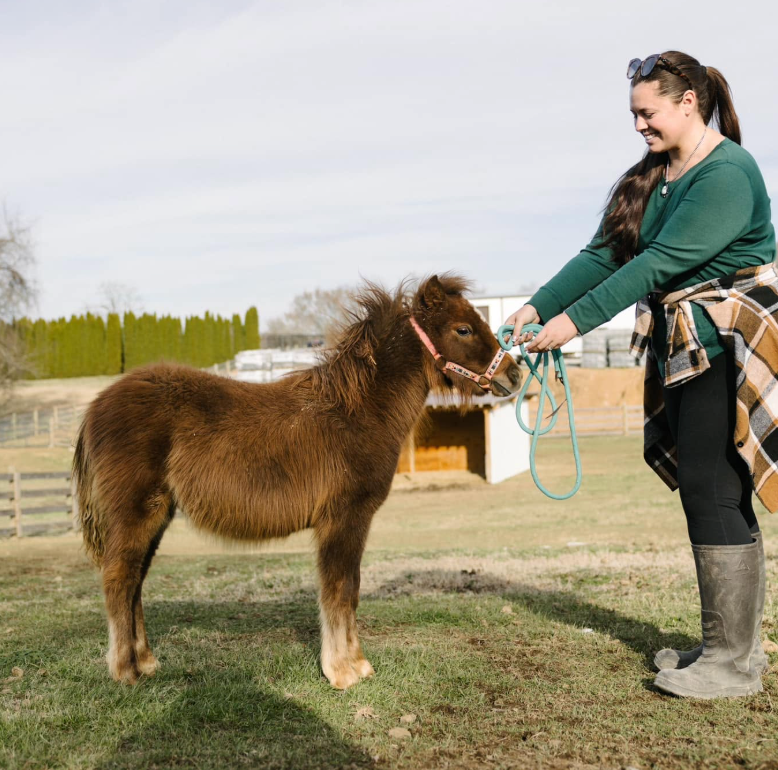
Hi y'all, Katie Van Slyke here! Grooming a horse is one of the very first things you'll learn at the barn, and honestly, it never stops being one of my favorite parts of the day. It's not just about making your horse look pretty (though that's a nice bonus).
Today, I'll walk you through my exact grooming routine step by step, the tools you need, and why horse grooming is so much more than brushing.
Whether you've never picked up a curry comb or you just want a refresher, stick with me.
This post contains affiliate links to products we actually use and recommend at Running Springs. If you buy through these links, we may earn a small commission at no extra cost to you.
Why Grooming a Horse Matters

Before we get into the how, let's talk about the why. Grooming your horse does a lot more than remove dirt. Here's what a good grooming session actually accomplishes:
- Health checks. Every grooming session is a chance to run your hands over your horse's entire body and catch bumps, cuts, swelling, heat, or anything that doesn't feel normal before it becomes a bigger problem.
- Skin and coat health. Brushing stimulates blood flow to the skin and spreads the horse's natural oils through the coat. That's what gives a well-groomed horse that soft, glossy look.
- Bonding. Horses groom each other naturally in herds. When you groom your horse, you're building trust and strengthening your relationship. The horses who get groomed regularly are the ones who are calmest and most connected to their people.
- Comfort under tack. A clean coat means no dirt or debris rubbing under the saddle pad, girth, or bridle. That prevents chafing and keeps your horse comfortable during rides.
- Early problem detection. You'll notice skin conditions like rain rot, scratches, or thrush early when you're grooming daily. Early detection means easier treatment.
At Running Springs, we groom before every ride and honestly most days even when we're not riding. With the number of horses we have, grooming time is when I really connect one-on-one with each animal.
Your Horse Grooming Kit: The Essential Tools
You don't need a fancy setup to get started. Here are the basic horse grooming tools every beginner needs:
| Tool | What It Does |
|---|---|
| Rubber curry comb | Round brush with rubber teeth. Used in circular motions to loosen dirt, mud, and dead hair from the coat. Also feels like a massage to your horse. |
| Stiff brush (dandy brush) | Hard-bristled brush that sweeps away the dirt and debris the curry comb loosened. Used on the body, not on sensitive areas like the face. |
| Soft brush (body brush) | Soft-bristled finishing brush for the body. Gives the coat its shine. |
| Face brush | Extra-soft brush sized for the face and other sensitive areas like behind the ears. |
| Hoof pick | Metal hook (often with a small brush) for cleaning mud, rocks, and debris from the bottom of the hooves. |
| Mane and tail comb | Wide-tooth comb or brush for detangling the mane and tail without breaking hairs. |
| Sponge or soft cloth | For wiping around the eyes, nostrils, and under the tail. |
| Detangler spray | Helpful for working through knots in the mane and tail without pulling out hair. I use TangleFree at the barn. |
| Fly spray | Applied after grooming during warmer months to protect your horse from flies and biting insects. |
Keep everything in a tote or bucket so it's easy to grab and go. I like having a grooming kit near the cross-ties so it's always within reach.
Clean your brushes regularly. Run them against each other or use a stiff brush to knock dirt out of the curry comb after every session. Dirty brushes just push grime around instead of removing it.
How to Groom a Horse: Step by Step

Alright, here's the part y'all came for. This is my exact grooming routine at Running Springs, broken down into simple steps. The whole process takes about 20 to 30 minutes depending on how dirty your horse is (and some of ours get very dirty).
Step 1: Secure your horse

Before you touch a brush, tie your horse or put them in cross-ties. Even the calmest horse can shift, step, or startle during grooming, and you don't want them wandering off mid-session.
Use a quick-release knot if you're tying to a post. If you don't have cross-ties, have a helper hold the lead rope.
Safety first, always. Stand to the side of your horse, never directly behind them. Even gentle horses can kick if they're surprised.
A pocketful of Tribute horse treats goes a long way with horses who are still learning to stand quietly for grooming. I use treats sparingly during grooming as a reward for soft, relaxed behavior, especially with younger horses and recip mares we are still building trust with.
Step 2: Pick the hooves
I always start with the feet. Run your hand down the horse's leg and gently squeeze just above the fetlock. Most trained horses will lift their foot for you.
Support the hoof with one hand and use the hoof pick to clean from heel to toe, removing mud, rocks, manure, and anything else stuck in there.
While you're picking, check for:
- Signs of thrush (a black, foul-smelling discharge in the frog area)
- Cracks in the hoof wall
- Loose shoes (if your horse is shod)
- Any heat or tenderness in the foot
Pick all four hooves, and try to do them in the same order every time. Consistency helps your horse know what to expect.
Step 3: Curry the body
Grab your rubber curry comb and start at the neck on one side. Use firm, circular motions to loosen dirt, dead hair, and dander from the coat. Work your way down the shoulder, barrel, and hindquarters.
The curry comb is where the real cleaning happens. It loosens everything that the brushes will sweep away in the next steps. Most horses love this part because it feels like a deep-tissue massage. You'll know you're doing it right when your horse leans into the pressure or drops their head and relaxes.
Avoid using the curry comb on:
- The face (too sensitive)
- The lower legs below the knee (too bony)
- The spine and bony prominences of the hips and shoulders (use lighter pressure here)
If your horse pins their ears or swishes their tail, you're pressing too hard. Lighten up and pay attention to their signals.
Here's a video of brushing a horse with a curry brush:
@katievanslyke Let’s curry the foals!🐴 #currycomb #horsegrooming #foalsof2025 #foalsoftiktok ♬ Chopin Nocturne No. 2 Piano Mono - moshimo sound design
Step 4: Brush with the stiff brush
Now use your stiff-bristled dandy brush in short, firm flicking strokes to sweep away all the dirt the curry comb brought to the surface. Brush in the direction of hair growth, working from neck to tail on one side, then switch to the other.
This brush does the heavy lifting of actually removing the debris from the coat. You'll see dust flying, and that's exactly what you want. On the legs, use a lighter touch since there's less muscle padding there.

One tool I keep on hand year-round but absolutely cannot live without in shedding season is the SleekEZ brush. It removes dead undercoat, loose hair, dirt, and dander in one easy, gentle pass without pulling the hair or damaging the coat.
When my horses are blowing their winter coats in the spring, this thing comes off the shelf and stays on the grooming tote until they are slick again.
Step 5: Finish with the soft brush
The soft body brush is your finishing tool. Use long, smooth strokes over the entire body, including the lower legs. This brush picks up fine dust, distributes the natural oils, and leaves the coat with that beautiful shine.
For the face, I switch to a smaller face brush and cup my hand under the horse's chin to steady their head. Very gentle strokes around the cheeks, forehead, and bridge of the nose. Most of our horses at Running Springs actually lean into this and love having their faces brushed.
Here's a video of brushing one of our horses at the farm:
Love the barn life? Check out our Katie's Classics collection for everyday farm-life favorites that work as hard as you do.
Step 6: Clean the face and dock
Use a damp sponge or soft cloth to gently wipe the corners of your horse's eyes, their nostrils, and around the muzzle. This removes any crust or discharge and is a great time to check for signs of eye irritation or respiratory issues.
Then, with a separate sponge or cloth (important: separate!), wipe under the tail and around the dock area. Be gentle here, as some horses are sensitive about having their tail area touched.
Step 7: Detangle the mane and tail
Spray any knots with TangleFree detangler, then work through tangles with your fingers first, starting at the bottom and moving up. Follow with a wide-tooth comb once the worst knots are out. Never rip through a tangle, and always stand to the side of your horse when working on the tail, never directly behind.
Want to go deeper on mane care specifically? See my full guide to horse mane care for how we pull, braid, and grow out manes at Running Springs.
Step 8: Apply fly spray (seasonal)
During fly season (basically all of summer here in Tennessee), finish your grooming routine by applying citronella fly spray over the body and legs. Avoid spraying directly on the face; instead, spray a cloth and wipe it gently over the facial area. This protects your horse from biting flies, gnats, and other insects that can cause irritation and spread infection.
Step 9: Final check
Before you walk away or tack up, do one last visual and hands-on check. Run your hands down all four legs, feeling for any heat, swelling, or bumps you might have missed. Check that the coat looks even and healthy. Take a step back and look at your horse's overall condition, body weight, posture, and attitude.
This is what the AQHA calls the real value of grooming: it's not just about cleanliness; it's a daily health assessment built into your routine.
Here's a sample video we have grooming Happy:
Horse Grooming Tips for Beginners

Here are a few extra horse grooming tips I've picked up over the years that I wish someone had told me when I was starting out:
- Develop a routine and stick to it. Groom in the same order every time. Your horse will learn what to expect, and you won't accidentally skip a spot.
- Talk to your horse while you groom. Your voice is calming and helps build trust. I'm always chatting with our horses during grooming. They might not answer back, but they're definitely listening.
- Watch their body language. Ears back, tail swishing, or shifting weight can all tell you something. Maybe you're brushing too hard, or maybe they're sore somewhere. Pay attention.
- Don't skip the hooves. Hoof care is one of the most important parts of grooming. A rock stuck in the frog can cause bruising. Thrush left untreated can get serious. Pick those feet every single time.
- Grooming is not just for before riding. Even on days you don't ride, a quick grooming session is great for your horse's skin, coat, and mental well-being. It's also when you'll catch problems early.
For more care tips beyond grooming, check out our post on extra horse care tips your horse will love. And if you want to see grooming in action, I share a lot of our daily routine on TikTok and YouTube, including the mini horse grooming sessions that fans always go crazy for (if you haven't seen Jack's first bath, you're missing out).
Can't get enough of the Running Springs crew? Browse our newest arrivals for fresh merch drops inspired by the farm and the animals you love.
Grooming for Show Day vs. Daily Grooming

There's a difference between your daily grooming routine and what you do before a show. On a normal day, the steps above are everything you need. But when show day rolls around, we kick it up a notch.
For show prep at Running Springs, we also:
- Bathe the horse a day or two before the show (a full bath with shampoo and conditioner)
- Clip the muzzle, ears, and bridle path for a clean, polished look
- Braid the mane for the ring — see the braiding styles we use at Running Springs for what fits each class
- Apply DAC Lazer HD Shine spray for extra polish (avoiding the saddle area so the saddle doesn't slip)
- Use hoof polish on show day for a finished presentation
We show on the AQHA circuit, so presentation matters a lot. But even if you never set foot in a show ring, a well-groomed horse is a happier, healthier horse. That's what it's really about.
Take a peek on how we groom VS Code Red:
Shop Running Springs
Whether you spend your mornings at the barn or just wish you did, there's something for every horse lover at the Running Springs store. Check out the mini horse collection for gear inspired by our mini herd, or explore the full catalog for tees, hoodies, hats, and more.
Shop All Running Springs Merch
Grooming a Horse: The Habit That Changes Everything
Learning how to groom a horse is about so much more than keeping a clean coat. It's the foundation of good horse care, and it's where your relationship with your horse really starts to grow. Every time you pick up that curry comb, you're telling your horse, "I'm here. I'm paying attention. I care about you."
I groom horses every single day at Running Springs, and it's still one of my favorite parts of the routine. It's quiet, it's grounding, and it's the time when I notice the little things: a new scratch on someone's leg, a mare who seems a little off, or a foal who's finally comfortable being handled.
Start simple. Follow the steps above. Be patient with yourself and with your horse. And before you know it, grooming will be second nature, and your horse will love you for it.
Thanks for reading, y'all. Questions? Come find me on Facebook or Instagram. I'm always happy to talk horse care.
Frequently Asked Questions About Horse Grooming
How often should you groom a horse?
Ideally, every day, even on days you don't ride. At minimum, always groom before and after riding. Daily grooming keeps the coat and skin healthy, and it's your best opportunity to catch injuries or health issues early.
How long does it take to groom a horse?
A thorough grooming session takes about 20 to 30 minutes. If your horse is especially dirty or you're doing show prep, it can take longer. With practice, you'll get more efficient without cutting corners.
Can you groom a horse too much?
Regular brushing is great, but avoid over-bathing. Frequent baths strip the natural oils from the coat. Most horses only need a full bath a few times a season (or before a show). Daily brushing does the heavy lifting.
What if my horse doesn't like being groomed?
Start slow and gentle. Some horses are sensitive in certain areas or haven't been handled much. Use a softer brush, talk calmly, and let them get comfortable. If they consistently react to grooming in a specific spot, it might indicate pain, and that's worth a vet conversation.
Do you need to groom a horse that lives outside?
Yes! Horses that live on pasture still benefit from regular grooming. They'll often be dirtier than stabled horses, and grooming gives you the chance to check for injuries, ticks, skin conditions, and hoof problems.
Keep Reading
Want more horse care tips from Running Springs? Check these out:
Sources
Horse health, grooming best practices, and skin care guidance referenced in this article come from the following equestrian and veterinary resources, plus our own first-hand experience at Running Springs.
About the Author

Hi, I am Katie Van Slyke!
I breed AQHA Quarter Horses at my family farm in Tennessee, stand two stallions, and document foaling season every year from the barn floor while sharing the daily realities of farm life.
I am incredibly lucky to share this journey with millions of friends across YouTube, TikTok, Facebook, and Instagram. You can read the full story of how it all started on my about page.
















0 comments