
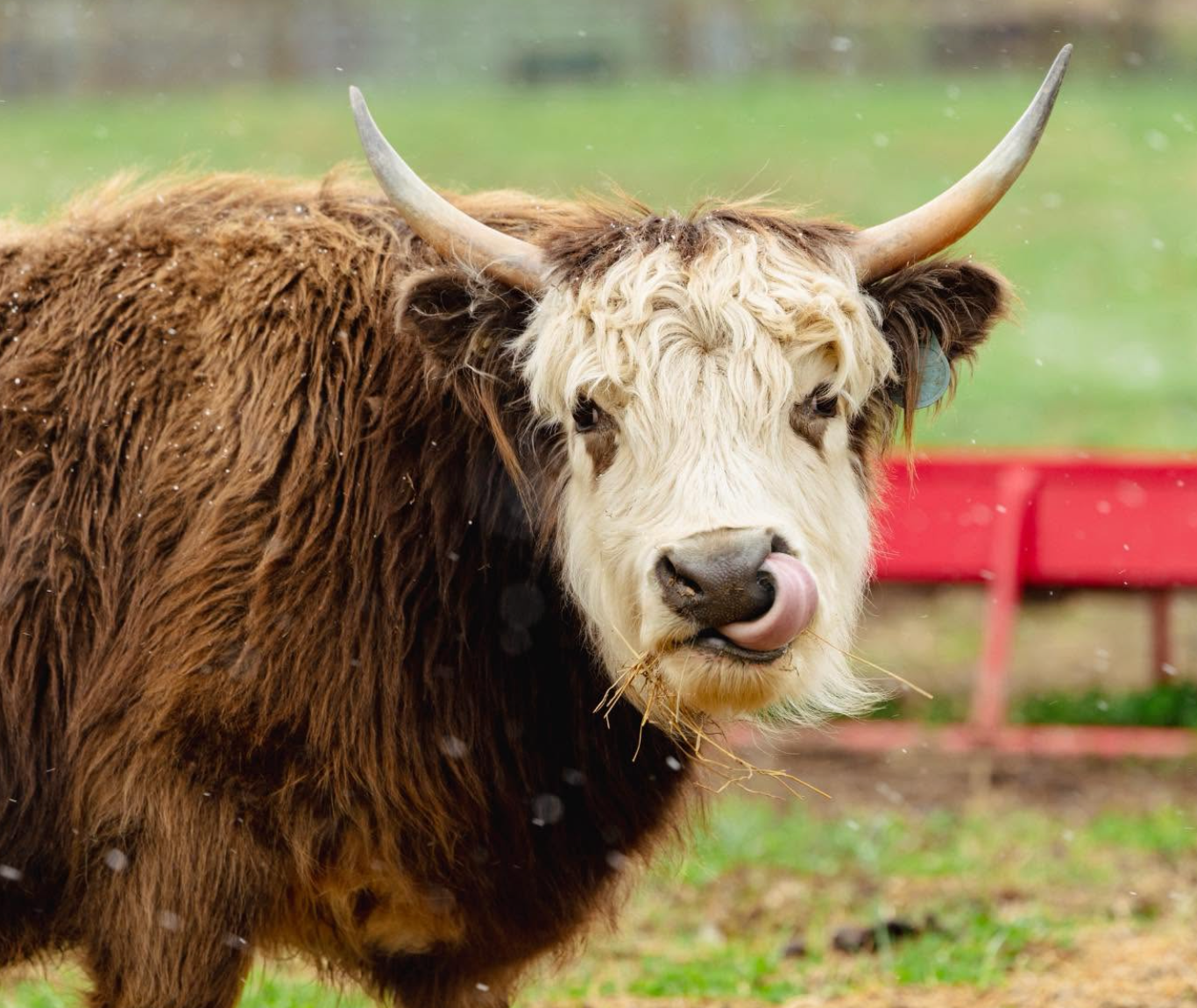
Short answer: yes, female Highland cows absolutely have horns. In fact, both male (bulls) and female (cows) Scottish Highland cattle grow large, distinctive horns. It's one of the most defining features of the entire breed, and it's been that way for centuries.
But male and female Highland horns don't look identical. There are real, recognizable differences in shape, length, and angle that any longtime breeder or experienced eye can spot in seconds.
Here's everything you need to know about Highland cow horns, including the male vs. female differences, why they have horns in the first place, how they grow, and whether polled (hornless) Highlands exist.
Table of Contents
- Yes, Female Highland Cows Have Horns
- Male vs. Female Horn Differences
- Why Do Highland Cows Have Horns?
- How Big Do Highland Cow Horns Get?
- Horn Growth Timeline by Age
- Do Steers Have the Same Horns as Bulls?
- Are There Hornless (Polled) Highland Cows?
- Do Mini Highland Cows Have Horns Too?
- Are Highland Cows Dangerous?
- Should You Dehorn a Highland Cow?
- The Bottom Line
- Frequently Asked Questions
Yes, Female Highland Cows Have Horns

Highland cattle are a naturally horned breed. According to the American Highland Cattle Association, both bulls and cows grow horns, and the horns are a core part of how the breed is identified, judged, and registered.
The Highland Cattle Society in the UK, which has set the breed standard since 1885, describes the horns as one of the defining features that "give the animal a stamp of nobility."
This is one of the things that makes the breed so visually unique. Many modern beef breeds (like Angus and Hereford) have been bred to be naturally polled or are dehorned for safety. Highlands are the opposite. The horns are protected as part of the breed identity.
Highland Cow Male vs. Female Horn Differences

The easiest way to tell a Highland bull from a cow at a glance, once you know what to look for, is by the horns.
Female horns are "upswept and finer textured," while male horns are "more forward pointing and massive."
| Feature | Female (Cow) Horns | Male (Bull) Horns |
|---|---|---|
| Thickness | Narrower at the base, finer overall | Thicker, more massive at the base |
| Length | Generally longer at the tips | Shorter and stouter |
| Direction | Sweep upward, often dramatically | Come out level, curve forward |
| Upward curve | Pronounced upward curl near tips | Only slight rise at the tips |
| Overall impression | Elegant, sweeping, "majestic" | Masculine, powerful, defensive |
The Highland Cattle Society notes that there are actually two classical horn shapes for cows: one that comes out squarely from the head and rises upward, and another with a "peculiar back set curve" that creates a wider sweep.
Both are accepted within the breed standard. Bull horns, by comparison, are more uniform: out level with the head, slight forward curve, and only a small upward tip.
Why Do Highland Cows Have Horns? The Purpose Behind Them
Highland horns aren't just for looks. They evolved over centuries in the harsh Scottish Highlands and serve real, practical functions even today. Their horns are "used primarily for knocking down brush to graze, predator control and scratching."
Here's what those horns actually do:
- Foraging tools. Highlands use their horns to push through brush, knock down branches, and clear snow to reach grass underneath. This is part of what makes them such efficient browsers in tough terrain.
- Predator defense. In their native Scotland predators are rare today, but historically and in places like North America where Highlands have been imported, horns help protect against wolves, coyotes, and other threats, especially to calves.
- Social hierarchy. Cattle use horns to establish pecking order within the herd. Watching ours, you can see who's boss without anyone ever getting hurt.
- Scratching. Yes, really. Highlands use their horns to scratch hard-to-reach itchy spots.
- Thermoregulation. Horns have blood vessels running through them, which helps Highlands shed excess heat in warmer weather. Their thick coat keeps them warm in winter; their horns help them not overheat in summer.
How Big Do Highland Cow Horns Get?

Highland horns are seriously impressive. Mature cow horns can reach more than three feet from tip to tip, and in some exceptional females the spread can approach 5 feet. Bull horns tend to be shorter but visually heavier and more substantial.
Horns keep growing throughout a Highland's lifetime, though the growth slows significantly after about 3 years of age. An older cow's horns can look genuinely dramatic, which is part of the reason aged Highland cows are so often photographed.
Highland Cow Horn Growth Timeline by Age
Highlands are born without visible horns, just small bony horn buds under the skin. The horns push out and develop over the first few years of life. Here's what to expect at each stage.
| Age | Horn Development |
|---|---|
| Birth | Tiny horn buds, not yet visible from a distance |
| 2 to 3 months | Buds become noticeable as small points |
| 6 to 9 months | Horns clearly visible with hooked tips on heifers |
| 12 to 18 months | Significant growth; female horns start curving upward |
| 2 to 3 years | Mature horn shape established |
| 3+ years | Slower continued growth; horns lengthen and thicken throughout life |
One thing experienced Highland breeders watch for: in young heifers, healthy horns will have a small hooked tip up to around 18 months old. Those hooks are a good sign, suggesting the animal hasn't had any horn trauma early in life and will develop a beautifully shaped mature set.
Do Steers Have the Same Horns as Bulls?
Here's an interesting one. When a male Highland is castrated as a calf (becoming a steer) and never dehorned, his horns grow in a shape that looks more like a female's than a bull's. They come up taller and curve upward more dramatically.
The widely accepted explanation is that testosterone influences how bull horns develop. Without the same level of testosterone, steer horns grow in the more upward shape typical of cows. A full-grown Highland steer that hasn't been dehorned can have absolutely enormous, sweeping horns, sometimes longer than any cow or bull in the herd.
Are There Hornless (Polled) Highland Cows?

This is where things get interesting. Naturally polled (hornless) cattle exist across many breeds. UC Davis Veterinary Genetics Laboratory notes that the polled gene exists in many European cattle breeds, and Highland is among the breeds appropriate for polled vs. horned DNA testing. So genetically, it is possible to find polled Highlands.
That said, naturally polled Highlands are extremely rare and are not considered breed-standard. The Highland Cattle Society's breed standard, established in 1885 and largely unchanged since, treats horns as fundamental to the breed.
Polled animals generally aren't accepted in the show ring or registered as breed-typical Highlands. If you see a "Highland" without horns, it's almost always been dehorned rather than born without them.
Do Mini Highland Cows Have Horns Too?
Yes. Miniature Highland cattle are still Highlands, and they still grow the same distinctive horns. The horns just appear in proportion to their smaller frame, which can actually make them look even more dramatic on a 36 to 48 inch animal.
Most of our mini Highland girls at Running Springs are horned. Poppy and Petunia were our very first mini cows, and our little herd has grown to eight mini Highland girls since.
Watching Poppy, Petunia, Pumpkin, and the rest of the "P" crew grow their horns over the first three years has been one of the most fun parts of raising them. Each one is developing her own slightly different shape, which is true to the breed standard noting two acceptable types of cow horns.
If you're thinking about adding a mini Highland to your farm, this is something to plan for. Even at a smaller size, those horns are real, sharp, and need to be respected. Our girls have never hurt anyone, but I always handle them with the awareness that they're armed.
Are Highland Cows Dangerous Because of Their Horns?
Highlands have a well-deserved reputation as one of the calmest, most docile cattle breeds. The Livestock Conservancy lists them as having a docile temperament and notes they're suitable for novice to intermediate keepers.
That said, those horns are real weapons even on a calm animal. A few things to keep in mind:
- Cow-calf protectiveness. Highland mothers are intensely protective of their babies. Even the most chill cow can get serious if she thinks her calf is in danger.
- Personal space matters. Highlands respect personal space when they're respected in return. Pressuring them into corners is when accidents happen.
- Don't get between two horned cows. When they're playing or establishing pecking order, those horns swing wide.
- Mind your kneecaps. Even an accidentally swinging cow head can connect with a knee if you're standing too close. Be aware of where their horns are.
Should You Dehorn a Highland Cow?
This is a debated topic in the Highland world. Some breeders dehorn for safety, easier handling in tight spaces, or smaller-acreage operations where horned cattle present management challenges.
But the strong consensus in the Highland community, and in both the American Highland Cattle Association and Highland Cattle Society UK breed standards, is that horns are integral to the breed.
Many Highland breeders feel that if you don't want horned cattle, you should choose a naturally polled breed like Angus, Red Poll, or Galloway, rather than altering a horned breed. We don't dehorn at Running Springs, and we don't plan to.
That said, dehorning of steers being raised for beef is more common and considered more practical, since horns serve less purpose in that context.
Meet the Herd at Running Springs
Running Springs is our family farm in Nolensville, Tennessee. We raise Simmental cattle, miniature Highland cattle, quarter horses, mini horses, mini donkeys, Nigerian dwarf goats, and a whole lot of personality in between. Our miniature Highland girls (Poppy, Petunia, Pumpkin, Posie, Peanut, Pearl, Pepper, and Pippa) are the stars of a lot of our social content, and you can watch them in action across our channels.
If you want more from the farm, come follow along on Facebook, Instagram, TikTok, and YouTube. And if you want to take a piece of the herd home with you, our mini cow merch collection features designs inspired by Poppy, Petunia, and the rest of the "P" crew.
The Bottom Line on Highland Cow Horns
Female Highland cows do have horns, and so do the bulls. The shape, size, and angle tell you the sex at a glance once you know what to look for: females sweep upward and finer, males come out level and thicker. The horns aren't a flaw or a hazard to be designed out of the breed. They're part of what makes a Highland a Highland, and they serve real purposes in foraging, defense, and herd life.
If you're considering adding a mini Highland to your farm, plan for the horns. Respect them, build trust slowly, and you'll have one of the most rewarding animals you've ever owned. That's exactly what our girls at Running Springs have been for us.
Frequently Asked Questions About Highland Cow Horns
Do all Highland cows have horns?
Almost all Highland cattle, both male and female, are horned. The breed standard set by the Highland Cattle Society treats horns as a core breed characteristic.
Polled (naturally hornless) Highlands do exist genetically but are extremely rare and not considered breed-typical. If you see a Highland without horns, it has most likely been dehorned rather than born polled.
How can you tell a male Highland cow from a female by the horns?
Female (cow) horns are finer, sweep upward, and are generally longer at the tips. Male (bull) horns are thicker and more massive, come out level with the head, and curve slightly forward with only a small upward rise at the tip.
We can sum it up as female horns being "upswept and finer textured" and male horns being "more forward pointing and massive."
Why do Highland cows have horns?
Highland cows use their horns for foraging (knocking down brush and clearing snow), predator defense, scratching, social ranking within the herd, and even thermoregulation since horns help dissipate heat.
They evolved in the harsh Scottish Highlands where these were genuinely useful adaptations.
When do Highland cows grow their horns?
Highland calves are born with small horn buds rather than visible horns. By 2 to 3 months they're noticeable, and by 6 to 9 months they're clearly visible with hooked tips on heifers.
Mature horn shape is generally established by 2 to 3 years of age, with continued slow growth throughout life.
How long are Highland cow horns?
Mature Highland cow horns can reach more than three feet from tip to tip, and exceptional females can have a horn span approaching 5 feet.
Bull horns are typically shorter but visually thicker and more massive. Horn size depends on genetics, age, and overall health.
Are Highland cows dangerous because of their horns?
Highland cattle are one of the most docile beef breeds and rarely use their horns aggressively against humans. That said, those horns are real weapons even on a calm animal, especially when cows are protecting calves or moving around in tight spaces.
Respectful handling, gentle daily routines, and giving them their space are the keys to safety.
Do mini Highland cows have horns?
Yes. Mini Highland cattle are still Highlands and they still grow the breed's signature horns.
The horns scale proportionally to the animal's smaller size but follow the same male vs. female pattern as standard Highlands. Most of our miniature Highland girls at Running Springs are horned.
About the Author

Hi, I am Katie Van Slyke, and I share my daily life at Running Springs farm with millions of wonderful people online. I am best known for raising a huge variety of animals, from Quarter horses to famous mini Highland cows.
I am incredibly lucky to share this journey with millions of friends across YouTube, TikTok, Facebook, and Instagram. You can read the full story of how it all started on my about page.
Sources
Breed standard descriptions, horn characteristics, and breed-association facts in this article come from the following authorities. Personal observations come from our own experience raising mini Highland cattle at Running Springs.













0 comments