
Written from hands-on experience running a working Quarter Horse breeding barn at Running Springs, home to newborn foals, performance mares, and a gelding in his mid-twenties.
When it comes to horse care, there's no shortage of videos and articles explaining the basics: good feed, clean water, regular hoof trims, and a safe environment.
But for those of us who treat our horses like family, and sometimes better than ourselves, there's a whole other level to horse care that's worth exploring. I'm talking about the extras.
The things that go above and beyond, not just for your horse's health, but for their comfort, longevity, and overall happiness.
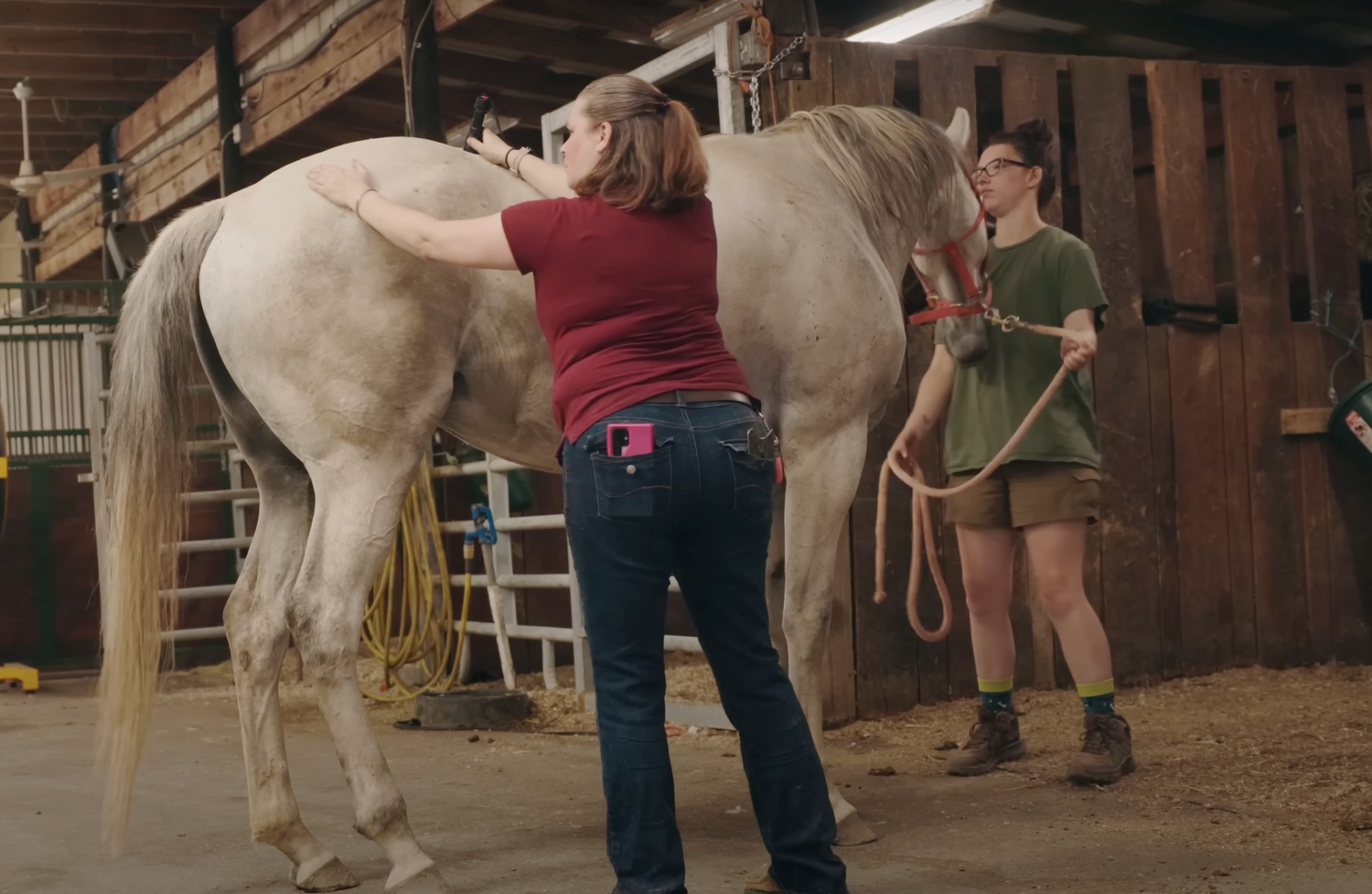
Hi, I'm Katie Van Slyke, and today I want to talk about the additional therapies and techniques I've added to my program, from chiropractic adjustments to acupuncture, dental care, and equine massage.
These are not only vital tools for the aging horses in my barn but also for our high-performance mares, foals, and everything in between.
- Start With the Basics: Everyday Horse Care
- Equine Acupuncture: More Than Just Needles
- Equine Chiropractic: Keeping the Body in Alignment
- Equine Dentistry: Why a Healthy Mouth Matters
- Equine Massage: A Little Luxury That Goes a Long Way
- Extra Care for Senior Horses
- Other Complementary Therapies Worth Knowing About
- Equine Therapies at a Glance
- Bringing It All Together: Holistic Horse Care
- Frequently Asked Questions About Horse Care
Start With the Basics: Everyday Horse Care

Before we get into the extras, here's the foundation every good horse care routine is built on. Nail these first, and everything else becomes the icing on the cake:
- Forage first: Most horses should eat about 2% to 2.5% of their body weight in hay or pasture each day, with roughage making up the bulk of the diet. Grain is a supplement, not the main event. If you want to dig into feeding, here is how we handle nutrition at the barn.
- Fresh water always: A horse drinks roughly 8 to 12 gallons a day, and more in heat or heavy work, so clean, unfrozen water should never run out.
- Shelter and turnout: Horses need protection from sun, wind, and rain, plus daily turnout to move and socialize. They are herd animals and do best with company.
- Hoof care: Plan on a farrier visit every 6 to 8 weeks for trimming or shoeing to keep your horse sound.
- Dental and health checks: Schedule a dental exam at least once a year, and work with your vet on a vaccination and deworming program suited to your horse's age, travel, and region.
- Daily grooming: A quick daily groom boosts circulation and is your best chance to catch cuts, heat, or swelling early. Totally new to horses? Here is what to expect around the barn.
Once those basics are dialed in, the extras below are where you can really level up your horse's comfort. Here's what I've added at Running Springs.
Equine Therapies at a Glance
Here's a quick side-by-side of the therapies I lean on and a couple of others you may run into, including what each one tends to help with and who should be doing it.
Across the board, veterinary groups describe these as complementary or "therapeutic options" that work alongside routine veterinary care, not in place of it. Acupuncture in particular is considered a medical procedure that should be performed by a licensed veterinarian with special training.
| Therapy | What it can help with | Who should perform it |
|---|---|---|
| Acupuncture | Pain relief, inflammation, nerve pain, supporting healing | A licensed veterinarian trained in veterinary acupuncture |
| Chiropractic | Stiffness, spinal and joint alignment, uneven movement | A veterinarian or certified animal chiropractor working with your vet |
| Dentistry (floating) | Chewing, weight, comfort, saddle fit | A qualified equine dentist or veterinarian |
| Massage | Muscle soreness, circulation, range of motion, relaxation | A trained equine massage therapist |
| PEMF | Circulation, soreness, soft tissue recovery | A vet or trained practitioner, guided by your vet |
| Cold laser (LLLT) | Targeted pain and inflammation | A vet or trained practitioner |
| Hydrotherapy / cold therapy | Swelling and inflammation, especially in the legs | Per your vet's rehab plan |
Equine Acupuncture: More Than Just Needles

Let's start with one that's been surprisingly impactful: acupuncture. Now, if you're like me, the idea of sticking a bunch of needles into your horse might sound a little... unconventional. But after talking to multiple specialists and witnessing the results firsthand, I've become a believer.
Unlike Western medicine, acupuncture comes from a completely different school of thought, traditional Chinese medicine.
When my vet demonstrated a technique called "circle the dragon," which involves needling around a wound to speed up healing, I was stunned by how fast we saw improvement.
It's all about encouraging blood flow, releasing inflammation (or "heat" as it's called in Chinese medicine), and supporting muscle groups, tendons, and overall balance.
Equine Chiropractic: Keeping the Body in Alignment

I mentioned chiropractic care up top, and it has truly earned its place in our routine. Equine chiropractic focuses on the spine and joints, using controlled adjustments to restore normal motion where a horse has gotten stiff, sore, or a little out of alignment.
For a horse that has started refusing a lead, hollowing its back, or moving unevenly, the right adjustment can bring real relief.
Like acupuncture and massage, I lean on it most for our aging horses and our hard-working performance mares, the ones whose bodies take the most wear and tear.
I always have it done by a certified professional working alongside my vet, never as a substitute for veterinary care. When the whole body moves freely, everything from saddle fit to attitude under saddle tends to improve.
Equine Dentistry: Why a Healthy Mouth Matters

Image source: thehorse.com
If you follow me on social media, you've probably met Bo, my 25-year-old gelding who's still full of life and sass.
He recently started dropping grain from his mouth and losing weight, even though he's on the same diet and medications as always. So, we called in Jay Atwell, an equine dentist here in Tennessee, to take a deeper look.
Turns out, Bo had some serious ridge buildup and jaw lock from not being able to chew side-to-side properly. Once Jay floated his teeth and evened out the molar table, Bo's entire demeanor changed, he could eat better, move better, and was just a happier horse.
His temporomandibular joint (TMJ) was finally able to release, and that made a huge difference in his comfort level and movement under saddle.
Dental care is one of the most overlooked parts of horse care, but it can impact everything from weight maintenance to saddle fit, performance, and more.
And as I've learned with my mares, especially those who are currently part of our horse breeding program, proper dental alignment is key before pregnancy, during gestation, and after foaling.
Equine Massage: A Little Luxury That Goes a Long Way

Massage might sound like a spa treatment, but for horses, it's a powerful tool for reducing muscle soreness, increasing blood circulation, and helping with mobility issues, especially in older or hard-working horses.
I've started incorporating regular massage sessions for some of my more nervous or aging horses, and the results have been amazing. Horses that once flinched when touched are now more relaxed and accepting.
They even seem to enjoy being groomed more. Bo, of course, thinks it's the best thing that ever happened to him, he zones out like he's living his best life during every session.
Massage has also helped improve range of motion and reduce inflammation, which is a huge win for senior horses and performance horses alike.
Extra Care for Senior Horses
Bo is the reason this section exists. Most horses are considered seniors somewhere in their mid to late teens, roughly 15 to 18, though plenty stay healthy and useful well into their twenties and thirties.
Age is really just a guide. What matters more is watching each horse for changes and adjusting their care as they need it.
As they get older, two things tend to catch up with them: their teeth wear down, and their digestion gets less efficient. That is exactly what we ran into with Bo, and it is why senior horses benefit from a dental check at least once a year, with some needing one every six months once their teeth start to give out.
Alongside that, keep a close eye on body condition and lean on a diet that is easy to chew and digest, since complete senior feeds are built for horses whose mouths cannot handle long-stem hay as well anymore.
One thing that surprised me: saddle fit is worth rechecking as a horse ages, because an older horse's topline changes and a saddle that fit at ten may not fit at twenty.
Between good dental work, the right feed, and the therapies above, a senior horse can stay comfortable and full of personality for years, just like Bo.
Other Complementary Therapies Worth Knowing About

Beyond the hands-on care I use every week, there are a few tech-driven therapies you will hear about more and more in performance and rehab barns.
Pulsed electromagnetic field therapy, usually shortened to PEMF, uses gentle magnetic pulses to stimulate cells and encourage circulation.
Vets have reached for it since the late 1970s, first mainly for fractures, and today use it to help with soreness, soft tissue recovery, and inflammation. The research in horses is still catching up, so it works best as one piece of a plan you build with your vet.
Cold laser therapy, also called low-level laser therapy, targets a specific spot to help calm pain and inflammation.
Hydrotherapy and cold therapy, like cold hosing or ice boots, do something similar for tired or swollen legs.
You will most often see these built into a broader rehab program right alongside massage, chiropractic, and controlled exercise rather than used on their own.
These extras support your vet, they do not replace them. If a horse is truly off or in pain, the first call is always to the veterinarian for a proper workup. Everything on this list works best on top of solid basic care and a real diagnosis, never in place of one.
Bringing It All Together: Holistic Horse Care
While I know not every horse owner has the budget to do all these things, and not every horse needs them, it's important to know what tools are out there. The more educated we are about the options, the better decisions we can make for our animals.
As someone who is deeply involved in horse breeding, raising foals, and managing a full barn of horses at every stage of life, I've learned that going the extra mile in horse care isn't just about fixing problems. It's about preventing them, improving performance, and giving each horse the chance to feel their best.
So whether you're training a young performance horse, maintaining a senior companion, or raising the next generation through your own horse breeding program, remember, those "extras" can make all the difference.
From acupuncture and dentistry to a good old-fashioned massage, I hope this gives you some inspiration to try something new in your care routine. And as always, thank you for following along with me on this journey.
Frequently Asked Questions About Horse Care
What are the basics of horse care?
The foundation is a forage-based diet, constant clean water, shelter with daily turnout and companionship, regular farrier and dental care, a vet-guided vaccination and deworming plan, and daily grooming. Everything else, including the extras in this post, builds on top of those basics.
How often should a horse see a dentist?
Most horses need a dental exam at least once a year. Seniors, performance horses, and broodmares often benefit from more frequent checks, since problems like the ridge buildup we caught with Bo can quietly affect weight, comfort, and even saddle fit.
How often should a horse's hooves be trimmed?
Plan on a farrier visit roughly every 6 to 8 weeks, whether your horse is barefoot or shod. The exact timing depends on hoof growth, workload, and the season.
Does acupuncture really work on horses?
Many owners and vets, myself included, see real benefits for pain relief, inflammation, and healing. It should always be performed by a trained veterinary professional, and it works best alongside good basic care rather than in place of it.
How often should a horse get chiropractic or massage?
It varies by the individual horse. Many do well with periodic sessions, especially senior horses and hard-working performance horses. Work with a certified professional and your vet to set a schedule that fits your horse's workload and comfort.
What is holistic horse care?
Holistic horse care means supporting the whole horse by pairing solid basics with complementary therapies like dentistry, acupuncture, chiropractic, and massage. The goal is to prevent problems and keep your horse comfortable, not just to treat issues after they show up.
At what age is a horse considered a senior?
Most horses are called seniors somewhere in their mid to late teens, roughly 15 to 18, though plenty stay healthy and active well into their twenties, like my Bo. Age is really a guide. What matters more is watching each horse for changes in weight, teeth, and energy and adjusting their care as they need it.
Does PEMF therapy really work on horses?
A lot of vets and performance barns use PEMF for circulation, soreness, and soft tissue recovery, and it has been part of veterinary medicine since the 1970s. The research in horses is still growing and results can be mixed, so I think of it as a helpful tool inside a plan with your vet rather than a cure-all.
Can someone who is not a vet do horse acupuncture or chiropractic?
Equine acupuncture is considered a medical procedure, so it should be done by a licensed veterinarian with special training. Chiropractic should be handled by a veterinarian or a certified animal chiropractor working with your vet. For anything hands-on like this, I always go through a trained professional alongside my own vet.
Sources
Care, aging, and therapy facts in this post come from the veterinary and university sources below. Anything about my own horses and barn comes from firsthand experience at Running Springs.
- University of Tennessee College of Veterinary Medicine, Equine Acupuncture
- University of Minnesota Extension, Caring for Your Senior Horse
- Iowa State University Extension, Feeding the Senior Horse
- PetMD, Caring for an Older Horse: Health and Nutrition Tips
- The Horse, Equine Rehab Therapies: How Do They Work?
- The Horse, Complementary Therapeutic Options for Horses

About the Author
Katie Van Slyke is an AQHA Quarter Horse breeder and farm content creator at Running Springs in Tennessee, where she stands two AQHA stallions, VS Code Red and First Thingz First, and raises every foal under the farm's "RS" prefix.
From foaling season and senior horse care to advanced therapies like acupuncture, dentistry, chiropractic, and massage, she shares hands-on animal husbandry with millions of followers every day.
























0 comments