
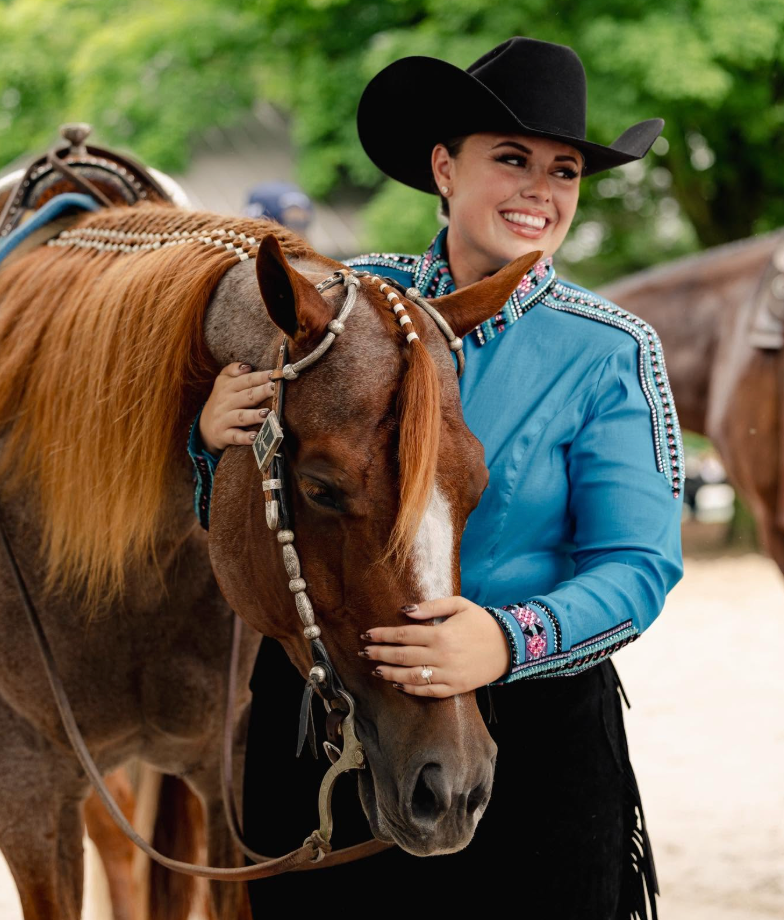
I show AQHA all-around and pull, braid, and grow out manes on our own horses at Running Springs every season, so everything here comes from years of actually doing it in the barn, not from a grooming manual.
A horse mane is the strip of long, coarse hair that grows along the crest of the neck, from behind the ears down toward the withers.
It is there to shield the horse from weather, insects, and sun, and a thick, shiny one is also a quick read on how healthy a horse is. Keeping it that way comes down to a few simple habits done consistently.
Whether you want to grow a longer mane, tidy one up for the show ring, or just understand what all that hair is actually for, this guide walks you through it. If you're looking for the wider routine that covers hooves, body, face, and everything else, start with my full step-by-step grooming routine and come back here when you're ready to go deep on the mane.
Below I'll cover what a mane is, why does a horse have a mane in the first place, how we care for the hair on horse after horse in our barn, and how we pull and braid when it is time to show.
What You'll Learn
What a Horse Mane Actually Is

A horse mane is the thick strip of coarse hair growing along the top of the neck, and the tuft that falls between the ears over the forehead has its own name too. We call it the forelock, and it does more work than folks give it credit for.
The hair on horse manes is different from the soft body coat. It grows longer, it grows coarser, and it keeps growing rather than shedding out with the seasons the way body hair does.
Every horse in my barn has a slightly different mane. Some are thick and heavy, some are fine and wispy, and a lot of that comes down to genetics and breeding, which is a rabbit hole I could go down all day when it comes to VS Code Red and the babies he throws.
Why Does a Horse Have a Mane?
A mane is working hardware, not just decoration. It protects the neck and face, helps with weather, and even signals health. Here is the short version of what that hair is doing out in the pasture:
- Insect defense. The mane and forelock swish and shield the neck and face from flies, gnats, and mosquitoes, which matters more than people think since biting bugs can carry real equine diseases.
- Weather protection. That coarse hair helps rain run off the neck and traps a little warmth in winter. On a cold, wet Tennessee morning, I promise the horses are glad to have it.
- Sun and eye cover. The forelock shades the eyes from harsh sun and helps keep bugs out of them.
- A health signal. A thick, shiny mane usually means a horse is well fed and feeling good. A dull or brittle mane is often the first hint I need to look closer.
- A handle. Way back, riders gripped the mane to stay on. I still grab a fistful of Denver's mane more often than I'll admit.
So when someone asks why does a horse have a mane, the honest answer is that it is natural armor, a weather jacket, and a bug swatter all in one.
Running Springs note: A mane that suddenly gets itchy, patchy, or rubbed out is trying to tell you something, usually bugs, dry skin, or a diet gap. I treat a changing mane like a check-engine light and go looking for the why before I reach for a product.
How We Care for the Mane for Horse After Horse
Good mane care is not complicated, but it is consistent. Most of the mistakes I see come down to timing and tools, not fancy products. Here is the everyday routine I use on every mane for horse in our barn.
Never brush a wet mane
This is the rule I would tattoo on every new horse owner if I could. Wet hair stretches, and stretched hair snaps.
When a mane is soaking wet, the strands pull apart under a comb far too easily, and that is how you end up with a thin, broken mess. I wait until the mane is nearly dry, or I work a leave-in conditioner through it first so the comb glides instead of yanks.
Fingers first, comb second
Whenever I can, I pick tangles apart with my fingers before any comb touches the hair. It is gentler, it saves strands, and honestly it is kind of relaxing at the end of a long barn day.
When I do reach for a tool, it is a wide-tooth comb, never a fine brush that rips through knots. A good detangler spray makes the whole job easier and cuts way down on breakage.
Running Springs tip — spray first, comb last: If you're about to groom the whole horse, spray the mane and tail with detangler first, before you pick up a curry comb. By the time you finish the body and come back to the mane, the product has soaked in and the tangles slide right out. This one trick has saved me countless broken strands over the years.
Keep it clean, but not too clean
I bathe manes when they need it, not on a strict schedule, because over-washing strips the natural oils that keep the hair flexible.
When we do bathe, we condition every single time. If you want to see how gentle a good bath routine looks, I walked through the whole thing when Jack had his first bath as a mini colt.
Feed the mane from the inside
Here is the part people skip. A shiny, strong mane starts with what goes in the bucket, not what you spray on top.
Good hair grows on good nutrition, so we feed a balanced program and lean on quality feed for coat and hair health. I've shared before why we trust Tribute for our horses' nutrition, and a healthy coat is one of the first places you see it pay off. You can find the rest of my go-to grooming gear on my favorites page.
Barn days are messy, and I basically live in my Running Springs tees while I'm grooming. Rep the farm with my Katie's Classics line, or grab a Running Springs hat for those early braiding sessions.
Mane Pulling vs. Clipping for the Show Ring

Once you get into showing, a tidy, uniform mane becomes part of the picture, especially in my AQHA all-around classes. In hunter under saddle, that mane needs to be short, thin, and lie flat so it braids clean. There are two main ways to get there, and I use both depending on the horse.
Pulling the mane
Pulling is the traditional way to shorten and thin a mane, and it leaves a natural, tapered edge that scissors just cannot match. You back-comb a small section to push the short hairs up, wrap the long strands around a pulling comb, and pull firmly from the roots a few hairs at a time.
The trick is doing a little at a time so it never becomes a big deal for the horse. A mane is easiest to pull right after exercise, when the pores are open and the hair slides out cleaner.
Clipping or trimming
Not every horse tolerates pulling, and that is okay. For the sensitive ones, I'll use a clipper blade in a teasing, back-and-forth motion to thin and shorten without any yanking.
Done right, you get a tidy look and a happy horse. Scissors straight across the bottom are my last resort, because a blunt-cut mane reads unnatural in the ring.
Heads up: If your horse gets fidgety when you pull, do not fight it. Split the job across several short sessions, pull after a workout, and keep it low pressure. A calm three-minute session beats a stressful thirty-minute one every time.
Braiding Styles That Finish the Look

Braiding does double duty. In the pasture, it protects the mane from tangling and breaking. In the ring, it provides a polished, professional finish.
Whether you are preparing for a local weekend show or aiming for the Quarter Horse Congress, a perfect braid job is essential. Here are the styles you will see most, along with where each one fits.
| Braid style | Best for | What it looks like |
|---|---|---|
| Button braids | Dressage and hunter classes | Small individual braids rolled up and secured tight against the crest |
| Hunter braids | English disciplines, short thin manes | Intricate braids sewn flat with yarn or thread so they lie clean |
| Continental / diamond braids | Beginners and flashy turnout | A woven lattice or diamond pattern across the neck using the mane itself |
If you are just starting out, the continental or diamond braid is the most forgiving and the most fun, because it uses the mane's own length to build that pretty lattice and does not demand a perfectly pulled mane first. Button and hunter braids take more practice, but they are the gold standard when the class calls for it.
Braiding loosely at the roots is the one rule I never break, since a braid that is too tight at the base irritates the crest and actually breaks off the very hair you are trying to protect.
Shop All Running Springs Merch
Growing a Longer, Healthier Mane
If your goal is length, patience is the whole game. Mane hair grows slowly, so protecting what you have matters more than any miracle product. Loose braids that shield the hair from wind, rubbing, and pasture snags are your best friend, as long as you keep them loose at the roots.
Pair that with a conditioned, tangle-free mane and steady nutrition, and you'll see real gains over the seasons. The same everyday care that keeps a working mane healthy is exactly what grows a long one, so there is no separate secret, just consistency.
For more of the little habits that add up, I rounded up my extra horse care tips your horse will love.
Meet the Herd at Running Springs
Running Springs is our family farm in Nolensville, Tennessee, where we raise AQHA Quarter horses alongside mini horses, mini cows, donkeys, goats, and a whole crew of barn animals.
Our show babies like Denver and Hollywood, and our broodmares raising the next crop, are the horses I've learned every one of these mane tricks on.
If you want more from the farm, and get real horse farm experience and care tips, come follow along on Facebook, Instagram, TikTok, and YouTube.
The Bottom Line on Horse Mane Care
A great horse mane is not about expensive sprays or fancy tricks. It is dry combing over wet, fingers before tools, a wide-tooth comb, real nutrition, and a little consistency day after day.
Whether you are pulling for a class, braiding for the ring, or just trying to grow out a mane that got rubbed thin, the fundamentals are the same.
Every one of these habits came from years of trial and error with our own horses at Running Springs. I'm still learning new things every single day, and that is half the fun of it.
Go give your horse's mane a good finger comb, and I'll see you in the next one.
Frequently Asked Questions About Horse Manes
Why does a horse have a mane?
A mane protects the neck and face from biting insects, helps rain run off, traps warmth in cold weather, and shades the eyes through the forelock. A thick, shiny mane is also a good sign the horse is healthy and well fed. In short, it is natural armor that just happens to look beautiful too.
Should I brush my horse's mane when it is wet?
No, and this is the mistake I see most. Wet hair stretches and breaks easily, so combing a soaking mane thins it out fast. Wait until it is nearly dry, or work a leave-in conditioner through first so the comb slides instead of pulling.
How often should I wash a horse's mane?
Only when it truly needs it. Over-washing strips the natural oils that keep the hair flexible and healthy, which can lead to more breakage. When you do bathe, condition every time to put that moisture right back.
What is the difference between pulling and clipping a mane?
Pulling removes and shortens hair from the roots a few strands at a time, leaving a natural tapered edge that braids well. Clipping uses a blade in a teasing motion to thin and shorten without pulling, which is gentler for sensitive horses. I use whichever one keeps the horse calm and comfortable.
How can I get my horse's mane to grow longer?
Protect it more than you fuss with it. Keep it conditioned and tangle-free, use loose braids to shield it from rubbing and snags, and feed a balanced diet since good hair grows from good nutrition. Length comes with patience, not products.
Which mane braid is easiest for beginners?
The continental or diamond braid is the most beginner-friendly. It uses the mane's own length to create a woven lattice across the neck, so you get a beautiful, show-worthy look without needing a perfectly pulled mane first.
About the Author

Hi, I am Katie Van Slyke, and I share my daily life at Running Springs farm with millions of wonderful people online. I am best known for raising a huge variety of animals, from AQHA Quarter horses to famous mini Highland cows.
I am incredibly lucky to share this journey with millions of friends across YouTube, TikTok, Facebook, and Instagram. You can read the full story on my about page.
Sources
The general facts about mane biology and care in this guide come from the veterinary and equine references below. Anything about our own horses and program is drawn from firsthand experience at Running Springs.
- PetMD, Why Do Horses Have Manes? (mane function, insect and weather protection)
- Mane (horse), Wikipedia (mane and forelock anatomy, pulling and braiding overview)
- American Association of Equine Practitioners, Horse Health Resources (general grooming and skin/coat health)
















0 comments