
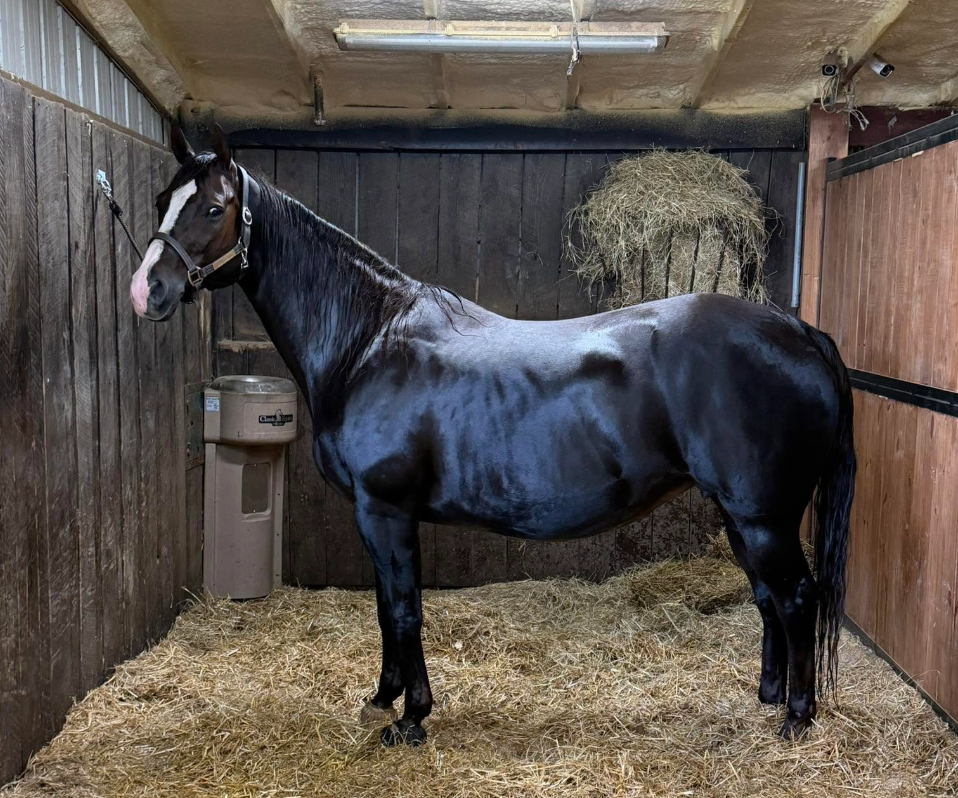
After enough foaling seasons at Running Springs, I have learned to read the little tells, the pacing, the sweat breaking out on the flanks, the way a mare keeps turning to look at her side. Those cues are what send me out to the barn to settle in and keep watch, because when a mare is ready, she does not wait around.
A mare going into labor often looks like she has colic. She may pace, act restless, lift her tail, pee a lot, and sweat in patches on her neck and flanks.
Real labor starts when her water breaks and you see the foal's hooves. In the days before, watch for her udder filling up, waxy drops on her teats, and the muscles around her tail getting soft.
Foaling happens fast once it starts, so knowing these horse labor symptoms helps you stay calm and know when to call your vet.
Key Takeaways
- Early horse labor symptoms mimic colic: restlessness, pacing, tail raising, frequent urination, and patchy sweating.
- In the days before, watch the udder fill, the teats 'wax' over, and the muscles around the tailhead soften.
- Waxing (honey-colored beads of colostrum on the teats) often shows 24 to 48 hours before foaling.
- Active labor begins when the water breaks; once it does, foaling moves fast.
- Most foalings go smoothly. Your job is to watch quietly, stay ready, and know the red flags.
The question every broodmare owner asks, usually while standing in the barn at 2 a.m., is simply 'is she close?' Reading the signs of labor in mares lets you be there when it counts without losing a month of sleep hovering by the stall.
Mares are famously private and unpredictable about foaling, but their bodies do give you a running countdown if you know what to look for.
If you are still tracking your mare's pregnancy day to day, my post Bump Dates, Bellies, and Babies covers exactly how I monitor them, and my full pregnancy in mares guide covers the whole journey.
Signs in the Days and Hours Before

Before true labor ever begins, a mare's body starts giving you clues, some over weeks, some in the final hours. Learning to read them is what turns guessing into knowing.
The udder and 'bagging up'
In the last couple of weeks, the udder fills and firms, what breeders call 'bagging up.' As foaling gets close, the udder gets tighter and fuller, and the teats begin to fill out and point downward and outward rather than straight down.
Waxing and milk changes
One of the most reliable near-term signs is 'waxing,' small beads of sticky, honey-colored colostrum that appear on the ends of the teats, often 24 to 48 hours before foaling.
Some mares will even drip or stream milk beforehand. If a mare is running milk heavily before she foals, mention it to your vet, because she may be losing valuable colostrum the foal needs.
Softening and behavior
In the final day or two, the muscles around the tailhead and the vulva relax and loosen, giving the hindquarters a slightly sunken look, and the belly may drop as the foal shifts into position.
Behaviorally, many mares get quiet and withdrawn and start seeking a private corner. None of these is a precise stopwatch, and mares absolutely love to surprise us, but stacked together they tell you foaling is very near.
Early Labor Symptoms
Once labor actually begins, the signs can look alarmingly like colic, which is exactly why they catch first-time owners off guard. This is the start of Stage 1, the mare's uterus contracting and the foal rotating into the birth position.
Watch for restlessness and pacing, repeatedly lying down and getting back up, pawing at the ground, tail raising and swishing, frequent urination or posturing, and patchy sweating that breaks out on the neck, shoulders, and flanks.
The mare may keep turning to glance or nip at her side, curl her lip, and generally seem agitated and unable to settle. She might start and stop, and some mares will show signs, then pause for a while, especially if they are disturbed.
Stage 1 ends dramatically when the water breaks, a sudden gush of fluid, and the real work begins.
Reading this in a list is one thing, watching it happen is another. Rikki's birth vlog on my YouTube channel follows a maiden mare from her first restless circles all the way through delivery, and it is the closest thing to standing in the stall with me.
The Three Stages of Foaling
Once that water breaks, labor moves fast. Active delivery (Stage 2) is powerful and should put a foal on the ground within about 10 to 30 minutes, and then the mare rests and passes the placenta (Stage 3).
Understanding what is normal at each stage, and what is taking too long, is the whole game. I walk through all three stages, the diving presentation, and the emergencies step by step in the process of giving birth in horses, and I cover afterbirth care in my placenta care after foaling guide.
Never toss the placenta
A retained placenta is a serious emergency, so never throw the afterbirth away. Save it in a bucket for your vet to inspect and confirm it came out whole.
What a Normal Presentation Looks Like
In a healthy delivery, the foal emerges covered in a whitish, translucent sac, in what is often called the 'diving' position: two front hooves, soles down, with the muzzle resting on or just behind the front legs, like the foal is diving into the world.
Seeing that pale, glistening sac with two little hooves pointed the right way, followed by a nose, is exactly the picture you want. If you ever see the soles of the hooves pointing up, a nose with no feet, or a tail first, that is your signal to get help fast.
Once your foal is safely on the ground, a whole new checklist begins, and I cover exactly what to watch for in signs of a healthy foal birth.
Counting down to foals with us? Grab something from the foals merch or meet our sires in the The Boys stallion collection.
When to Call Your Vet Immediately

Most foalings are uneventful, but the ones that are not move fast, so knowing your red flags ahead of time is everything. Call your equine veterinarian right away if you see:
| Red Flag | What It Means |
|---|---|
| 'Red bag' delivery | A thick, red, velvety sac at the vulva instead of the normal thin, whitish one. This is premature placental separation and a true emergency. |
| Stalled Stage 1 | Early labor going on for more than about 4 hours with no progression to the water breaking. |
| No progress in Stage 2 | The mare straining hard for more than about 15 minutes after her water breaks without a foal appearing. |
| Wrong presentation | A tail or hind feet first, only one leg showing, a nose with no feet, or hoof soles pointing up. |
| Retained placenta | The afterbirth not passing within about 3 hours of delivery. |
When something looks off, call. An early call is always better than a late one, and foaling emergencies are measured in minutes instead of hours.
Have your vet's number and your backup's number posted right where you can grab them.
Shop All Running Springs Merch
How to Prepare for Foaling
Being prepared is what lets you stay calm when the big moment finally arrives. A little setup ahead of time goes a long way:
- Know her dates. Track the breeding date and expected due window so you are watching at the right time.
- Prep a clean, safe foaling stall or a well-monitored pasture, and bed it deeply and cleanly.
- Set up a camera or foaling alarm so you can watch without constantly disturbing her, since mares often hold off when they feel observed.
- Have a foaling kit ready: clean towels, tail wrap, a navel dip, your vet's number, and a flashlight.
- Line up your vet and confirm their after-hours plan before you are ever standing in the barn at midnight.
Preparation is the difference between a scary night and a magical one. You can follow along with how I plan a whole season in the 2026 foaling season preview.
Foaling Season at Running Springs
When a mare is getting close, I keep her on camera and check her through the night, because those early signs, the pacing, the sweat, the restlessness, are my cue to quietly get into position and be ready.
Nine times out of ten it goes beautifully and my entire job is just to witness the miracle and stay out of her way while she does what she was born to do.
But knowing the red flags cold is exactly what lets me move fast on the rare night when something is not right, and in foaling, those minutes can save a life.
That balance of calm patience and total readiness is the heart of foal watch for me. You can see how we get the barn ready in how Running Springs prepares for foaling season and follow along with our pregnancy checks as we count down to babies.
Foaling season is the busiest stretch of our year, and I document all of it as it happens on Facebook, Instagram, TikTok, and YouTube. Come meet the mares before their babies get here.
Foal watch means long nights in the barn. My cozy Katie's Classics layers are what I wear for every midnight check.
Final Thoughts on Horse Labor Symptoms
Reading horse labor symptoms comes down to knowing your mare and knowing the timeline. Watch the udder, teats, and tailhead in the days before; recognize the colic-like restlessness and sweating of early labor; expect a fast, powerful Stage 2; and keep your vet's number close for the red flags.
Prepare your stall, your kit, and yourself ahead of time. Prepared and calm is exactly how you want to walk into a foaling, so you can spend the moment marveling at a brand-new baby instead of panicking.
This article is general information rather than veterinary advice. Always involve your own veterinarian in foaling.
Frequently Asked Questions
Why does a mare in labor look like she has colic?
Early labor causes similar discomfort, restlessness, pawing, repeatedly lying down and getting up, sweating, and looking at the flanks, as the uterus contracts and the foal repositions.
If you cannot tell whether it is colic or labor, call your vet to be safe.
Do mares usually foal at night?
Yes, most mares foal at night or in the quiet early morning hours. It is an instinct to give birth when it is calm and private, which is exactly why foal-watch cameras and alarms are so helpful for catching the moment without disturbing her.
How long can a mare show signs before actually foaling?
Some signs, like an enlarging udder, build over weeks, while waxing typically shows 24 to 48 hours out. But mares are famously unpredictable: some wax and foal within hours, others hold off for days. Treat the signs as a countdown window instead of an exact clock, and stay ready.
How can you predict the day a mare will foal?
You cannot pin it to the day, but you can narrow the window. Watching the udder is your best tool, and many breeders also test the calcium or pH of the mare's milk in the last week, since a sharp rise in calcium or a drop in pH often means foaling is likely within 24 to 72 hours.
Pair that with a foaling camera or alarm and you can be there for the moment without living in the barn.
Can you leave a mare alone to foal?
Mares actually prefer privacy and often wait for a quiet, dark moment to foal, and some will stall their labor if they feel watched.
The goal is to observe without hovering, which is exactly why a barn camera or foaling alarm is so useful. You want to be close enough to step in fast if something goes wrong, but out of sight enough that she relaxes and gets to work.
About the Author

Hi, I am Katie Van Slyke!
I breed AQHA Quarter Horses at my family farm in Tennessee, stand two stallions, and document foaling season every year from the barn floor while sharing the daily realities of farm life.
I am incredibly lucky to share this journey with millions of friends across YouTube, TikTok, Facebook, and Instagram. You can read the full story of how it all started on my about page.
Sources
The general foaling guidance in this article is supported by the equine references below. Everything about my own mares comes from firsthand experience at Running Springs.
- Penn State Extension, Foaling Season: Tips for Delivery
- AQHA, Stages of Labor
- Merck Animal Health, Broodmare Labor

























0 comments