
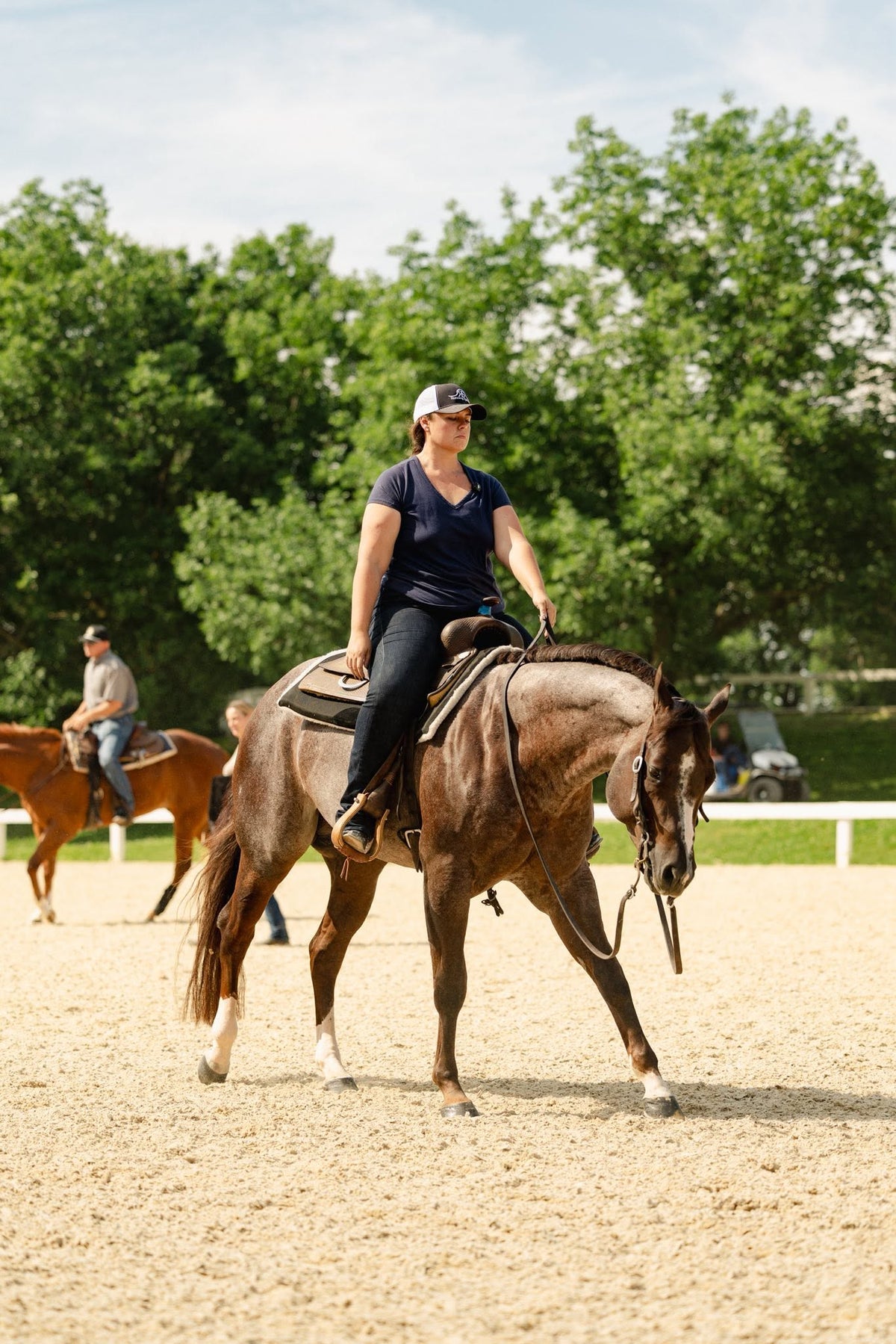
Every horse in my barn at Running Springs is a registered American Quarter Horse, from our cornerstone stallion VS Code Red to the foals we breed, raise, show, and sell every single year. So this breed is not a topic I researched. It is my whole life.
The American Quarter Horse is a breed developed in the United States, famous for its ability to sprint a quarter mile faster than any other horse, with some individuals clocking speeds up to 44 mph.
It is currently the world's most popular horse breed, with over 6 million horses registered through the American Quarter Horse Association (AQHA).
Whether you are thinking about buying your first one, showing on the AQHA circuit like I do, or you just love watching them work, here is what actually makes this breed the backbone of American horsemanship.
Key Takeaways
- The American Quarter Horse is an American breed developed for explosive speed over short distances and practical ranch work.
- The breed’s name comes from the quarter-mile races in which these horses became famous.
- Powerful hindquarters, agility, trainability, and versatility suit the breed to ranching, rodeo, showing, racing, and recreational riding.
- AQHA records pedigree and registration information for eligible American Quarter Horses.
- The breed is known for a calm, willing temperament, making it one of the most approachable breeds for new and experienced riders alike.
- Sorrel, a brownish red, is the most common coat color, though the breed comes in over a dozen recognized colors.
What's In Here
- The Origins of the American Quarter Horse
- Physical Characteristics That Define the Breed
- Temperament: What It's Actually Like to Work With One
- What Quarter Horses Are Used For Today
- The AQHA: Registering and Tracking the Breed
- Quarter Horses and Western Identity
- A Few More Things Worth Knowing
- Quarter Horses at Running Springs
- The Bottom Line on What Is a Quarter Horse Breed
- What Is an American Quarter Horse?
- Why Is It Called a Quarter Horse?
- Frequently Asked Questions
The Origins of the American Quarter Horse

The story behind what a Quarter Horse breed is begins in the early colonial period. Around the 1660s, English settlers in Virginia began crossing their imported English horses with native horses of Spanish origin, particularly those descended from horses brought over by early Spanish explorers. The resulting animals were compact, powerfully built, and fast over short distances.
Colonists quickly noticed these horses could outrun anything else on a straightaway of a quarter mile or less. Quarter-mile match races became enormously popular along village streets and open fields throughout Virginia and the Carolinas.
The informal name "Quarter Horse" stuck and eventually became official.
As American settlement expanded westward, the breed proved just as valuable on open range as it was on a racetrack.
Ranchers in Texas and the Great Plains discovered that the Quarter Horse had an almost instinctive ability to work cattle, cutting and turning with quick, precise movements that earned the breed a reputation for "cow sense." This dual identity as both a speed specialist and a working ranch horse is what separates it from nearly every other breed.
By 1940, enough breeders and enthusiasts recognized the need for a formal registry. The AQHA was established that year, and by 1950 it had consolidated several smaller Quarter Horse organizations under one umbrella.
Today, according to the American Quarter Horse Association, the registry holds records for more than 6 million horses, making it the single largest equine registry on earth.
Physical Characteristics That Define the Breed

If you've spent any time around horses, a Quarter Horse is easy to spot once you know what to look for. The breed has a distinctly athletic, compact frame that is built for explosive power rather than long-distance endurance.
Height and Weight
Most Quarter Horses stand between 14 and 16 hands, with 15 to 15.2 hands being a typical sweet spot for ranch and performance horses.
Weight generally falls between 900 and 1,200 lbs, though heavily muscled performance horses can push toward the upper end of that range.
Body Structure
- Short, broad back
- Deep, wide chest
- Heavily muscled hindquarters, the engine behind their signature burst of speed
- Short head with a wide forehead and alert eyes
- Strong, well-defined legs with dense bone
That hindquarter muscling is not just for show. It provides the rapid-fire acceleration that makes the breed so effective in timed rodeo events, quick stops in reining, and the sudden direction changes required for cutting cattle. It is the same power our stallion VS Code Red is famous for passing down to his babies.
Coat Colors
The breed comes in over a dozen recognized coat colors. Sorrel, a warm brownish red, is the most common and is essentially what other registries call chestnut. Other accepted colors include bay, black, brown, buckskin, palomino, gray, dun, red dun, grullo, red roan, blue roan, bay roan, perlino, cremello, and white.
| Color | Description |
|---|---|
| Sorrel | Brownish red, the most common Quarter Horse color |
| Bay | Brown body with black mane, tail, and lower legs |
| Buckskin | Golden body with black mane and tail |
| Palomino | Golden coat with light mane and tail |
| Grullo | Smoky blue-gray, often with a dorsal stripe |
| Roan (red, blue, bay) | Mix of colored and white hairs throughout the coat |
Temperament: What It's Actually Like to Work With One

One of the most consistent things you hear from Quarter Horse owners and trainers is that the breed is just practical.
Quarter Horses are not the kind of horses that spook at a plastic bag flapping in the wind or need 45 minutes of lunging before they settle. They tend to be steady, focused, and responsive to clear cues, and that is exactly what I see in my own barn every day.
The American Association of Equine Practitioners notes that temperament plays a significant role in a horse's suitability for both work and recreational riding. Quarter Horses score well on nearly every measure, which is a big part of why they are so often recommended as first horses for capable but new riders.
If you are just starting out, I broke down what those early sessions look like in my post on beginner horse riding lessons.
That said, calm does not mean dull or unresponsive. A well-trained Quarter Horse in a cutting pen or a barrel racing arena is laser-focused and athletic.
The breed has a strong work ethic combined with enough sensitivity to respond to subtle cues, which is exactly what makes them so versatile across disciplines.
What Quarter Horses Are Used For Today
Understanding what a Quarter Horse breed is really comes down to understanding just how many jobs this animal can do well. Few breeds cover this much ground.
Ranch and Working Cattle Operations
Quarter Horses remain the gold standard for working ranchers across the American West. Their instinctive cow sense means a good cutting horse can anticipate a cow's movement and mirror it almost automatically.
That quality, combined with the horse's durability and sure-footedness, makes them irreplaceable on a working cattle operation like ours.
Rodeo Events
The Quarter Horse dominates timed events at every level of rodeo, from local jackpots to the Professional Rodeo Cowboys Association National Finals Rodeo. Common Quarter Horse disciplines include:
- Barrel racing
- Calf roping (tie-down roping)
- Team roping
- Steer wrestling
- Breakaway roping
Show Events
The AQHA sanctions hundreds of horse shows each year across the country. Show classes range from western pleasure and halter to reining, trail, and horsemanship.
The breed's combination of athletic ability and trainability makes it a consistent winner in the show pen. It is the world I compete in. You can also follow along with my stallion Denver's western pleasure training to see what these horses can do in the pen.
Trail Riding and Family Use
Not every Quarter Horse is a competitive animal. Millions are used simply as family horses for trail riding, youth programs, and recreational riding. Their steady temperament and straightforward nature make them excellent companions for riders of all ages.
The AQHA: Registering and Tracking the Breed

The American Quarter Horse Association controls the American Quarter Horse Stud Book and Registry and sets the breed standards.
Registering a Quarter Horse with the AQHA involves providing parentage verification through DNA testing and completing the appropriate paperwork.
The AQHA also sanctions competitions, offers youth programs, and runs educational initiatives around responsible horse ownership and breeding. If you are considering buying a Quarter Horse, verifying AQHA registration is an important step.
A registered horse has documented bloodlines, which matters whether you plan to breed, show, or simply know what you're getting. Every foal born on our farm carries the "RS" prefix, and you can meet the whole crew and their registered names in my herd roundup.
Quarter Horses and Western Identity
Quarter Horses are woven into the fabric of American Western identity. They show up in rodeo arenas, on working ranches, and in Western films and television. The breed carries a kind of cultural symbolism that goes beyond horsemanship, representing a real working partnership between American riders and the land.
If you live that lifestyle, or just love it from a distance, that connection tends to show up in the gear you carry and the way you dress. Our whole merch brand, VS Code Red, is named after our cornerstone stallion for exactly that reason.
Headed to a show or a ranch day? A sturdy weekender or lunch bag from my bags collection travels from the barn to the road, and a stallion dad hat or pom pom beanie from the hats collection lets you rep that Western pride year-round.
Shop All Running Springs Merch
A Few More Things Worth Knowing
- The Quarter Horse's maximum recorded speed of 44 mph makes it the fastest horse breed over short distances, faster than even a Thoroughbred at the same distance.
- The AQHA uses DNA parentage testing to verify bloodlines before issuing registration papers.
- "Cow sense" describes the Quarter Horse's natural instinct to mirror and anticipate cattle movement, a trait that cannot be fully trained, only refined.
- Not all Quarter Horses look alike. Stock-type horses are heavily muscled and wide, while racing-type Quarter Horses are leaner and more similar in build to a Thoroughbred.
- Quarter Horses can carry heavier riders proportionally better than many lighter breeds thanks to their dense bone and muscular build.
Quarter Horses at Running Springs
Running Springs is our family farm in Nolensville, Tennessee, and Quarter Horses are the heart of everything we do here. We breed them using AI, embryo transfer, and recipient mares, foal them out every spring, and show them on the AQHA all-around circuit.
Our stallion VS Code Red is a multiple World and Congress Champion, and his grandson Denver is following right behind him.
If you want to see where this all started and how a Tennessee girl ended up with a barn full of champions, read how it all began. And if you want more from the farm, come follow along on Facebook, Instagram, TikTok, and YouTube.
The Bottom Line on What Is a Quarter Horse Breed
The American Quarter Horse is not just a breed. It is a piece of American history that has stayed relevant and dominant across centuries because it genuinely does its job better than almost any other horse.
From its colonial origins in Virginia to modern rodeo arenas and working ranches across the West, the Quarter Horse has earned every bit of its reputation.
If you are thinking about adding one to your life, the best thing you can do is go watch cutting, reining, or barrel racing up close at an AQHA-sanctioned event, then connect with a reputable breeder whose horses match your goals.
If you want to see what our program produces, our horse and cattle sales page is a good place to start. From one Quarter Horse lover to another, the investment is almost always worth it.
What Is an American Quarter Horse?
An American Quarter Horse is a versatile American horse breed known for powerful acceleration, a muscular build, and the ability to work cattle. Individual horses vary by bloodline and discipline, but the breed is widely used for ranch work, racing, rodeo, showing, and recreational riding.
Why Is It Called a Quarter Horse?
The name comes from the breed’s early reputation in quarter-mile races. The American Museum of Natural History describes the Quarter Horse as a short-distance sprinter and traces its development from horses used in the southeastern United States before the breed became closely associated with western ranch work.
The word quarter refers to the quarter-mile race distance, not the horse’s ancestry or body size.
Frequently Asked Questions
What is a Quarter Horse breed best known for?
The American Quarter Horse is best known for being the fastest horse breed over a quarter-mile distance and for its versatility in ranch work, rodeo, and recreational riding.
That combination of explosive speed, strong cow sense, and a calm temperament makes it the most popular horse in the United States by a wide margin. With over 6 million registered horses, the AQHA is the largest equine registry in the world.
How big does a Quarter Horse typically get?
Most Quarter Horses stand between 14 and 16 hands tall and weigh between 900 and 1,200 lbs.
Size varies by breeding line: stock-type horses bred for ranch and show work tend to be heavier and more muscular, while horses bred for racing are often leaner and slightly taller.
Is a Quarter Horse a good choice for a beginner rider?
Yes, Quarter Horses are widely recommended for beginner and intermediate riders because of their generally calm, willing, and forgiving temperament.
That said, the individual horse's training level matters more than the breed alone. A green or poorly trained Quarter Horse will still challenge a new rider, so working with an experienced trainer during selection is always a smart move.
What is the difference between a Quarter Horse and a Thoroughbred?
Quarter Horses are shorter, heavier, and faster over short distances, while Thoroughbreds are taller, leaner, and bred for longer distance racing. Thoroughbreds also tend to be more reactive and sensitive, requiring a more experienced handler.
Quarter Horses have significant Thoroughbred influence in their bloodlines, especially among racing-type individuals, but the two breeds serve distinctly different purposes.
How do I register a Quarter Horse with the AQHA?
You register a Quarter Horse by submitting an application to the AQHA along with DNA parentage verification for both the sire and dam. The AQHA website provides current registration forms, fees, and requirements.
Both parents must be AQHA-registered for the foal to qualify for full registration, and Associate or Appendix registration may apply in some cases involving Thoroughbred crosses.
Why is it called a Quarter Horse?
The breed was named for the quarter-mile races in which its ancestors became known for exceptional short-distance speed.
How tall is an American Quarter Horse?
Many American Quarter Horses stand roughly 14 to 16 hands, although height and build vary by bloodline, discipline, and the individual horse.
About the Author

Hi, I am Katie Van Slyke, and I share my daily life at Running Springs farm with millions of wonderful people online. I breed, raise, and show registered American Quarter Horses, and I am best known for raising a huge variety of animals, from champion Quarter horses to famous mini Highland cows.
I am incredibly lucky to share this journey with millions of friends across YouTube, TikTok, Facebook, and Instagram. You can read the full story on my about page.
Sources
The historical and breed-standard facts in this guide come from the references below. Anything about our own horses and breeding program is drawn from firsthand experience at Running Springs.
- American Quarter Horse Association (AQHA) (registry size, breed standards, registration and DNA verification)
- American Quarter Horse, Wikipedia (breed history, recorded speed, recognized coat colors)
- American Association of Equine Practitioners (temperament and suitability for work and recreation)














0 comments