
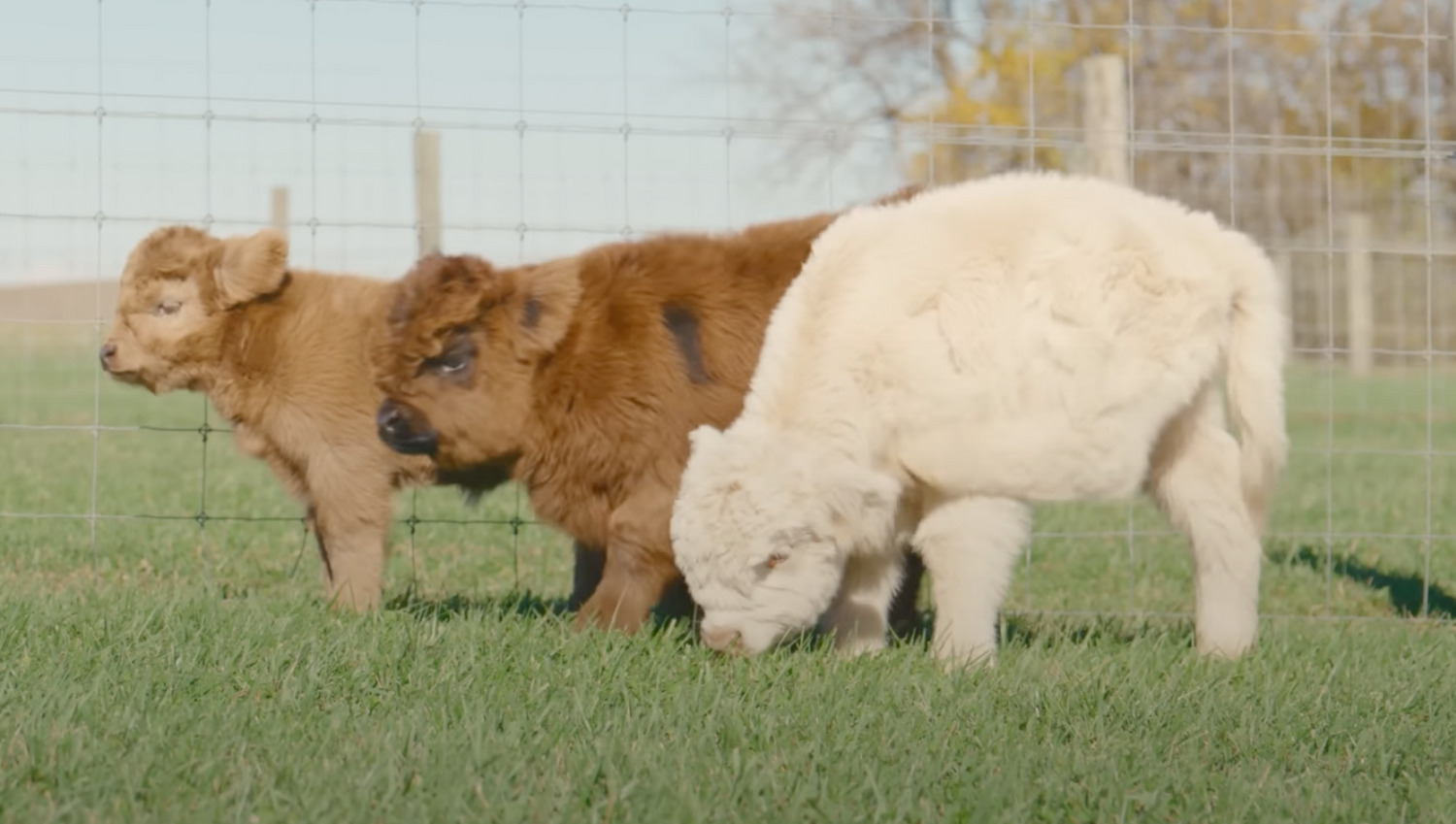
Written from three-plus years of hands-on experience raising eight purebred miniature Highland cattle at Running Springs in Nolensville, Tennessee.
Are mini cows good pets? For the right owner, they can be affectionate, curious pasture companions. But a cow as a pet is still livestock—not a house pet—and the commitment includes land, legal zoning, secure fencing, shelter, forage, water, veterinary care, and compatible animal company.
I am answering from years of daily experience with miniature Highland cattle at Running Springs. The bond is real, but so are the chores, emergency plans, and safety decisions. This guide separates the cute social-media moment from the long-term responsibility of keeping cattle well.
Key Takeaways
- Mini cows can be affectionate pasture companions, but they are livestock—not house pets.
- They need legal livestock zoning, secure fencing, shelter, water, forage, veterinary care, and compatible animal company.
- Adult size, temperament, horns, and handling history matter more than a cute calf photo or a marketing label.
- Prospective owners should confirm local rules, realistic carrying capacity, a large-animal veterinarian, and emergency costs before buying.
What's In Here
- What "Pet" Actually Means When You're Talking About a Cow
- The Personality Traits That Make Mini Cows Great Companions
- How a Pet Mini Cow Compares to a Dog or Cat
- Can You Keep a Mini Cow in Your Backyard?
- Are Mini Cows Safe Around Kids and Dogs?
- Who Should Get a Pet Mini Cow (and Who Shouldn't)
- The Daily Reality of Living With a Pet Mini Cow
- Meet the Herd at Running Springs
- The Best Pet You'll Never Keep Indoors
- Frequently Asked Questions About Pet Mini Cows
What "Pet" Actually Means When You're Talking About a Cow

The first thing I tell anyone who asks me about pet mini cows is this: redefine what "pet" means in your head. A mini cow is not a house pet. She is not going to curl up on the couch with you.
She lives outside, in a pasture, with proper fencing and shelter. She is livestock with a pet-like personality.
That distinction matters because the internet has blurred the line. You see videos of mini cows walking on leashes through living rooms and think, "I could do that." And sure, some people do bring a bottle-fed calf inside temporarily. But a full-grown mini Highland cow stands 36 to 42 inches tall and weighs several hundred pounds.
She belongs outside. For a complete breakdown of how big mini Highland cows actually get, I cover sizes, weights, and generational differences in a separate guide.
What a mini cow can be is something I would describe as a "pasture pet." An animal that knows your voice, comes when you call, lets you brush and scratch her, and genuinely looks forward to seeing you.
That is what our girls at Running Springs are, and it is incredibly special. But it requires the right setup and a realistic understanding of what you are signing up for.
The Personality Traits That Make Mini Cows Great Companions
So why do people call them pets in the first place? Because miniature Highland cows have genuinely exceptional temperaments.
The Highland breed is known across the cattle world for being calm, curious, and people-oriented, and the minis carry every bit of that personality in a smaller frame.
At Running Springs, our eight girls (Poppy, Petunia, Pippa, Pumpkin, Posie, Peanut, Pearl, and Pepper) each have completely different personalities.
Poppy and Petunia are our original pair, and Poppy will stand for chin scratches all day long. Pearl takes her time warming up to new people but once she does, she is a lovebug. Pumpkin has strong opinions about everything and will let you know.
The traits that make mini cows feel "pet-like" are real:
- They recognize and bond with their owners. Our girls know the difference between me, Jonathan, and a stranger. They respond to my voice, and they come when I call them by name.
- They enjoy physical contact. Brushing, ear scratches, chin rubs. A well-socialized mini cow actively seeks out affection.
- They are curious, not skittish. When something new appears in the pasture, most of our girls walk toward it to investigate rather than running away.
- They have genuine social intelligence. They form alliances (Poppy and Petunia are inseparable), they have a clear herd hierarchy, and they communicate with each other through body language and vocalizations.
The key word in all of that is "well-socialized." A mini cow that has been handled regularly from a young age will behave like a companion animal.
One that has not been handled will be cautious, standoffish, and may take months of patient work before she trusts you. That socialization has to happen early and consistently.
If you are buying a mini cow specifically to be a pet, ask the breeder how much handling the calf has had. A bottle-fed calf that has been around people daily since birth will bond with you much faster than a pasture-raised calf that has had minimal contact. Both can become great companions, but the timeline is very different.
How a Pet Mini Cow Compares to a Dog or Cat
People compare mini cows to dogs all the time. I get it. The affection, the following-you-around-the-yard thing, the way they tilt their head when you talk to them. The comparison makes sense on the surface.
But there are real differences that matter if you are trying to decide whether a mini cow is the right pet for your life.
| Factor | Dog or Cat | Pet Mini Cow |
|---|---|---|
| Lives | Inside your home | Outside in a pasture with shelter |
| Space needed | A yard or apartment | Enough legal, securely fenced land for exercise, shelter, separation, and locally appropriate forage management |
| Lifespan | 10 to 15 years (dog), 15 to 20 (cat) | 15 to 20 years |
| Needs a companion | Prefers one, but can be solo | Yes, always. A solo mini cow will be stressed and unhappy |
| Vet type | Small-animal vet (widely available) | Large-animal vet (less common, may need to travel) |
| Zoning | Allowed almost everywhere | Classified as livestock; check local ordinances first |
| Upfront cost | $200 to $3,000 (typical) | Varies by animal, pedigree, region, fencing, transport, and setup; ongoing care is the larger commitment |
| Affection level | High (when bonded) | High (when socialized from a young age) |
The biggest practical differences come down to space, zoning, and the companion requirement. You can have one dog. You really cannot have one mini cow. They are herd animals, and a single cow without any companion (another cow, a goat, a horse, a donkey) will pace, vocalize constantly, and develop stress behaviors.
At Running Springs, our minis share the property with mini horses, mini donkeys, and Nigerian Dwarf goats, and they all coexist beautifully.
For the full cost picture, from purchase price through fencing, shelter, feed, and vet care, I break everything down in my complete mini cow cost guide.
Already a mini cow parent? Poppy, Petunia, and the whole "P" crew have their own mini cow merch collection with tees, hoodies, and more.
Can You Keep a Mini Cow in Your Backyard?

This is the question I get more than almost any other. The honest answer is: it depends entirely on where you live and how big your backyard is.
Zoning Is the First Thing to Check
Mini cows are classified as livestock, not pets, in the eyes of most local governments. That means you need to check your county and city zoning ordinances before you even start shopping for a cow.
Some rural and semi-rural areas allow livestock on residential property. Many suburban and urban areas do not. Some have minimum acreage requirements. Others require specific setback distances from property lines and neighboring homes.
I cannot stress this enough: do not buy a mini cow first and check the zoning later. If your property is not zoned for livestock, you could be forced to rehome the animal, and that is heartbreaking for everyone involved.
Space Requirements
There is no honest universal acreage number for every property. Carrying capacity changes with rainfall, soil, grass species, pasture condition, seasonal hay needs, and the number and size of animals. A county extension professional or experienced cattle veterinarian can help you estimate what your land can support without overgrazing.
Whatever the acreage, the setup needs secure livestock fencing, room to move away from herd mates, a dry shelter, dependable water, a handling area, and a plan for mud, manure, parasites, and winter forage. A small cow still needs a livestock system.
Are Mini Cows Safe Around Kids and Dogs?
Mini Highland cows are among the most gentle livestock breeds you will find. Their temperament is a big reason they have become so popular as companion animals. That said, they are still several hundred pounds of animal with horns, and there are a few things to keep in mind.
Around Children
Our girls are gentle and patient, but I always recommend supervision when kids are around any livestock. A mini cow is not aggressive, but she can bump or step on a small child without meaning to, simply because she does not realize how big she is relative to them.
Teach kids to approach calmly, avoid sudden movements, and always let the cow see them coming. Most well-socialized minis are great with children, but the interaction should be guided, not unsupervised.
Around Dogs
This one depends heavily on the dog. Our dogs, Winnie and Kimmy, coexist peacefully with the mini cows. But herding breeds or high-prey-drive dogs can stress cattle, and a cow that feels chased or cornered may kick or charge in self-defense.
If you have dogs, introduce them to your mini cow slowly, on a leash, and never leave them together unsupervised until you are completely confident in how both animals behave.
The Horns
Both male and female Highland cows grow horns. Our girls are not aggressive with them at all, but horns are there, and they can accidentally catch a person or another animal during a head toss.
Some owners choose to have horns tipped (the very ends trimmed) for safety. Others leave them natural. Either way, be aware of them, especially if you have small kids or small dogs.
For more on what to expect from the Highland breed specifically, including how they compare to standard-size Highlands, I cover that in mini vs. regular Highland cows.
Who Should Get a Pet Mini Cow (and Who Shouldn't)
After three years of raising minis and answering thousands of questions from people who want one, I have a pretty clear picture of who thrives with a pet mini cow and who ends up overwhelmed.
A Pet Mini Cow Might Be Right for You If:
- You own rural or semi-rural property that is zoned for livestock, with at least an acre of usable pasture.
- You already have (or are willing to get) a companion animal for the cow, whether that is a second cow, a goat, a horse, or a donkey.
- You have access to a large-animal vet in your area and have confirmed they work with cattle.
- You understand that this is a 15- to 20-year commitment and are prepared for the ongoing costs of hay, minerals, vet care, and fencing maintenance.
- You are patient, calm around animals, and willing to spend months building trust if needed.
A Pet Mini Cow Is Probably Not Right for You If:
- You live in a suburb or city with zoning restrictions on livestock.
- You are buying one because you saw a cute video and want the Instagram moment. The viral clip is 60 seconds. The daily care is years.
- You can only afford the purchase price and have not budgeted for fencing, shelter, feed, and veterinary emergencies.
- You do not have the time for daily care. Mini cows need fresh water, hay, mineral checks, and visual health assessments every single day.
- You expect a house pet. A mini cow belongs in a pasture, not a living room.
I love our mini cows more than I can say, but I get concerned when I see people impulse-buying them because they are trending. These are living creatures that deserve committed owners who have done the work before bringing one home.
If the purchase price stretches your budget, you are not ready yet. The cow is the cheapest part of the whole deal.
The Daily Reality of Living With a Pet Mini Cow

Here is what a typical day with our mini cows actually looks like. It is not glamorous, but it is deeply rewarding.
Morning: Check water troughs, make sure nothing froze overnight (in winter) or got knocked over. Do a quick visual assessment of every cow: is she eating, moving normally, bright-eyed? Top off hay if pasture is thin. Make sure the loose cattle mineral feeder is stocked.
Midday (when time allows): Brushing and bonding time. This is the "pet" part. I go out to the pasture, and the girls who are in the mood come over for scratches. Poppy always comes. Pumpkin comes on her own terms. Brushing is not strictly required, but it helps catch burrs, ticks, mats, and skin issues early, and it builds trust.
Evening: Second water and hay check. Another visual scan. In summer, I monitor fly control and make sure they have shade access. In winter, I confirm the shelter is clean and dry.
Total active time per day: about 30 to 45 minutes for routine care, plus whatever bonding time I choose to spend. That is manageable.
What catches people off guard is not the daily routine but the things that happen outside the routine: a surprise vet visit, a fence that needs repair after a storm, a cow that is acting off and needs monitoring for 48 hours. That is the real commitment.
I go deeper into the seasonal rhythms, the lessons that surprised me, and what I wish I had known before getting our first minis in my full personal account of raising mini Highland cows.
Meet the Herd at Running Springs

Running Springs is our family farm in Nolensville, Tennessee. We raise eight miniature Highland cows: Poppy, Petunia, Pippa, Pumpkin, Posie, Peanut, Pearl, and Pepper. Every one of them has a name that starts with "P" (yes, it is a tradition and we are committed to it).
They share the property with Quarter Horses, Simmental cattle, mini horses, mini donkeys, Nigerian Dwarf goats, barn cats, a pig named Winston, and our two dogs.
The farm is home to 176 animals total, and the mini Highland cows are the heart of the mini farm side. We started breeding mini cows at Running Springs in 2025, and Poppy and Petunia are both expecting their first calves. Follow along on YouTube, TikTok, Facebook, and Instagram.
The Best Pet You'll Never Keep Indoors
Are mini cows good pets? They are incredible companions for the right person in the right situation. If you have the land, the zoning, the budget, and the willingness to commit to 15 to 20 years of daily livestock care, a miniature Highland cow will give you a bond that is unlike anything else in farming or pet ownership.
But if you are looking for something that lives in your house, does not need a companion, and can be cared for by a neighborhood pet sitter while you travel, a mini cow is not it. And that is OK. These animals deserve owners who go in with their eyes wide open, not people chasing a trend.
Poppy, Petunia, and the rest of our "P" crew have changed my life. They have taught me patience, humility, and a whole new kind of love. If you are ready to do the work, they will change yours too.
Thanks for reading, y'all.
Frequently Asked Questions About Pet Mini Cows
Can mini cows be house trained?
While some people have success with very young calves using the bathroom outside on command, mini cows are not realistically house pets. They belong in a pasture with proper shelter, not inside a home.
A full-grown mini Highland weighs several hundred pounds and needs outdoor space to graze, move, and express natural herd behavior. The internet clips of mini cows indoors are the exception, not the rule.
How much daily time does a pet mini cow need from its owner?
Routine daily care takes about 30 to 45 minutes, covering water checks, hay, mineral feeders, and a quick visual health assessment. Bonding time like brushing and scratching is on top of that and can be as much or as little as you want.
The bigger time commitment is the unplanned stuff: vet visits, fence repairs, and monitoring a cow that is acting off. Budget for the unexpected, not just the routine.
Are mini cows safe around small children?
Well-socialized mini Highland cows are gentle and patient, but they are still large animals that can accidentally bump or step on a small child. Always supervise interactions between children and any livestock.
Teach kids to approach calmly, avoid sudden movements, and let the cow see them coming. With proper guidance, mini cows and kids can have a wonderful relationship.
Do pet mini cows get along with dogs?
It depends on the dog. Calm, low-prey-drive dogs often coexist peacefully with mini cows. At Running Springs, our dogs Winnie and Kimmy live alongside the minis without issues.
However, herding breeds or dogs with a strong chase instinct can stress cattle, and a cow that feels threatened may kick or charge in self-defense. Always introduce dogs and cows slowly, on a leash, and never leave them unsupervised until you are confident in how both animals behave.
Can you keep just one mini cow as a pet?
Keeping a single mini cow with no companion at all is not recommended. Mini cows are herd animals and will become stressed, vocal, and unhappy without company. If you cannot get a second cow, make sure she has other animal companions such as goats, horses, or donkeys.
At Running Springs, our minis share the property with several other species and they all get along well. But a completely solitary mini cow is not a happy one.
About the Author

Hi, I am Katie Van Slyke, and I share my daily life at Running Springs farm with millions of wonderful people online. I am best known for raising a huge variety of animals, from Quarter horses to famous mini Highland cows.
My true expertise lies in hands-on animal husbandry and living an authentic Tennessee outdoor lifestyle. I am incredibly lucky to share this journey with millions of friends across YouTube, TikTok, Facebook, and Instagram. You can read the full story of how it all started on my about page.
Sources
This article is written primarily from first-hand experience raising miniature Highland cattle at Running Springs. General breed temperament, lifespan, and care traits referenced below are sourced from established breed resources.














2 comments
What happened to Pearl?
I love learning everything about minis. Breeding. How to care for them. Do you need to brush them?