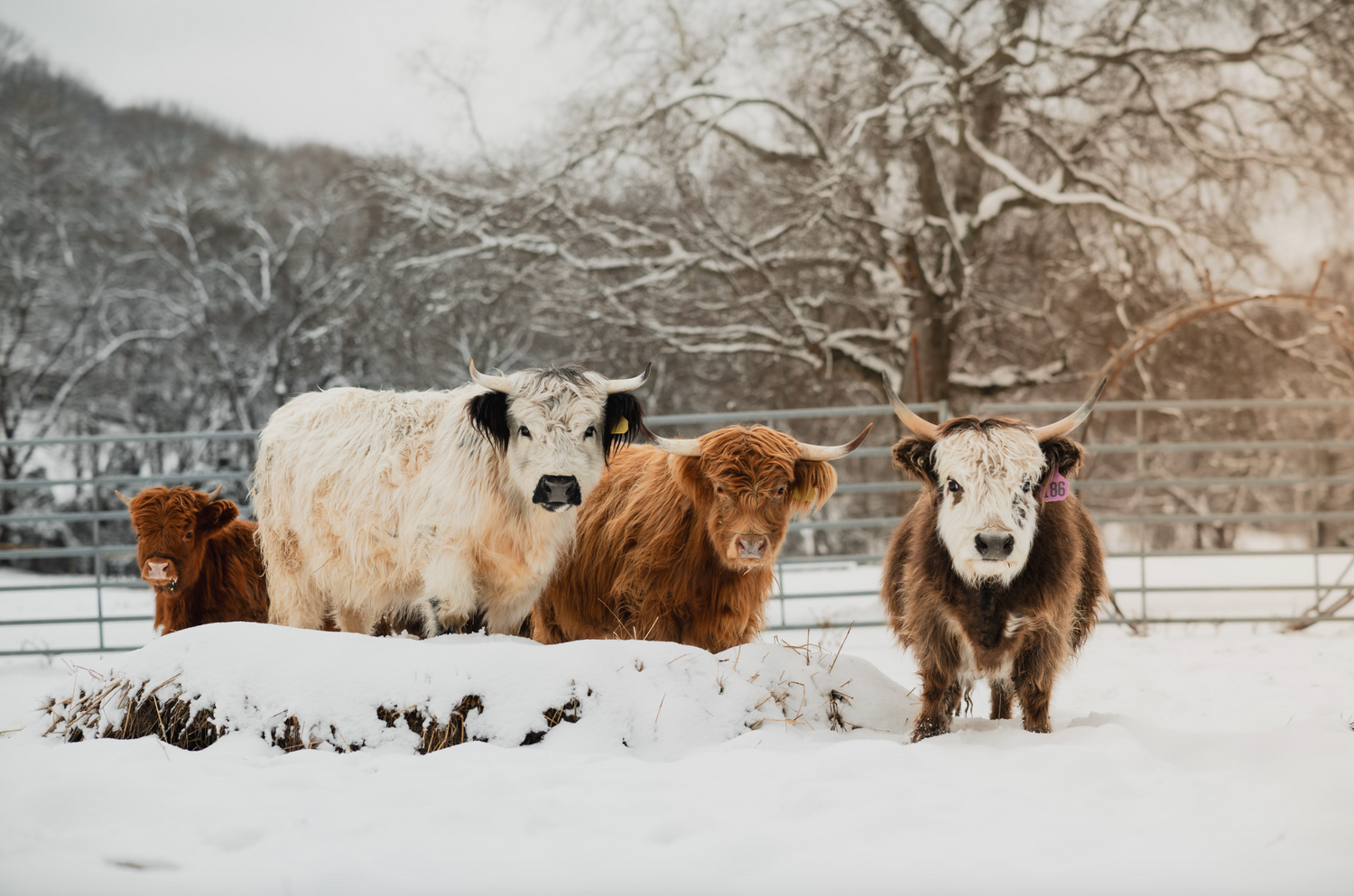
Hi y'all, Katie Van Slyke here! If you've spent any time on my page, you already know I'm a little obsessed with my miniature Highland cows. Poppy, Petunia, and the whole fluffy "P" crew are the reason I fell down this rabbit hole, and they're hands down what I get asked about most.
So I pulled everything I've learned into one place. Today I'll walk you through what a miniature Highland cow actually is, where they come from, how big they get, what they cost, how to care for them, and how to make sure you're bringing home a real, healthy one. Grab a coffee and stick with me.
Written from first-hand experience raising purebred miniature Highland cows, Poppy, Petunia, and the whole "P" crew, at Running Springs in Tennessee.
- Miniature Highlands are smaller, selectively bred Scottish Highlands, usually 36 to 48 inches tall and around 500 to 700 pounds.
- They're known for that shaggy double coat, the long fringe over their eyes, and a sweet, docile temperament.
- With good care they live 15 to 20 years or more, so this is a long commitment.
- They're premium "pet" cattle, with prices that run from several thousand dollars into the tens of thousands.
- Buy only from a reputable, health-testing breeder. Avoid stunted "fake" minis and the lethal dwarf (bulldog) gene.
What Is a Miniature Highland Cow?
A miniature Highland cow is a smaller version of the classic Scottish Highland, the shaggy, horned "hairy coo" you've seen all over your feed. Breeders create them by selectively breeding the smallest Highlands over several generations until the animals settle at a fraction of standard size, while keeping the long coat, the horns, and that famously gentle personality.
Highlands are one of the world's oldest registered cattle breeds, shaped by the harsh, windswept Scottish Highlands and the islands of the Hebrides, like the Isle of Skye. That brutal climate is exactly why they grew such a thick, weatherproof coat. Fun bit of trivia: a group of them isn't called a herd, it's called a fold.
One honest note up front. The American Highland Cattle Association registers Highlands as a single breed and doesn't recognize "miniature" as a separate category. The "miniature" label is really a size designation, tracked by groups like the International Miniature Cattle Breeders Registry, rather than a different breed. That distinction matters a lot when you go to buy one, and I'll come back to it.
How Big Do Miniature Highland Cows Get?

Most miniature Highlands stand 36 to 48 inches tall at the shoulder when fully grown and weigh somewhere around 500 to 700 pounds, with some reaching 800.
That's roughly half the size of a standard Highland, where a cow can easily hit 1,100 to 1,400 pounds, a bull can push past 1,800, and the animal stands over 48 inches tall. Minis usually reach their full size around three years old.
Within the mini world, you'll hear size classes thrown around. Vets generally sort small cattle into midsize (42 to 48 inches), standard miniature (36 to 42 inches), and micro mini (under 36 inches). The smaller and more "true to size" the animal, the higher the price tends to climb.
What Do Miniature Highland Cows Look Like?
The whole reason these cows broke the internet is the look. The star of the show is the double coat: a long, coarse, slightly wavy outer layer over a soft, wooly undercoat. That coat is one of the breed's most notable traits, and it's why Highlands handle cold, wind, and rain so well that they rarely need a fancy barn.
They also tolerate heat just fine as long as they have shade and water, and they shed that coat out earlier in warm climates. Then there's the long fringe of hair that flops over their eyes, which is exactly as adorable in person as it looks online.
They come in far more colors than the classic red, too. The American Highland Cattle Association recognizes seven coat colors: red, black, dun, yellow, brindle, silver, and white. Red is the most common, while the lighter dun, silver, and white shades come from a dilution gene.
And yes, both males and females grow horns. On females they tend to be finer and sweep upward, while males' are heavier and point more forward. They use them for knocking down brush to graze and for scratching, not for picking fights.
Are Miniature Highland Cows Friendly? Temperament and Personality

This is my favorite part. Miniature Highlands are calm, social, and genuinely affectionate when they're raised with regular handling, which is exactly why they've become such popular pasture pets and petting-zoo favorites.
Poppy will follow me around the pasture for a chin scratch, and that's not just me being a proud cow mom. It lines up with the research.
Cows are smarter and more emotional than people expect. Studies show they recognize and remember individual people, and they remember whether a person treated them well or badly.
And they really do enjoy affection: research on dairy cows found that stroking a cow, especially on the neck and withers, lowers her stress and builds trust. Those are the same spots cows groom on each other, so a good scratch there is basically cow-to-cow language for "I like you."
The takeaway: spend calm, consistent time with your mini, and you'll earn a loyal friend who knows your face and comes running when you call.
How Long Do Miniature Highland Cows Live?
With good care, miniature Highlands commonly live 15 to 20 years, and sometimes longer. That's a serious commitment, closer to a horse than a dog, so it's worth being honest with yourself about the next two decades before you bring one home. The flip side is that a well-loved mini becomes a true long-term member of the family.
Caring for a Miniature Highland Cow

The good news is that minis are lower-maintenance than full-size cattle, but they're still livestock with real needs. Here's the core of what they take:
- Space: plan for about half an acre to an acre of grazing per cow, depending on your pasture. True micro minis can often get by on the smaller end.
- Diet: good grass and pasture is the base, with hay in winter (a rule of thumb is roughly 2 to 2.5 pounds of hay per 100 pounds of body weight a day), plus loose minerals or a mineral block and constant fresh water, several gallons per cow per day. Minis are efficient, eating only about a third as much feed as full-size cattle, so go easy on grain to avoid an overweight cow.
- Shelter: a simple three-sided shelter to block wind, rain, and harsh sun is plenty for this hardy breed.
- Fencing: sturdy and secure. They're small, but a determined cow is still a cow.
- Companionship: cows are herd animals, so always keep at least two. A lone cow gets lonely and stressed.
- Grooming: that gorgeous coat needs regular brushing to prevent matting and to check for burrs or parasites, especially as they shed in spring. I treat it as a built-in health check.
- Health: routine hoof trims, a vaccination and parasite schedule with a large-animal vet, and a quick daily eyes-on to catch anything off.
We breed our mini Highlands through artificial insemination, and you can follow the whole journey on my YouTube channel and in our post on how mini cow breeding started at Running Springs.
Can You Halter Train a Miniature Highland Cow?
Here's something a lot of people don't realize: mini Highlands can absolutely be halter trained, and it makes everything easier. Like any animal, they respond best to patience and positive reinforcement, not force. Start young if you can, keep sessions short, reward calm behavior, and build trust before you ever ask for much.
At Running Springs, getting our minis comfortable with handling, haltering, and leading pays off every single day, from vet visits to hoof trims to photos. A well-handled cow is a safer, happier cow, for both of you.
Can You Keep a Miniature Highland Cow in Your Backyard?
Sometimes, but it depends on your local zoning laws and the size of your yard. A few things to sort out before bringing one home:
- Space: ideally at least half an acre of grazing, and remember you'll need room for two since they can't live alone.
- Zoning laws: many urban and suburban areas prohibit livestock, so check with your local authorities first.
- Fencing: sturdy, secure fencing is non-negotiable.
- Shelter: even a hardy mini needs protection from extreme weather.
If you've got a small homestead or mini farm with the right setup, a miniature Highland can be a wonderful addition.
Do Miniature Highland Cows Produce Milk?
They can, with a couple of caveats. Like any cow, a mini Highland only makes milk after she's had a calf, and she'll need to calve again roughly once a year to keep producing.
Highlands are also primarily a hardy heritage and grazing breed, not a dairy specialist, so they give far less milk than a true dairy cow.
If a steady milk supply is your actual goal, a small dairy breed like a Mini Jersey is the better fit.
A Mini Jersey produces a much more manageable amount than a full-size dairy cow, often around a gallon to a gallon and a half per milking, which is plenty for a family with some left over for butter or cheese. Most folks keep mini Highlands as pets and pasture companions, not milkers.
How Much Does a Miniature Highland Cow Cost?
Here's where people gasp a little. Because they're so popular and genuinely hard to breed well, miniature Highlands are premium "designer" cattle.
Prices swing widely with breeder reputation, pedigree, size, and color, anywhere from a few thousand dollars for a pet steer up into the tens of thousands for a top registered or micro heifer. The fluffier, smaller, more registered, and rarer the color, the higher it climbs.
To give you a clearer picture, here's roughly what the different types run on the current market:
| Type | Typical price | What you're getting |
|---|---|---|
| Pet-quality steer (no breeding rights) | $2,000 – $5,000 | A friendly companion or pasture pet, usually a neutered male |
| Registered heifer (standard mini, breeding rights) | $5,000 – $15,000 | A breeding-quality female with papers and a known pedigree |
| Micro mini, show, or rare-color heifer | $15,000 – $30,000+ | The smallest, fluffiest, top-pedigree, or rare-colored animals |
Those are ballpark ranges, not hard rules. A bull calf, an older cow, or a pet without papers can land below these numbers, while a tiny, perfectly marked heifer from a sought-after herd can climb well past them.
And remember, the purchase price is just day one. Fencing, shelter, hauling, feed, and vet care all add up. I broke down every number, including the hidden setup and yearly costs, in my full guide on how much a mini cow really costs.
The "Miniature Highland" Debate, and How to Avoid a Fake
This is the part nobody likes to talk about, but it matters most. As I mentioned, the breed registry treats Highlands as one breed, so some livestock experts argue that a "purebred miniature Highland" isn't an official, separate thing.
True minis are made by selectively breeding the smallest Highlands over generations, and to shrink them faster, some breeders cross Highlands with other genuinely small breeds like the Dexter or Zebu.
Crossbreeding itself is fine when it's done honestly, but it's a problem when a cross is sold as a purebred, or when corners get cut. Here's what to watch for:
- Stunted or misrepresented standard calves. A poorly fed or sick standard Highland calf can look small for a while, then grow into a full-size cow. Some sellers even misrepresent a calf's age to make it seem smaller than it is.
- The dwarf (bulldog) gene. Some "micro" minis get their size from carrying chondrodysplasia, the dwarfism gene. Bulldog dwarfism is a lethal genetic defect, and the UC Davis Veterinary Genetics Laboratory offers testing for it in miniature Scottish Highlands. If both parents carry it, breeding them can produce calves that don't survive.
The fix is simple: buy from a reputable breeder. Ask to see the parents, request height and age records, and confirm the animals are health and genetic tested.
A good breeder wants to qualify you as much as you're qualifying them. If a deal feels rushed or the price seems too good to be true, walk away.
How Miniature Highlands Compare to Other Mini Cows
"Mini cow" isn't one single breed, it's a whole category of mini cattle, and the Highland is just its fluffiest, most famous face. If you're weighing your options, here are the breeds you'll run into most often:
| Breed | Origin | Known for | Best for |
|---|---|---|---|
| Miniature Highland | Scotland | Long, shaggy coat and horns; very hardy and friendly | Pets, grazing, that famous "fluffy cow" look |
| Miniature Hereford | United States | Red body with a white face; calm and easy to handle | Beef or a gentle family animal |
| Dexter | Ireland | Naturally small, dual-purpose; one of the oldest small breeds | Milk and meat on one animal |
| Lowline Angus | Australia | Solid black, docile, excellent feed-to-beef conversion | Small-scale beef |
| Miniature Zebu | South Asia | Distinct shoulder hump; heat- and pest-tolerant | Hot climates, light milk, companionship |
| Miniature Jersey | Jersey (Channel Islands) | Classic dairy breed in a smaller package | A manageable family milk cow |
If you love the teddy-bear look, the Highland wins every time, and it's the breed behind my whole crew. You can dig into one of the most common matchups in our guide to the differences between miniature Highland and miniature Hereford cows.
Meet the Mini Highlands of Running Springs

Mine are the whole reason this blog exists. Poppy and Petunia are my OG girls, and the rest of the "P" crew, Pippa, Posie, Pumpkin, Peanut, Pearl, and Pepper, have turned the mini farm into the cutest chaos you've ever seen.
They're proof that a well-bred, well-loved mini Highland is everything people hope for. And the cows are only part of the fun: the mini farm is also home to our mini horses and a trio of sweet mini donkeys.
Want to rep the fluffy life? Poppy and Petunia have a whole Mini Cows collection named after them, and you can meet them up close in their own story.
Shop Running Springs
If these fluffy girls have your heart, come celebrate the farm life from home. Browse the Katie's Classics collection for our fan-favorite staples, and know that every order supports the animals you've been following along with.
Shop All Running Springs Merch
Is a Miniature Highland Cow Right for You?
If you've got the space, a secure setup, a good large-animal vet, and the time to give them daily attention for the next 15 to 20 years, a miniature.
Highland can be one of the most rewarding animals you'll ever own. They're hardy, gentle, endlessly charming, and they bond with you in a way most people never expect from a cow.
Just go in with eyes open: budget for the full picture, buy from someone who breeds responsibly, and be ready for the work as well as the cuddles. Do that, and you'll understand exactly why I can't imagine Running Springs without them.
Frequently Asked Questions About Miniature Highland Cows
How big do miniature Highland cows get?
Most stand 36 to 48 inches tall at the shoulder and weigh around 500 to 700 pounds when fully grown, with some reaching 800. That's roughly half the size of a standard Highland. They usually reach full size around three years old.
How long do miniature Highland cows live?
With good care, miniature Highland cows commonly live 15 to 20 years, and sometimes longer. That's closer to a horse's lifespan than a dog's, so it's a real long-term commitment.
Do cows like to be petted?
Yes. Research on dairy cows shows that stroking, especially on the neck and withers, lowers their stress and builds trust. Those are the same spots cows groom on each other, so a scratch there is genuinely soothing to them. My Poppy will line right up for it.
How long will a cow remember you?
A long time. Studies show cows recognize and remember individual people, and they clearly remember whether someone treated them kindly or roughly, keeping their distance from people who handled them badly. Treat a cow well and she'll know your face for years.
How much does a miniature Highland cow cost?
They're premium pet cattle, so prices range widely, from a few thousand dollars for a pet steer up into the tens of thousands for a top registered or micro heifer. Pedigree, size, color, and breeder reputation all drive the number.
How much land does a miniature Highland cow need?
A common guideline is about half an acre to an acre of grazing per cow, depending on pasture quality. Since cows can't live alone, plan space for at least two.
Are miniature Highland cows good pets?
For the right person, absolutely. They're docile, friendly, and people-oriented, which is a big part of their appeal. The key is enough space, secure fencing, a companion animal, and the time and budget to care for them properly.
Do miniature Highland cows have horns?
Yes. Both males and females grow horns. On females they're usually finer and sweep upward, while males' horns are heavier and point more forward. Highlands use them for browsing brush and scratching, not aggression.
What colors do miniature Highland cows come in?
The American Highland Cattle Association recognizes seven coat colors: red, black, dun, yellow, brindle, silver, and white. Red is the most common, while the lighter dun, silver, and white shades come from a dilution gene.
Is a miniature Highland a real, purebred breed?
Highlands are registered as one breed, so "miniature" is a size designation rather than a separate breed. True minis are purebred Highlands selectively bred small over generations, though some breeders cross with smaller breeds like Dexter or Zebu. Be cautious of stunted standard calves or animals carrying the lethal dwarf (bulldog) gene, and always buy from a reputable, health-testing breeder.
Sources
General breed, health, and behavior facts are drawn from the following. Price figures reflect current market listings and our own first-hand experience at Running Springs.
- American Highland Cattle Association, "The Breed"
- Heartland Highland Cattle Association, "Highland Breed Hair Colors"
- Taylorsville Veterinary Clinic, "Caring For A Miniature Cow"
- UC Davis Veterinary Genetics Laboratory, "Bulldog Dwarfism (Chondrodysplasia)"
- Costa et al., "Cognition of Dairy Cattle" (NIH/NCBI)
- World Animal Protection, "Do Cows Think and Feel?"
- Hobby Farms, "Miniature Cattle: 5 Breeds For Small Farms"
- Mother Earth News, "Small-Breed Milk Cows"
About the Author

Hi, I am Katie Van Slyke, and I share my daily life at Running Springs farm with millions of wonderful people online. I am best known for raising a huge variety of animals, from Quarter horses to famous mini Highland cows.
My true expertise lies in hands-on animal husbandry and living an authentic Tennessee outdoor lifestyle. I love bringing my everyday farm adventures and practical experience straight to you!







3 comments
What grooming items should I have and food before I bring my little man home?
Cani oboes be kept in a Pattie with horses
We are moving to a home on five acres which is an agricultural 1 area. We are newbies on an adventure and have no idea how to have mini cows! Thanks for any info you can give us!