
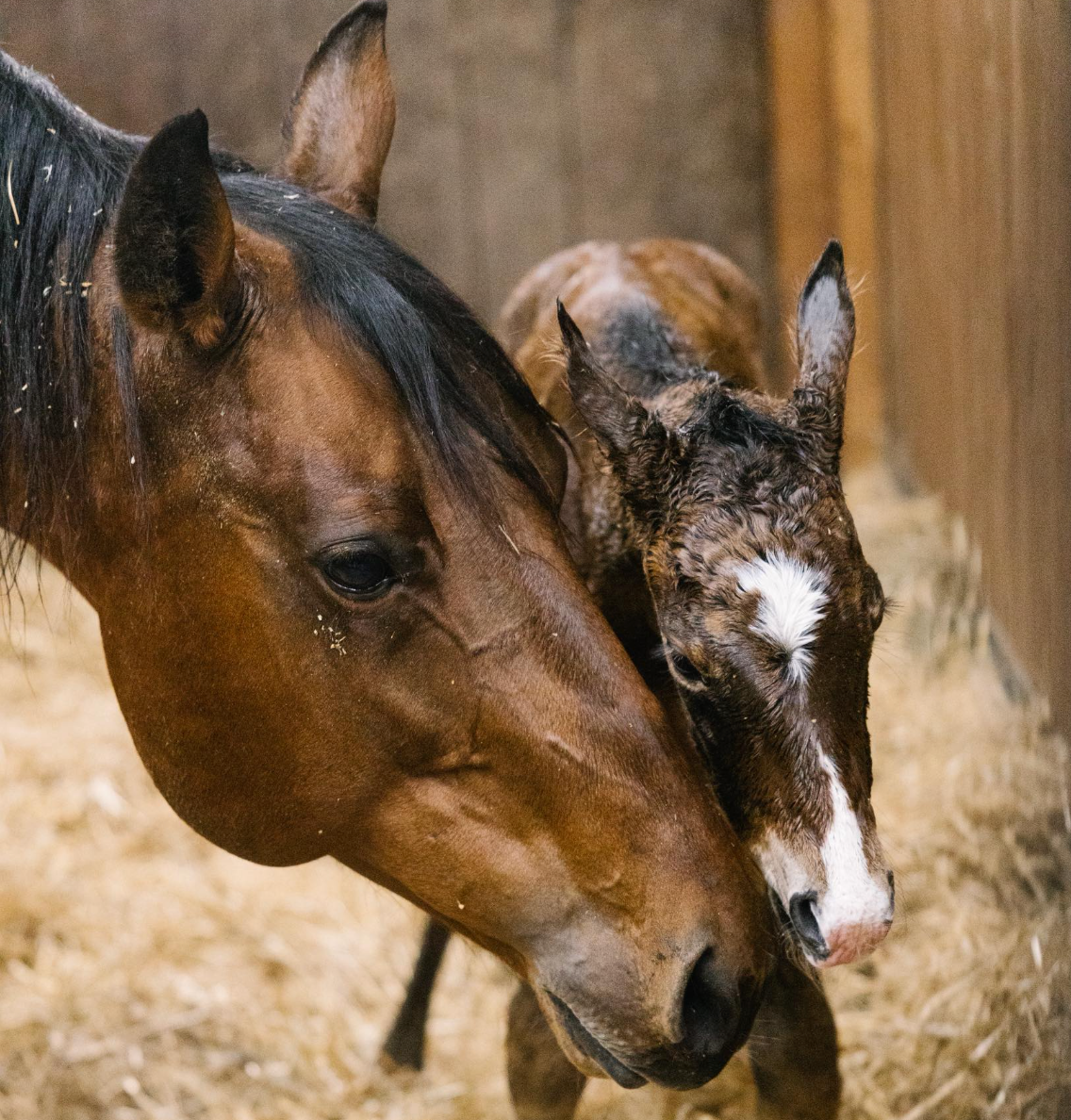
Hi y'all, Katie Van Slyke here, and today I want to walk you through one of the most overlooked but critically important parts of horse breeding: the horse placenta.
If you have ever watched a foaling and wondered what that big membrane is, why we never pull on it, or how vets decide it has been in there too long, this one is for you.
Today, I'll go through what the equine placenta is, how it works during pregnancy, what happens at foaling, and what retained placenta in horses actually means. Stick with me — it's not glamorous, but it might be the most important thing on the breeding side of our barn.
- What is a horse placenta?
- The function of the equine placenta during pregnancy
- What a normal horse placenta looks like
- What happens to the placenta after foaling
- Why I tie a knot in the placenta
- Retained placenta in horses: causes, signs, and treatment
- How to inspect the placenta of a horse
- Inside the Running Springs foaling routine
- Warning signs in the post-foaling mare
- Frequently asked questions
What Is a Horse Placenta?

Image source: LORI Equine Section
The horse placenta is the temporary organ that develops alongside the foal inside the mare's uterus. It is the foal's lifeline from conception through birth, handling nutrient delivery, oxygen exchange, waste removal, and hormone production for roughly eleven months of gestation.
The equine placenta is made up of two main membranes:
- The chorioallantois is the outer membrane that fuses to the mare's uterine lining. This is the side that does most of the work, exchanging nutrients and gas through tiny finger-like villi.
- The amnion is the thinner, opaque inner membrane that wraps directly around the foal in fluid.
You will also hear vets and breeders mention the cervical star, which is a pale spot on the chorioallantois that sits over the mare's cervix. Under normal foaling conditions, that is the part of the placenta that ruptures first to release the foal into the birth canal.
If your foal arrives wearing what look like soft jelly bedroom slippers, that is actually part of the same system. We have a whole post on foal slippers and why they are completely normal.
If you'd rather watch than read, I walked through the placenta and its role in foaling in a two-part series on my channel:
The Function of the Equine Placenta During Pregnancy
The equine placenta is the bridge between the mare's circulation and the developing foal. It does five big jobs at once:
- Moves oxygen from the mare's blood into the foal's blood
- Moves nutrients across so the foal can grow
- Carries waste products back to the mare for disposal
- Produces pregnancy-supporting hormones, including progestins
- Acts as a physical barrier against most infections
This is also why the placenta's weight at delivery actually tells you something. A healthy near-term equine placenta usually weighs about ten to eleven percent of the foal's body weight. If it is unusually heavy, that can hint at inflammation or a uterine infection called placentitis, which is one of the things vets watch for during routine pregnancy checks and broodmare bump dates.
Every new arrival at Running Springs gets the RS prefix and a spot in our family lineup. Browse our foals collection for tees and hoodies that celebrate the babies behind the program.
What a Normal Horse Placenta Looks Like

Image source: Veterian Key
Once it passes, the equine placenta lays out in what looks like the letter F or Y. The two horns of the placenta — the parts that lined the two horns of the mare's uterus — form the arms. The body forms the base. The umbilical cord and the amnion come off the body.
Here is what you (and your vet) want to see:
- The pregnant horn (the side the foal grew in) is thick, velvety, and well-formed.
- The non-pregnant horn is thinner and slightly puckered, but its tip should still be intact.
- The chorionic surface (the side that touched the uterus) is dark red and velvety. The amnion side is paler.
- No major holes, tears, or missing pieces, especially at either horn tip.
The most common spot for a fragment to break off and stay inside the mare is the very tip of the non-pregnant horn. That is exactly why a proper inspection matters even when the placenta seems to have passed cleanly.
What Happens to the Horse Placenta After Foaling
In a normal delivery, the foal breaks through the cervical star feet-first, comes out, and the chorioallantois inverts as it follows.
For a stretch of time after birth, the placenta will literally be hanging from the mare's vulva. That is the "afterbirth" phase, and it is normal.
Most healthy mares pass the entire placenta within one to two hours. Veterinarians consider any membrane that has not been expelled by three hours retained, and beyond that point it is treated as a medical situation that needs an active plan, not a wait-and-see approach.
For the full rundown of the watch window and exactly what to do as the clock ticks, our placenta care after foaling guide walks through it step by step.
Behind every foal is the stallion side of the family. Our stallions collection features Waylon (VS Code Red) and Denver, the two boys at the heart of our breeding decisions.
Why I Tie a Knot in the Placenta
This is one of the most common questions I get at the start of every foaling season. While the placenta is hanging, you have to be careful with it. Two things can go wrong:
- It can pool on the ground, lose its natural weight, and not detach.
- The mare can step on it, tug it, or tear it before it has fully released.
Pulling on the placenta — for any reason — can cause serious internal damage to the uterus. Instead of pulling, we let gravity do the work.
I tie a soft knot in the placenta to add gentle weight at the bottom. That weight helps it detach naturally and keeps it up off the ground.
One small thing I have changed over the years is when I tie the knot. If the mare is still down, focused on her foal, and relaxed, I will tie it right then. Once she stands up and is in full mama-bear mode, getting near her hind end is a lot harder.
Retained Placenta in Horses: Causes, Signs, and Treatment
This is the term you want to know cold if you are going to breed a mare. Retained placenta in horses (also called retained fetal membranes, or RFM) is when any portion of the placenta — even a small piece — does not pass within three hours of foaling.
How common is it?
The published incidence is roughly two to ten percent of foalings, with higher rates after a difficult or assisted delivery. Draft breeds and Friesians are particularly prone, but it can happen to any mare.
What causes retained placenta in horses?
There is no single cause. The most common triggers vets see are:
- Dystocia or any kind of difficult delivery
- Premature or induced births
- Fescue toxicosis (mares grazed on endophyte-infected tall fescue)
- Twin pregnancies
- Uterine inertia or weak contractions
- Older mares
Why retained placenta is so serious in horses
Retention is far more dangerous in mares than in cows. Inside the warm, moist uterus, bacteria multiply quickly on retained tissue and release toxins. Within hours, a mare can develop endometritis, septic metritis, founder (laminitis), or full-body endotoxemia. Mares have died from retained placenta. This is why your timeline is measured in hours, not days.
What treatment looks like
Treatment usually progresses in steps:
- Tie up the membranes to prevent further damage.
- Oxytocin injections to stimulate uterine contractions. This resolves the majority of early cases.
- Uterine lavage if the placenta has not passed within several hours.
- Antibiotics and anti-inflammatories to prevent infection and laminitis.
- Manual removal is generally avoided because of the risk of uterine damage, hemorrhage, or even prolapse.
If you ever face retention, the rule is simple: do not pull, and call the vet. Having a relationship with a trusted equine vet is just as important as the months of pregnancy checks and heartbeat monitoring leading up to foaling.
The Running Springs everyday — barn boots, coffee, and a baby horse around every corner — lives in our Classic Apparel collection.
How to Inspect the Placenta of a Horse

Even when the placenta passes inside the normal window, the job is not done. Every placenta should be inspected — by you initially, and by the vet on the post-foaling check.
Here is the basic checklist:
- Get gloves on. The placenta carries plenty of bacteria.
- Lay it flat on a tarp or paved surface, F or Y side up.
- Check both horns. Both tips need to be present and intact. The non-pregnant horn tip is the number-one spot for a fragment to be missing.
- Weigh it. A bathroom scale works fine. Roughly 10 to 11 percent of foal body weight is normal.
- Look for tears or holes in the body of the placenta.
- Save it. Bag it or put it in a clean bucket of ice water for the vet to recheck within 24 hours.
If anything looks off — missing tissue, foul smell, abnormal color, weight far heavier than expected — tell the vet immediately.
Inside the Running Springs Foaling Routine

At Running Springs, foaling season runs from late winter into spring, and someone is on watch every single night once mares hit their safe window.
Our broodmare band carries foals by both of our stallions, and every single RS-prefix baby comes into the world with the same protocol behind it.
The non-negotiables in our routine:
- A tied placenta the moment the mare relaxes after delivery
- A clean towel ready in case the placenta tears early
- Oxytocin in the barn fridge for vet-guided administration only
- Our equine vet on speed dial
- The placenta inspected and saved for the post-foaling vet check the next morning
The biggest thing I have learned across our foaling seasons is to trust the timeline. The two-hour mark is where I get serious. The three-hour mark is where I stop assuming it will resolve on its own. The four-hour mark is where the vet is already either at the barn or on the way.
If you want the longer version of our day-to-day breeding side of things, our piece on the role of recipient mares walks through the back end of the program.
Warning Signs in the Post-Foaling Mare
Even after the placenta passes cleanly, the first 72 hours are still close-monitoring time. Vets watch for a handful of red flags:
- Fever above 101°F in the first three days — often the earliest sign of a retained fragment or mastitis, before the mare looks outwardly ill.
- Excessive bleeding, abnormal discharge, or vulvar swelling — may signal a deeper tear or infection.
- Depression, lethargy, colic signs, or going off feed — can be mild post-foaling colic, but also uterine artery rupture or a uterine tear.
- A drop in manure production within the first 12 to 24 hours — predisposes the mare to cecal impaction.
- Udder problems — heat, pain, or chunky milk can indicate mastitis.
Track the mare's temperature twice a day for the first three days, watch her attitude closely, and trust your gut. Early calls almost always end better than late ones.
Shop Running Springs
If our farm content is your happy place, our merch is built around the babies that started it all — the foals, the boys, the broodmare band, and the daily chaos of life at Running Springs.
The foals collection pulls together everything inspired by foaling season, our Classic Apparel covers our staple Running Springs tees and hoodies, and our stallion-themed pieces feature the boys behind the breeding program. The full lineup is one click away.
Shop All Running Springs Merch
The Horse Placenta and the Bigger Picture of Breeding
The horse placenta is one of the most quietly important pieces of any breeding program. It gets the foal here. It tells you whether the pregnancy went the way you wanted. And in the wrong direction, it can cost you your mare faster than you would believe.
The more you understand about the equine placenta — what it does, what normal looks like, and when to call for help — the better positioned you are to protect both her and her foal.
Foaling at Running Springs has taught me that the best outcomes start months before the foal hits the ground, with good pregnancy management, a vet you trust, and a plan you do not have to think through at three in the morning. Get that part right, and the rest tends to follow.
Frequently Asked Questions About the Horse Placenta
What is a horse placenta?
The horse placenta is the temporary organ that grows inside the mare's uterus alongside the foal. It connects the foal's circulation to the mare's, handling oxygen and nutrient delivery, waste removal, and hormone production throughout the roughly eleven-month pregnancy. After foaling, it is expelled as the "afterbirth."
How long does it take for a horse to pass the placenta?
Most healthy mares pass the placenta within one to two hours of foaling. Veterinarians consider any membrane that has not been expelled within three hours to be a retained placenta, which is a medical emergency in horses.
What is retained placenta in horses?
Retained placenta in horses (also called retained fetal membranes) is when all or part of the placenta is not expelled within three hours of foaling. It can cause severe infection, laminitis, and even death if not treated promptly. Treatment usually starts with oxytocin and progresses to uterine lavage and antibiotics under veterinary direction.
How much does an equine placenta weigh?
A normal near-term equine placenta weighs roughly 10 to 11 percent of the foal's body weight. A significantly heavier placenta can indicate inflammation or infection, such as placentitis, and is something your vet will want to evaluate.
Why does the placenta of a horse look like an F?
The equine placenta lays out in an F or Y shape because the mare's uterus has two horns. The arms of the F are the placenta's two horns, and the base is the body of the placenta. Both horn tips should be present and intact during inspection.
Can you pull a horse's placenta out?
No. You should never pull or tug on a mare's placenta. Doing so can tear the uterus, rupture uterine arteries, or cause a uterine prolapse. Let gravity, oxytocin, and your veterinarian handle the process.
Keep Reading
If foaling season is on your mind, these next reads from Running Springs are a natural place to head next.
- A look inside foaling season at Running Springs — the highs, the long nights, and what makes it all worth it.
- Breeding season insights from our barn — how the decisions you make months ago shape the foaling you get.
- Horse breeding terms every new breeder should know — the vocabulary that makes everything else easier.
- 2026 foaling season preview — the broodmares, the sires, and what we are watching for.
Sources
The veterinary timelines, retention thresholds, anatomy descriptions, and post-foaling warning signs in this article are drawn from published equine veterinary resources. They are educational only and do not replace the advice of your own veterinarian.
- Merck Veterinary Manual — Retained Placenta in Horses
- Bend Equine Medical Center — Monitoring the Post-Foaling Mare
- Merck Animal Health — Broodmare Foaling
- Ontario Ministry of Agriculture — Examining the Mare's Placenta and Keeping Foaling Records
- Veterinary Partner (VIN) — Retained Placenta in Horses
- Vetster — Retained Placenta in Horses
About the Author

Hi, I am Katie Van Slyke!
I breed AQHA Quarter Horses at my family farm in Tennessee, stand two stallions, and document foaling season every year from the barn floor while sharing the daily realities of farm life.
I am incredibly lucky to share this journey with millions of friends across YouTube, TikTok, Facebook, and Instagram. You can read the full story of how it all started on my about page.






















0 comments